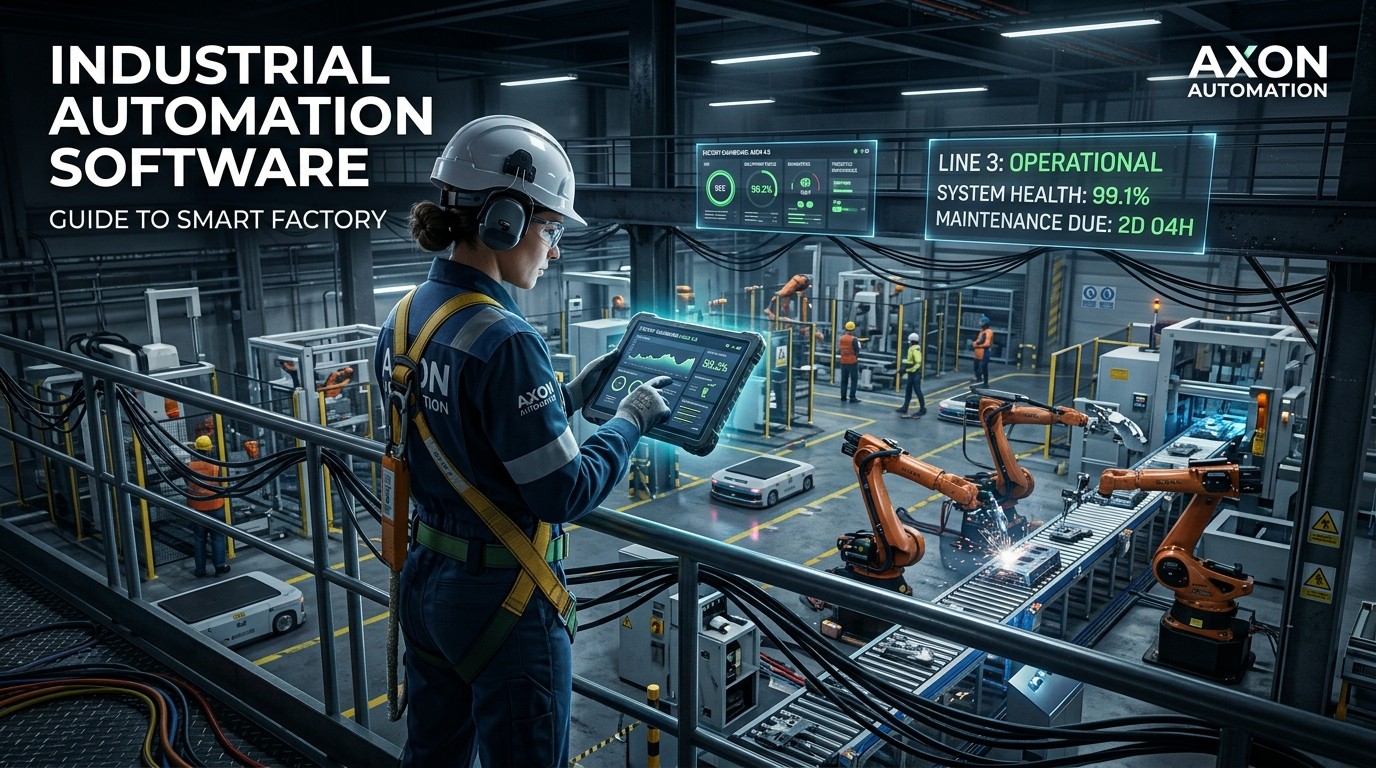
Industrial Automation Software helps smart factories connect machines, people, and data so production becomes faster, safer, and easier to control through clear automation, visibility, and continuous improvement.
Industrial Automation Software is no longer a nice-to-have layer on top of production. It has become the operating logic that helps modern factories coordinate machines, reduce errors, and respond faster to demand shifts. When plants grow more complex, manual coordination slows everything down. Industrial Automation Software helps bring that complexity under control by giving teams a shared view of what is happening, what failed, and what should happen next.
The smart factory idea sounds futuristic, but the core goal is practical. Industrial Automation Software exists to make daily operations more predictable. It turns scattered data into usable signals, helps teams spot bottlenecks, and reduces the time spent guessing why throughput changed. In the best facilities, the software becomes part of the culture because operators, engineers, supervisors, and planners all rely on it for faster decisions.
A good system also reduces anxiety. When production lines are visible in real time, teams can react early instead of discovering problems after the damage is done. Industrial Automation Software supports that confidence by tying machines, sensors, alarms, dashboards, and workflows into one coordinated environment. That is what makes it central to a smart factory.
What industrial automation software actually does
At the simplest level, Industrial Automation Software helps monitor, control, and optimize industrial processes. It collects information from equipment, converts raw signals into readable data, and presents that information in ways people can act on. Depending on the plant, it may control a single machine, an entire line, or a multi-site operation. Industrial Automation Software can manage schedules, alarms, recipes, quality checks, machine states, and maintenance alerts.
The value is not only in automation itself but in coordination. Industrial Automation Software reduces the gap between what a machine is doing and what a human thinks it is doing. That gap is where many production losses begin. If the software closes that gap, the business gains time, clarity, and consistency. Teams no longer need to rely on paper notes, verbal updates, or disconnected spreadsheets to understand the plant.
In a smart factory, the software becomes the connective layer between the physical and digital worlds. Industrial Automation Software supports that bridge by allowing equipment to speak the same operational language. That makes it easier to analyze performance, standardize actions, and improve the system over time.
Why smart factories need software, not just machines
Machines alone do not create smart manufacturing. A factory can own advanced equipment and still operate inefficiently if the information between systems is fragmented. Industrial Automation Software matters because it gives the machines context. It tells the system what to do, when to do it, and how to react when something changes. Without that layer, even expensive hardware may operate below its potential.
Smart factories depend on visibility. Industrial Automation Software gives leaders a clear picture of uptime, downtime, output, quality, and resource usage. That visibility helps them ask better questions. Is a slowdown caused by equipment, material availability, operator steps, or a scheduling issue? Once the answer is visible, improvement becomes easier. Industrial Automation Software transforms instinct into evidence.
The software also supports resilience. When a plant runs on one person’s memory or one department’s routine, it becomes fragile. Industrial Automation Software creates repeatability, which is essential when staff changes, demand grows, or a process must be audited. Smart factories are not only fast; they are also stable enough to keep running when conditions change.
Core benefits that matter to operations teams
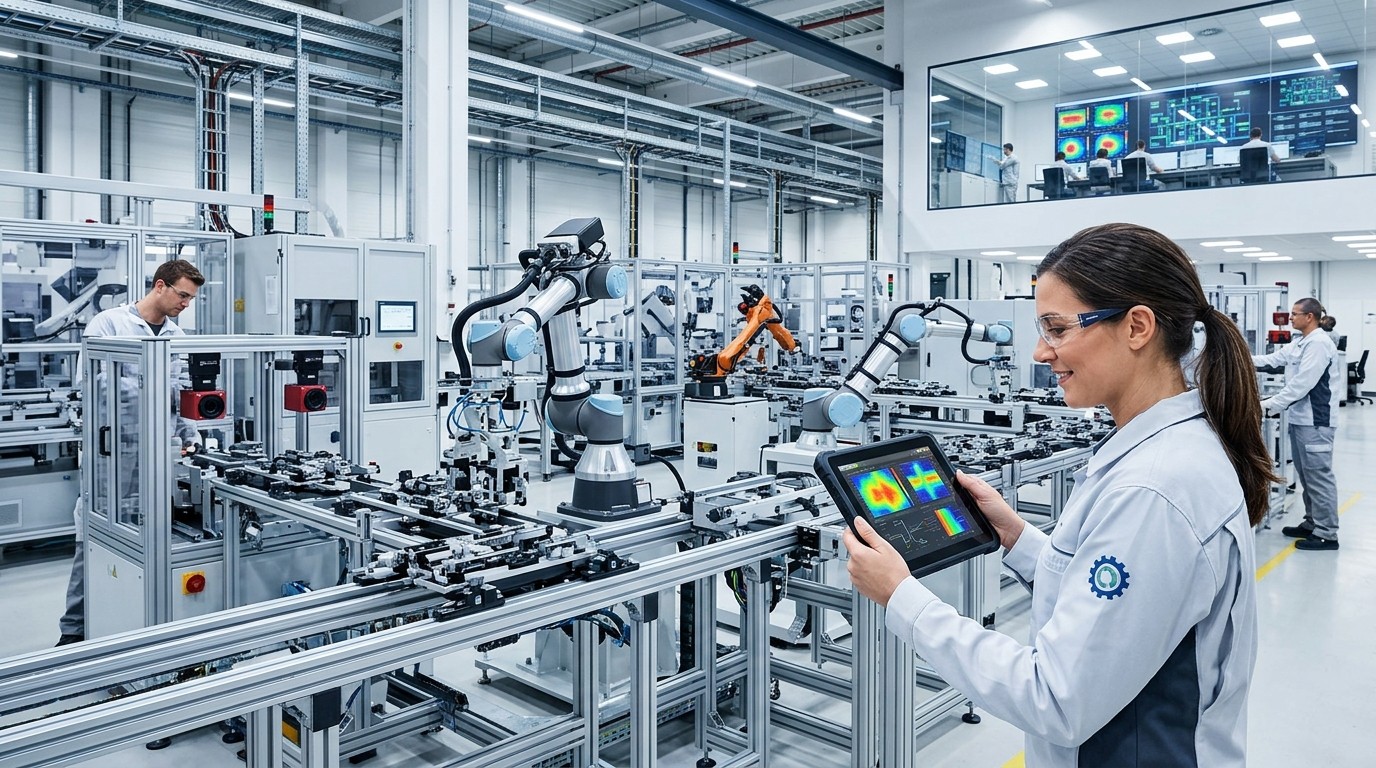
Industrial Automation Software brings several practical benefits that show up quickly in daily work. First, it improves visibility. Operators can see machine states and alarms faster. Supervisors can identify trends before they become failures. Leaders can review performance using data rather than assumptions. Industrial Automation Software makes the whole operation easier to read.
Second, it improves consistency. Automated rules reduce variation in tasks that should not depend on memory or mood. A process that runs the same way every time usually has fewer defects. Industrial Automation Software helps lock in best practices so the factory does not drift over time.
Third, it supports speed. When responses are automated or semi-automated, the plant wastes less time waiting for manual approval. Industrial Automation Software can shorten the distance between detection and action. That speed matters in environments where one small delay can multiply into a larger loss.
Finally, it improves traceability. Industrial Automation Software can record who changed what, when a fault occurred, and which batch or line was involved. That record is important for quality, compliance, troubleshooting, and continuous improvement. In a serious industrial setting, traceability is not a luxury. It is part of operational safety.
Main layers inside a smart factory stack
A smart factory usually has several layers, and Industrial Automation Software sits across them. At the lowest level are sensors, actuators, drives, controllers, and equipment. These devices produce the physical signals. Above them are systems that monitor and control processes. Industrial Automation Software connects those layers into a usable whole.
At the data layer, the software gathers signals and organizes them into dashboards, reports, and analytics. At the control layer, it supports logic for workflows, alarms, sequences, and process actions. At the business layer, it may feed ERP, scheduling, maintenance, inventory, or quality systems. Industrial Automation Software is valuable because it works across these boundaries rather than living in one department.
That cross-layer role is often where projects succeed or fail. If the plant installs new equipment but the data remains isolated, the factory stays fragmented. Industrial Automation Software reduces that fragmentation by giving different stakeholders one operational picture. Engineers see the mechanics, managers see the performance, and operators see the next action.
Key features to evaluate before buying
The best purchase decision usually starts with the right feature checklist. Industrial Automation Software should offer real-time visibility, flexible control logic, alarm management, reporting, user permissions, integration options, and support for scale. A beautiful interface alone is not enough. The system must work in the actual rhythm of the plant.
Integration is especially important. Industrial Automation Software should connect with PLCs, sensors, MES, SCADA, historians, quality platforms, and enterprise tools when needed. If a product cannot communicate well, the team may end up duplicating work in spreadsheets. That defeats much of the purpose. Good software reduces manual transfer, not adds to it.
Security should also be part of the evaluation. Industrial Automation Software is part of operational infrastructure, so access control, logging, authentication, and safe update practices matter. If the software is powerful but fragile from a security standpoint, the risk grows with every new connection.
Support and extensibility matter too. A plant should not be locked into a rigid system that cannot adapt. Industrial Automation Software should allow future modules, new machines, and new workflows without forcing a full rebuild. A system that grows with operations is more valuable than one that looks complete only on day one.
A comparison table for planning
| Capability | Why it matters | What to look for |
|---|---|---|
| Real-time monitoring | Faster response to issues | Live dashboards and alarms |
| Integration | Connects equipment and business systems | Open APIs and device compatibility |
| Traceability | Supports audits and root cause analysis | Event logs and batch history |
| Scalability | Handles growth without breaking | Modular architecture |
| Security | Protects operations and data | Access control and logging |
Industrial Automation Software should be reviewed against the plant’s actual priorities, not a generic checklist. A food plant, a chemical line, and a discrete assembly site all need the same fundamentals but in different proportions. The best choice is the one that fits the operating reality.
The difference between control, monitoring, and optimization
Many teams use these terms loosely, but they are not the same. Control means the software helps execute actions in the process. Monitoring means it shows what is happening. Optimization means it helps improve performance over time. Industrial Automation Software can do one, two, or all three depending on the system.
A plant might begin with monitoring because it wants visibility first. Then it may add control logic to reduce manual intervention. Later it may layer analytics to improve cycle time, energy use, or quality. Industrial Automation Software is strongest when it evolves with the plant rather than pretending every factory needs the same maturity level on day one.
That progression matters because factories often overspend by trying to jump directly to advanced optimization without fixing basic visibility. Industrial Automation Software should first make the process readable. Once the process is readable, control can be tightened. Once control is stable, optimization becomes far more useful.
Automation Studio Software in the engineering workflow
Automation Studio Software is useful when engineers need to design, simulate, test, or document automation systems before deployment. It can reduce mistakes by letting teams validate logic and layouts earlier in the process. Industrial Automation Software often works best when paired with tools like this during planning and commissioning.
That pairing matters because design errors are expensive once hardware is live. A simulation-first approach can expose logic problems, sequence conflicts, and integration gaps before they become downtime. Industrial Automation Software becomes more reliable when the engineering team has already tested assumptions in a controlled environment.
The practical lesson is simple: better design tools usually produce better operational systems. Automation Studio Software helps teams think before they build. Industrial Automation Software then turns that planning into production reality. The two approaches reinforce each other.
Laboratory Automation Software and production discipline
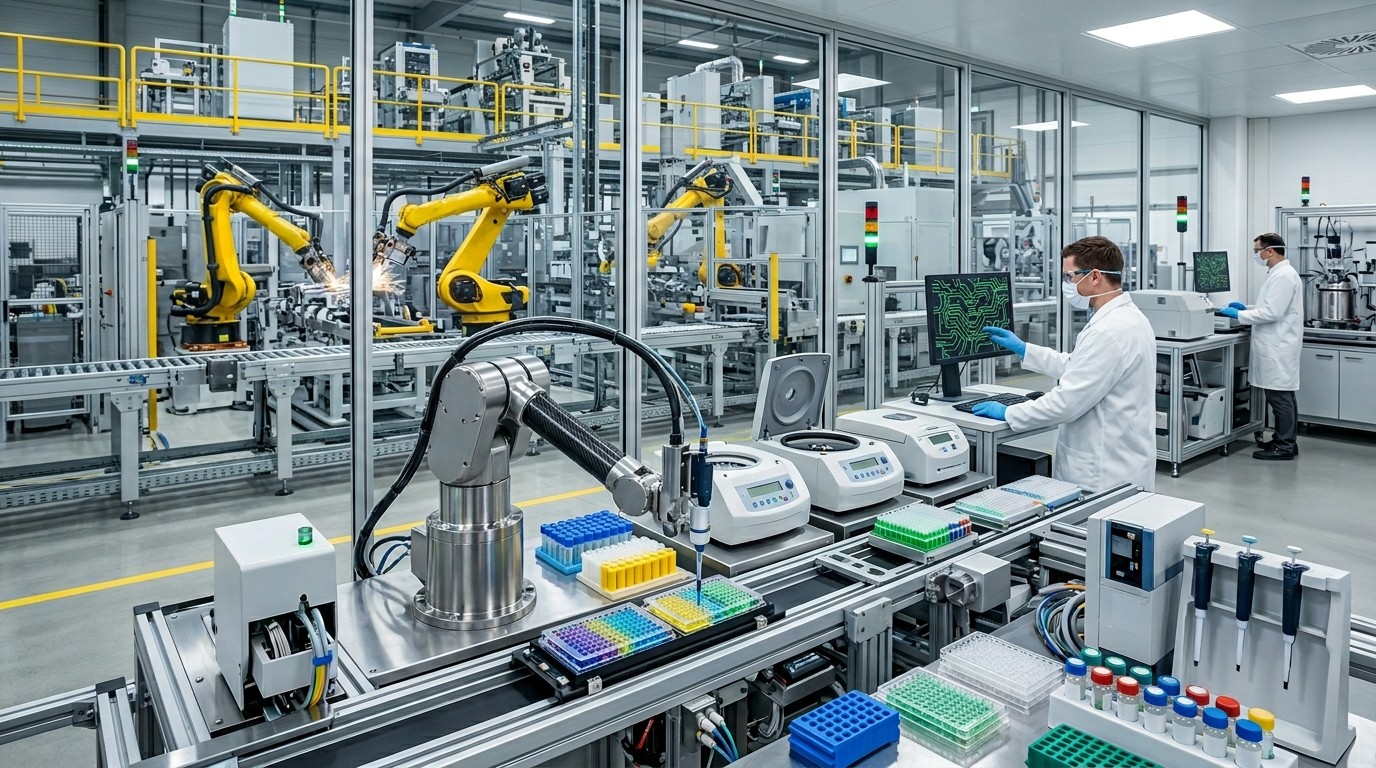
Laboratory Automation Software may seem different from factory automation, but the mindset is similar. Both depend on repeatability, traceability, and reduced human error. When laboratories automate workflows, they create more reliable data and faster turnaround. The same discipline supports better industrial operations.
Factories that handle quality testing, material verification, or compliance checks can benefit from the same logic. Industrial Automation Software becomes more useful when it connects production with lab results instead of keeping them separate. That link helps teams understand not just what was made, but whether it met the required standard.
This connection is especially helpful in regulated industries. A process that can be traced from raw input to verification output is easier to audit and improve. Industrial Automation Software supports that continuity, while Laboratory Automation Software teaches the value of precision at every step.
Office Automation Software and the hidden back office
Office Automation Software often receives less attention, but smart factories need it. Production may happen on the shop floor, yet orders, approvals, maintenance tickets, purchasing, and reporting still flow through administrative processes. If those tasks remain manual, the plant slows down around the edges.
Industrial Automation Software creates the factory’s operational core, but office workflows support the surrounding business. When the two layers work together, the result is smoother scheduling, faster communication, and fewer delays caused by paperwork. A smart factory is not just automated in production; it is coordinated across the whole organization.
That coordination matters because bottlenecks often start outside the line. A missing approval, a delayed purchase order, or a forgotten shift update can create real output loss. Industrial Automation Software becomes more valuable when it is supported by efficient office processes.
Workflow Automation Software and repeatability
Workflow Automation Software helps businesses standardize tasks, approvals, notifications, and handoffs. In manufacturing, that logic is powerful because many losses come from inconsistent follow-up. Industrial Automation Software often gains extra value when paired with workflow automation, since one system handles the machine action while the other manages the human process around it.
This combination is where many smart factory gains become visible. A machine alert can trigger a maintenance ticket. A quality failure can create a review step. A production delay can notify the planner automatically. Industrial Automation Software becomes far more impactful when it is not isolated from task routing and decision chains.
Repeatability is the real prize. Workflow Automation Software reduces dependence on memory, and Industrial Automation Software reduces dependence on manual machine oversight. Together they create a cleaner, more predictable operation.
Implementation steps that reduce risk
A successful rollout usually starts with one line, one area, or one process. Industrial Automation Software is easier to adopt when the project scope is small enough to learn from but large enough to prove value. Trying to automate everything at once often creates confusion and resistance.
The next step is mapping the current process. Teams should understand what happens today before they change anything. Industrial Automation Software should support the process, not hide bad assumptions. If the existing workflow is unclear, the software will only make the confusion faster.
After that comes configuration, testing, training, and gradual expansion. Industrial Automation Software should be introduced in stages so the team can adjust without losing control. The best deployments usually involve operators early because they know where the process actually breaks.
Change management is important too. People do not resist automation only because they dislike technology. They resist because they fear disruption, loss of control, or extra complexity. Industrial Automation Software adoption improves when leaders explain the purpose clearly and show how the new system makes work easier, not harder.
Metrics that show whether the system is working
You cannot improve what you do not measure. Industrial Automation Software should help the plant track downtime, throughput, cycle time, defect rate, energy consumption, maintenance frequency, and response time. These metrics reveal whether the system is creating value or just producing more screens.
Some metrics are operational, while others are behavioral. If users log in regularly, respond faster, and trust the dashboards, the system is probably useful. Industrial Automation Software becomes a success when it changes decisions, not just data volume.
It is also smart to watch the lag between alert and action. If alarms are visible but ignored, something in the workflow still needs attention. Industrial Automation Software should make problems harder to miss and easier to solve. That is the real measure of usefulness.
Common mistakes that hurt ROI
One of the biggest mistakes is buying software before defining the process problem. Industrial Automation Software should solve a specific operational need. If the need is vague, the project may become a costly demonstration rather than a working improvement.
Another mistake is overcomplicating the rollout. Industrial Automation Software can be powerful, but a plant still needs to keep production stable while learning the new system. Too many features at once can create fatigue and reduce adoption. Simplicity during implementation often leads to stronger long-term results.
A third mistake is undertraining the team. Industrial Automation Software only creates value when people understand how to use it. If the software is installed but not understood, the plant loses the chance to turn visibility into action.
The final mistake is failing to update the system after launch. Industrial Automation Software should evolve with the plant. If the business changes but the software does not, the gap returns in a new form. Continuous improvement is part of the value.
Security, reliability, and long-term thinking
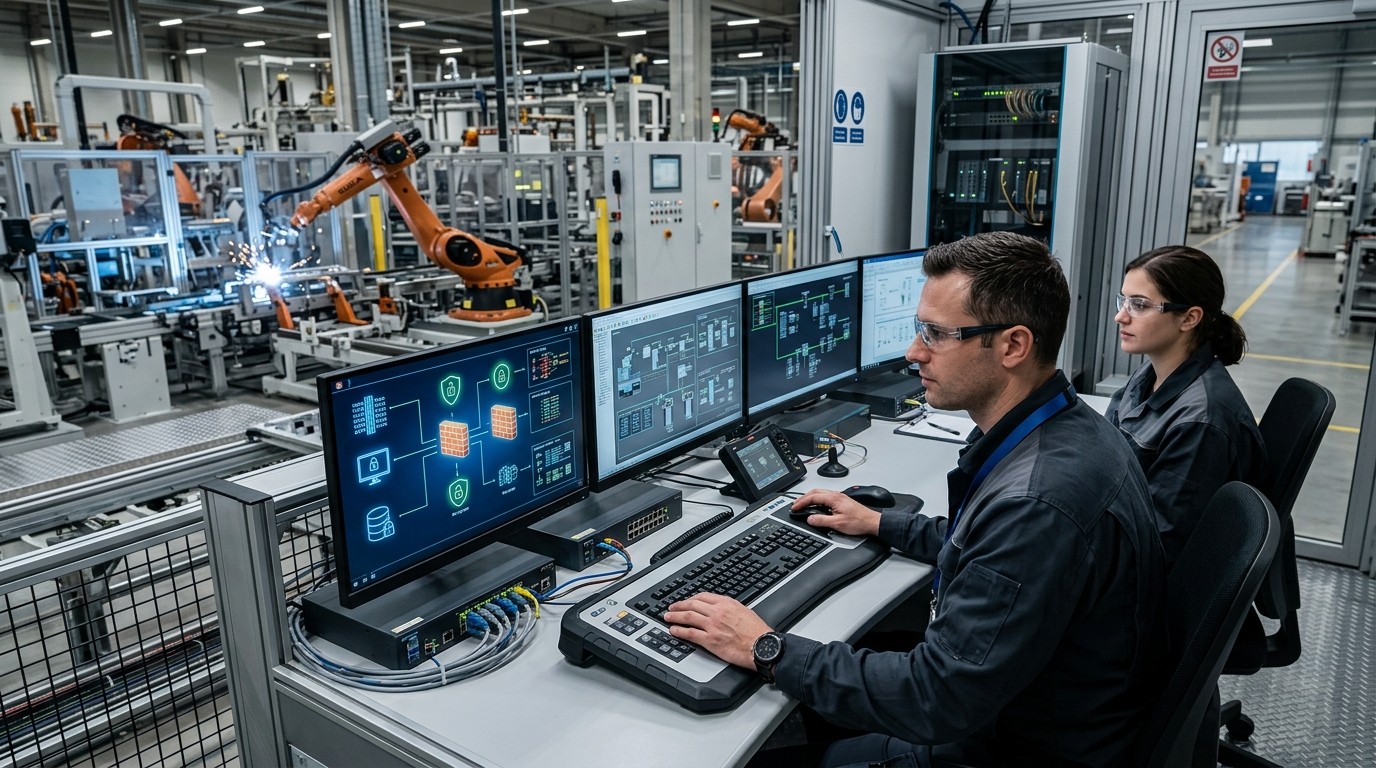
Industrial systems must be dependable. Industrial Automation Software should support backup plans, stable uptime, and controlled updates so operations remain safe even when something changes. Reliability is not a decorative feature; it is part of the business promise.
Security is equally important. As more devices connect to the plant, the attack surface grows. Industrial Automation Software must support proper access management, logging, and safe network design. A smart factory is only smart if it is also protected.
Long-term planning means choosing systems that can grow with the business. Industrial Automation Software should not force constant replacement every time a new line opens or a new site comes online. Flexibility saves money and reduces disruption. In the long run, the most valuable platform is often the one that keeps adapting.
Building a smart factory culture
Technology alone does not make a plant smart. People do. Industrial Automation Software succeeds when the team trusts the data, uses the tools consistently, and treats improvement as part of the job. A smart factory culture is one where small problems are surfaced early and solved before they become expensive.
That culture depends on visibility, shared language, and steady follow-through. Industrial Automation Software helps create that environment by showing everyone the same picture of operations. Once the team sees the same truth, it becomes easier to align on the next step.
The long-term win is not simply more automation. It is better decision-making across the plant. Industrial Automation Software supports that shift by turning operations into something that can be understood, measured, and improved in a disciplined way.
Conclusion
Industrial Automation Software is the backbone of a smart factory because it connects machines, people, and data into one working system. When the software is chosen well and implemented carefully, it improves visibility, consistency, speed, traceability, and resilience. The biggest gains usually come from clear scope, strong integration, good training, and steady improvement rather than from flashy features alone. Smart factories do not happen by accident; they are built through systems that make the right actions easier and the wrong actions harder. When the software fits the process, the plant becomes more stable, more responsive, and much easier to scale.
Frequently Asked Questions (FAQ)
1) What is Industrial Automation Software used for?
It is used to monitor, control, and improve industrial processes by connecting equipment, data, and workflows into one system.
2) Is Industrial Automation Software only for large factories?
No. Smaller plants can also benefit, especially when they need better visibility, consistency, and process control.
3) What is the main benefit of a smart factory system?
The main benefit is better decision-making through real-time visibility and automation that reduces manual effort.
4) How do I choose the right platform?
Start by defining the process problem, then compare integration, usability, security, reporting, and scalability.
5) Do I need training before rollout?
Yes. Training is essential because the system only creates value when people know how to use it correctly.
6) What systems should it connect with?
It often connects with PLCs, sensors, MES, SCADA, historians, maintenance tools, quality systems, and business software.
7) Can it improve quality?
Yes. Better visibility, traceability, and process consistency usually reduce errors and support quality improvement.
8) Is cloud-based automation always better?
Not always. The right setup depends on latency, security, plant requirements, and integration needs.
9) What is the biggest implementation mistake?
The biggest mistake is automating without clearly understanding the current process and the specific problem to solve.
10) How do I know if the software is successful?
Look for improved uptime, faster response, lower error rates, stronger traceability, and better team adoption.