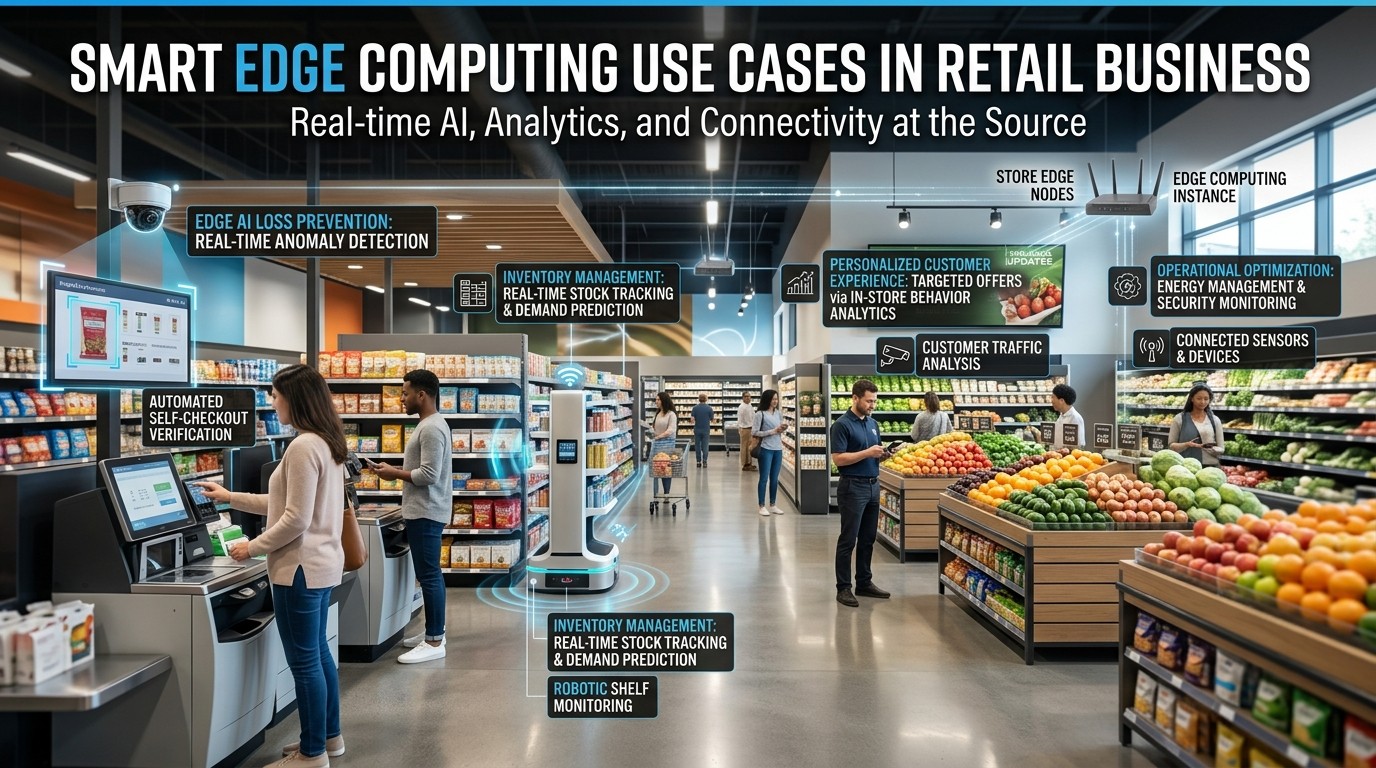
Smart Edge Computing helps retail stores process data closer to the customer, so checkout feels faster, inventory signals arrive sooner, and store decisions can happen with less delay and less friction.
Smart Edge Computing is becoming a practical retail advantage because modern stores need speed at the exact moment shoppers make decisions. Instead of sending every camera feed, sensor event, and checkout signal to a distant cloud first, Smart Edge Computing lets the store act where the data is created. That can improve responsiveness, reduce latency, and support real-time action across the sales floor.
For retail leaders, the question is no longer whether data matters. The question is where that data should be processed so the store can move faster than the customer’s patience runs out. Smart Edge Computing gives retailers a way to make that choice with less guesswork. It is especially useful in stores that rely on AI, computer vision, self-checkout, local analytics, and quick operational responses.
What Smart Edge Computing means in retail
At a technical level, Smart Edge Computing means pushing compute and inference closer to the store, kiosk, or branch instead of depending only on a centralized data center. NIST describes edge computing as a paradigm that improves network performance by collecting and processing data locally or near an edge data center. Microsoft’s Azure Local documentation also emphasizes low-latency decision-making and on-premises deployment for workloads that need to stay close to the source.
In retail, that definition becomes very concrete. Cameras can analyze shelf activity locally, point-of-sale systems can react faster, and loss-prevention tools can make decisions in near real time. Smart Edge Computing is useful because the store can act on what is happening now, not on what happened several seconds or minutes ago. That speed is often the difference between a smooth shopping trip and a stalled one.
Why retailers care about it
Retail is a business where tiny delays become visible very quickly. If checkout is slow, customers notice. If stock data is stale, shelves go empty. If a camera feed lags, loss prevention becomes less effective. Smart Edge Computing helps reduce those weak points by keeping critical processing close to the store floor. Intel’s retail guidance highlights fast checkout, digital signage, self-checkout, product recognition, and in-store analytics as supported use cases, which shows how many different retail pain points edge systems can touch.
| Retail problem | Edge response | Business effect |
|---|---|---|
| Slow checkout | Local AI and faster inference | Shorter lines and better throughput |
| Stale shelf data | Camera and sensor processing at the edge | Fewer stock surprises |
| Limited loss visibility | Real-time product recognition | Better shrink control |
| Generic in-store messaging | Local personalization and signage | More relevant customer experiences |
| Cloud dependency | Local processing with cloud sync | Better resilience and responsiveness |
This is where Smart Edge Computing starts to feel less like a technology trend and more like a store-operations strategy. It helps retailers improve service where customers feel the impact first: on the floor, at the register, and around the shelf.
Self-checkout and frictionless checkout
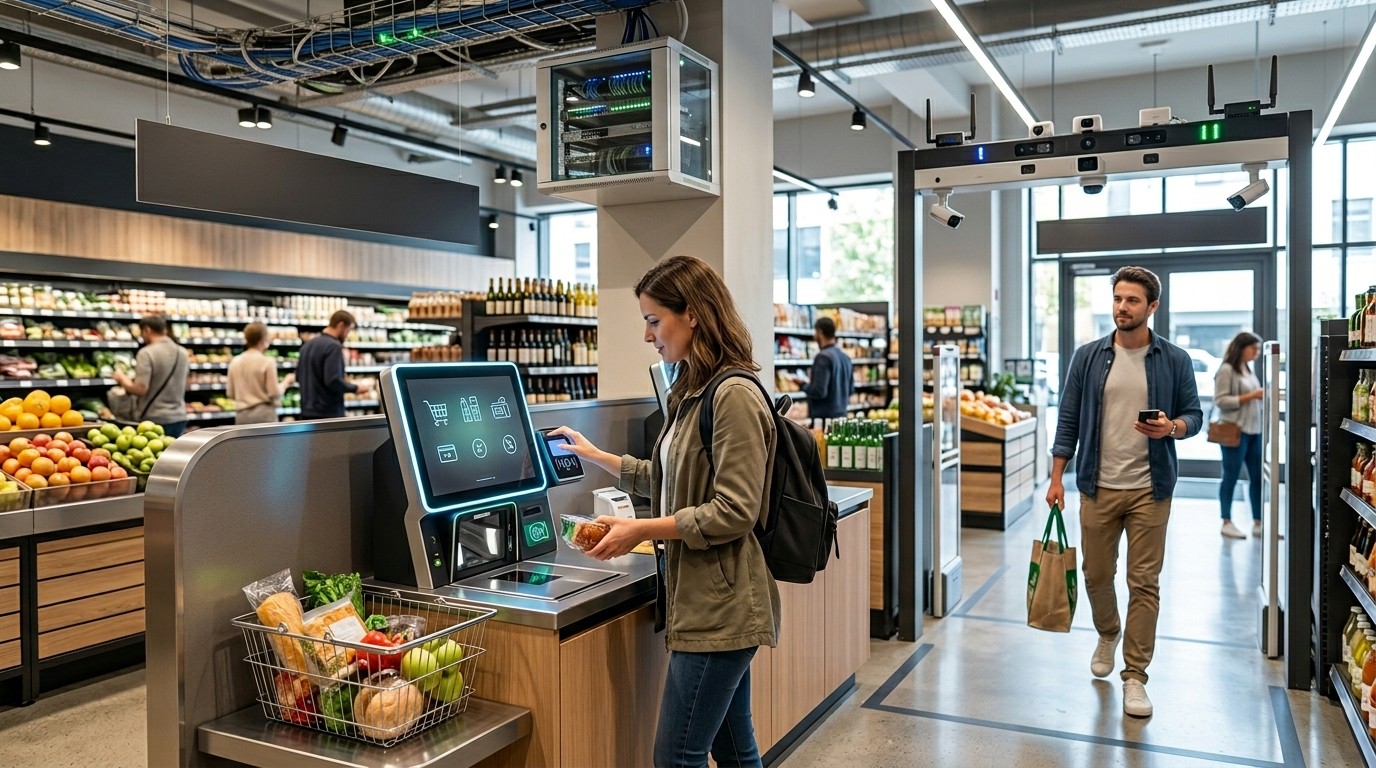
One of the strongest Smart Edge Computing use cases in retail is self-checkout. Intel’s automated self-checkout reference implementation shows how edge hardware and software can identify products faster, recognize SKUs in transparent bags, and reduce the steps needed when there is no exact match. AWS’s Just Walk Out system similarly uses AI, sensors, computer vision, and RFID to remove traditional checkout lines and automate payment when shoppers exit.
This matters because checkout is a high-friction moment. Customers are already ready to leave, and any delay feels bigger than it really is. Smart Edge Computing helps the store respond quickly at the point of action, whether the goal is barcode recognition, automated weighing, or seamless cart tracking. In practical terms, that means the retailer can make payment feel less like a bottleneck and more like a natural finish to the visit.
Inventory visibility and shelf intelligence
Another major Smart Edge Computing use case is inventory visibility. Intel’s retail solutions highlight product recognition, in-store analytics, and order-accuracy management, which are all central to knowing what is actually on the shelf. When stores process video and sensor data locally, they can identify gaps more quickly and trigger faster replenishment workflows. That is especially useful for high-traffic locations where missed stock signals turn into lost sales very quickly.
The operational value is easy to understand. If a system can detect that a fast-moving item is missing or low, the store can act before the customer walks away empty-handed. Smart Edge Computing gives that process more speed and more locality, so shelf intelligence becomes an active part of the store rather than a report that arrives too late. NIST’s explanation of local processing and nearby edge data centers aligns directly with that retail need.
Product recognition and loss prevention
Retailers also use Smart Edge Computing for product recognition and shrink reduction. Intel explicitly lists product recognition for loss prevention and order-accuracy management as supported retail use cases, and AWS says Just Walk Out can track item selection, automate payment, and use AI-powered technology to track inventory and reduce losses. That makes edge vision systems valuable not just for convenience, but for protecting margins.
The psychology here matters too. When a store can react quickly and accurately, staff are freed from chasing every small error manually. Smart Edge Computing supports that trust layer by creating a faster feedback loop between what the camera sees and what the system decides. In a busy environment, that loop can reduce both missed fraud signals and honest scanning mistakes.
Personalized offers and in-store experiences
Smart Edge Computing is also useful for personalization. Intel’s retail page highlights personalized AI shopping agents, smart POS systems, interactive displays, and dynamic digital signage. That means the store can tailor messages and actions closer to the moment of purchase, rather than depending entirely on remote systems. In practice, that creates more relevant experiences at the aisle, kiosk, or checkout lane.
This is also where digital retail and app-based engagement can blend. Retail teams often combine Smart Edge Computing with Best Mobile App Promotion Strategies and Advanced Mobile App Marketing Techniques when loyalty messages, store offers, or app prompts need to reflect what is happening in the physical store. The edge layer gives the retailer a faster context signal, while the app gives the brand a way to continue the relationship after the customer leaves.
Queue reduction and staff efficiency
Long lines affect sales, satisfaction, and labor pressure at the same time. Smart Edge Computing helps by letting checkout, recommendation, and validation tasks happen closer to the shopper. AWS says checkout-free technology can increase throughput, extend operating hours, and improve staff efficiency by freeing employees to help shoppers instead of managing bottlenecks. Intel’s retail materials also emphasize fast, secure checkout and continuous loss prevention.
That is why Smart Edge Computing is so appealing to operations teams. It does not just “automate” something in the abstract. It changes the shape of the workday. Staff can spend less time on repetitive handling and more time on service, stocking, and customer support. That reallocation of attention is one of the most overlooked benefits of edge deployment in retail.
Real-time analytics and better decisions
Retail executives often want dashboards, but stores need action. Smart Edge Computing is valuable because it can support local analytics that turn raw signals into immediate decisions. Intel’s retail use cases include in-store analytics, while Microsoft’s Azure Stack Edge Pro 2 documentation explains that retailers can use edge devices for rapid ML inferencing and preprocessing before sending data to Azure. That means the store can produce actionable insights faster.
This is where Smart Edge Computing stops being just a technical phrase and becomes an operating model. When a store can analyze traffic patterns, queue lengths, or product movement quickly, managers do not have to wait for a nightly batch job to understand the problem. They can respond during the same shift, which is often where the real business value shows up.
Resilience, privacy, and compliance
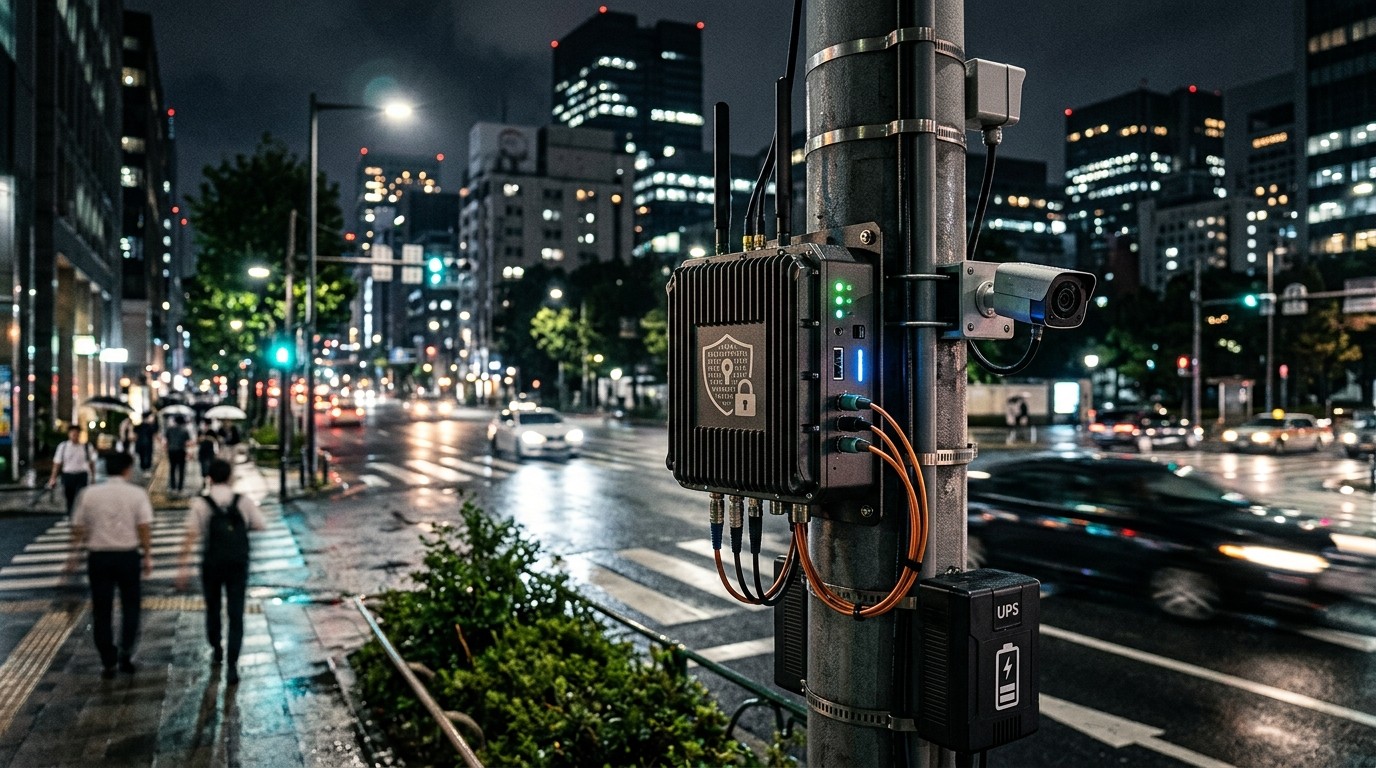
Retail systems also need resilience, and edge processing can help with that. Microsoft’s Azure Local documentation says its on-premises, distributed infrastructure supports low-latency decision-making, business continuity, and workloads that must remain on-premises. For retail, that matters because stores still need core functions to keep working during network issues or cloud interruptions.
Privacy is another reason Smart Edge Computing is attractive. NIST notes that moving IoT processing from the cloud to the edge can create data privacy concerns, which means edge systems need a thoughtful design rather than blind adoption. Retailers using cameras, sensors, or customer-facing AI should treat data handling as part of the system architecture, not as an afterthought. Smart Edge Computing helps by keeping more processing local, but it still needs governance, retention rules, and access control.
Deployment architecture that actually works
A good retail deployment usually combines local inference, local networking, and selective cloud sync. Microsoft’s Azure Stack Edge Pro 2 is designed for retail, telecommunications, manufacturing, and healthcare edge locations, and it supports ML inferencing at the edge along with preprocessing before data is sent to Azure. Azure Local also describes a distributed infrastructure model for modern and legacy workloads across edge and sovereign locations. That combination explains why Smart Edge Computing works best as a hybrid architecture, not a pure cloud replacement.
The best architecture is the one that keeps the store responsive while still allowing central oversight. Video can be analyzed locally, summaries can be uploaded later, and machine-learning models can be retrained in the cloud. Smart Edge Computing gives retailers that split: speed where action happens, scale where learning happens. That is a practical fit for many chains, especially when stores differ in size, traffic, or format.
How Telecom Edge Computing and Industry Edge Computing fit in
Retail edge projects do not live alone. Telecom Edge Computing matters because store locations depend on network reliability and low latency, while Industry Edge Computing describes the broader pattern of running operational workloads closer to where work happens. In retail, that means the network, the device, and the store workflow all need to cooperate. Smart Edge Computing sits at the center of that relationship.
This is also where operational technology and customer technology begin to overlap. A store might use edge processing for cameras, RFID, kiosks, and analytics while the mobile experience still matters for loyalty, offers, and digital engagement. Retail teams sometimes link these efforts with Smart Edge Computing because the same local intelligence that improves the store can also feed the next customer touchpoint. That is a useful bridge between physical retail, app-driven commerce, and the broader IT stack.
A step-by-step rollout plan
A sensible rollout begins with one clear use case. Smart Edge Computing works best when a retailer starts with a pain point such as self-checkout speed, shelf visibility, or loss prevention, then measures the effect before expanding. Intel’s reference implementations show how specific workflows can be built around checkout and computer vision, which is a strong model for a phased implementation.
The second step is to define where the data should be processed and where it should be stored. Smart Edge Computing is strongest when local action happens fast, but cloud systems still handle training, reporting, and central governance. Microsoft’s edge guidance supports that split by emphasizing local inferencing, preprocessing, and cloud integration. If a retailer keeps that architecture simple, the rollout is easier to support and easier to scale.
Common mistakes retailers make
One common mistake is trying to move too many workloads to the edge at once. Smart Edge Computing should be introduced gradually, because each store format may have different network, camera, and staffing conditions. Another mistake is focusing only on hardware and ignoring operational workflows. Intel’s and AWS’s retail materials show that edge systems matter most when they support checkout, recognition, inventory, and throughput—not when they sit idle as impressive boxes in a closet.
A second mistake is forgetting privacy and maintenance. Smart Edge Computing can reduce latency, but NIST’s privacy discussion makes it clear that edge data still needs protection. Retailers who skip data governance, model monitoring, or update planning can create new risks while trying to solve old ones. The better approach is to treat edge systems as living retail infrastructure that needs lifecycle management, not as one-time installations.
How to measure success
The right metrics depend on the use case, but most retailers should track checkout speed, queue length, stock availability, shrink indicators, and response time from signal to action. Smart Edge Computing should not be judged only by technical uptime. It should be judged by whether the store is easier to run and easier to shop in. Intel’s retail materials repeatedly connect edge use cases to revenue protection, customer experience, and operational efficiency, which is a useful lens for measurement.
The most practical KPI is whether the edge system helps the store decide faster. If a shelf alert arrives too late, the system is not delivering value. If a checkout model speeds up the queue, or a vision system catches errors early, then the business impact becomes visible. That is the real promise of Smart Edge Computing: not just better computing, but better retail outcomes.
What the next phase looks like
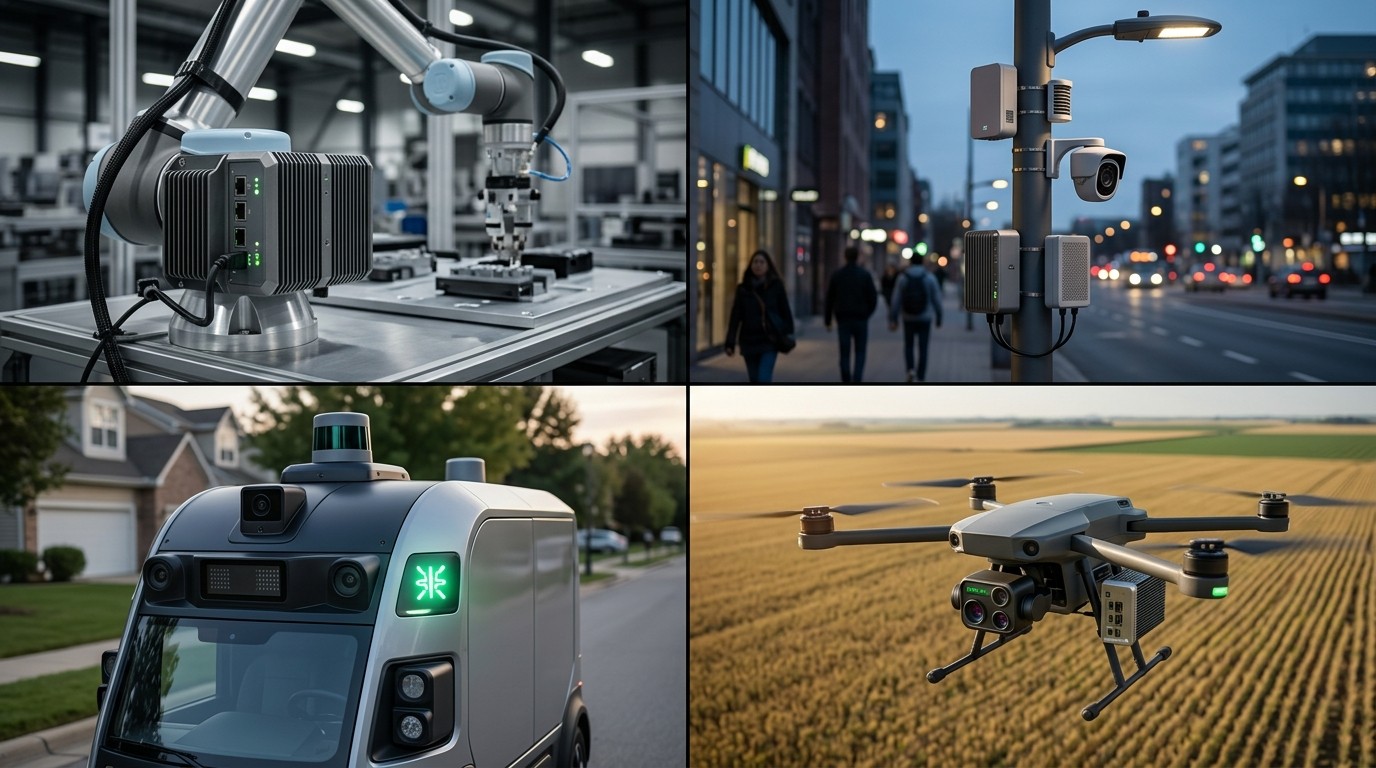
The future of retail edge is likely to be more AI-heavy, more sensor-rich, and more hybrid. Intel’s retail page already points to personalized shopping agents, smart POS, self-checkout, and in-store analytics, while AWS points to autonomous retail and checkout-free experiences. That suggests a market moving toward smarter physical stores rather than less physical retail. Smart Edge Computing will likely be the invisible layer that lets those experiences feel fast enough to trust.
As edge systems mature, retailers will likely use them to connect product movement, customer behavior, and operational response more tightly. The key will be keeping the store responsive without making the architecture overly complex. Smart Edge Computing works best when it stays close to the use case, close to the data source, and close to the customer moment that matters most.
Conclusion
Smart Edge Computing gives retail businesses a practical way to move faster where the customer can feel it most. It supports self-checkout, inventory visibility, loss prevention, personalization, local analytics, and resilient operations by processing critical data near the store instead of relying only on distant systems. That local speed is why the technology matters. It helps stores reduce friction, respond sooner, and protect margins while still keeping cloud systems in the loop for training, reporting, and governance. For retailers that want better service and more agile operations, Smart Edge Computing is not just a technical upgrade. It is a business advantage that shapes the entire shopping experience. Smart Edge Computing becomes most valuable when the store, the network, and the customer journey are designed together.
FAQs
1. What is Smart Edge Computing in retail?
Smart Edge Computing in retail means processing data closer to the store floor so systems can react faster to checkout, inventory, and customer-experience events. NIST and Microsoft both describe edge computing as a way to improve latency and make local decision-making more practical.
2. Why do retailers use Smart Edge Computing for checkout?
Retailers use Smart Edge Computing for checkout because it can help identify items faster, reduce recognition steps, and support faster payment flows. Intel’s self-checkout reference implementation and AWS’s checkout-free retail solution both show how edge processing improves the checkout experience.
3. Can Smart Edge Computing help with inventory?
Yes. Smart Edge Computing can analyze shelf activity and product movement locally, which helps stores spot low stock, missing items, or order-accuracy issues faster. Intel lists in-store analytics and product recognition as supported retail use cases.
4. Is Smart Edge Computing useful for loss prevention?
Yes. Intel explicitly includes product recognition for loss prevention and order accuracy, and AWS says its autonomous retail technology can help track inventory and reduce losses. That makes edge vision systems a strong fit for shrink control.
5. How does Smart Edge Computing improve customer experience?
It reduces waiting, speeds up decisions, and makes in-store interactions feel more responsive. Intel and AWS both connect edge retail systems with faster checkout and more seamless shopping journeys.
6. What role does privacy play in Smart Edge Computing?
Privacy matters because local processing can reduce how much raw data needs to travel, but edge systems still need governance and controls. NIST notes that edge IoT processing can create privacy concerns, so security and retention planning remain essential.
7. Do retailers still need the cloud if they use Smart Edge Computing?
Yes. Most successful retail setups use a hybrid model where the edge handles fast local inference and the cloud handles training, reporting, and central management. Microsoft’s edge documentation supports that split.
8. What kind of stores benefit most from Smart Edge Computing?
Stores with high traffic, checkout friction, frequent stock movement, or camera-heavy operations tend to benefit most. Intel’s materials point to retail stores, kiosks, self-checkout, and in-store analytics as especially strong fits.
9. How should a retailer start using Smart Edge Computing?
The best start is one clear use case, such as self-checkout, shelf visibility, or loss prevention. After proving value in one store or one workflow, the retailer can expand in stages. That phased approach matches the way Intel and Microsoft frame edge deployments.
10. What is the biggest business benefit of Smart Edge Computing?
The biggest benefit is faster action at the point where the business happens. When data is processed locally, the store can respond sooner, protect margins better, and create a smoother experience for shoppers. That is the core retail promise of Smart Edge Computing.