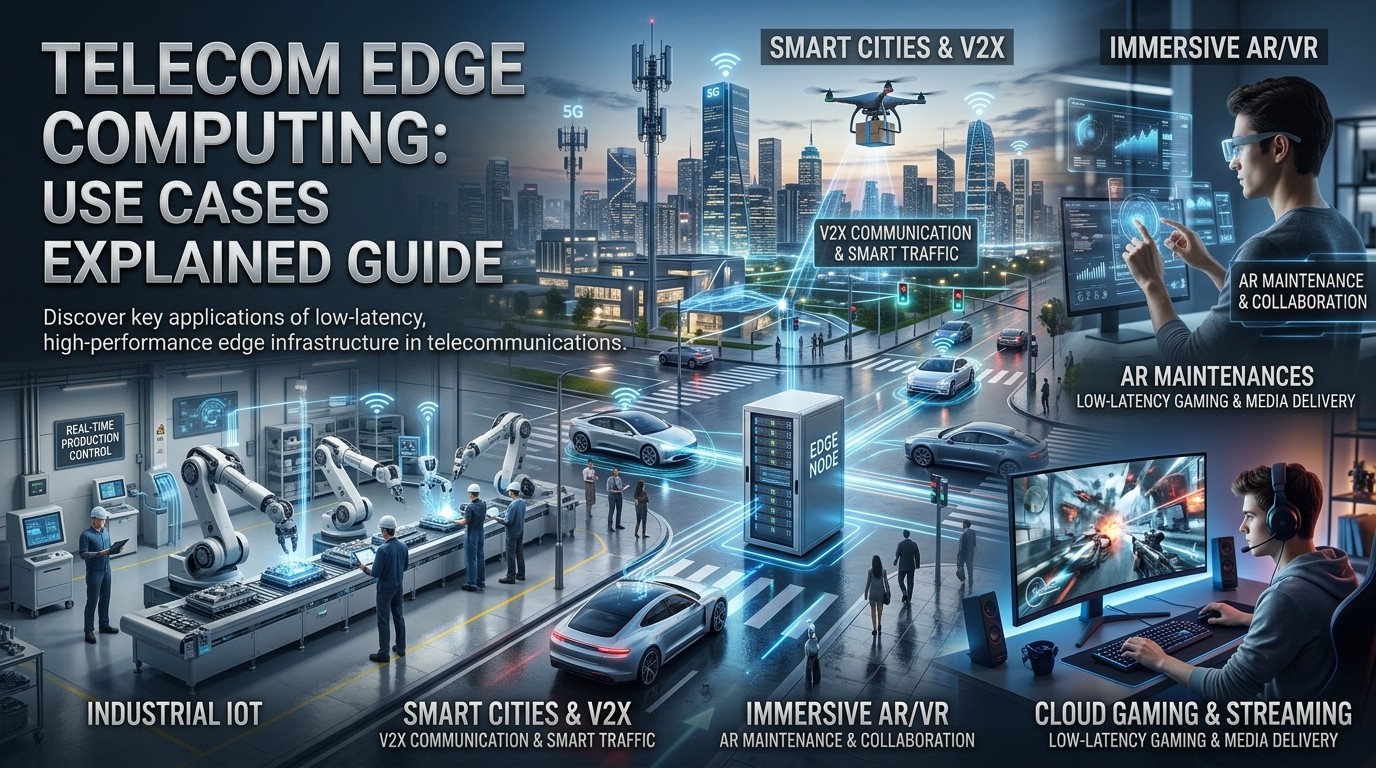
Telecom Edge Computing Use Cases help telecom providers deliver faster, smarter, and more reliable digital services by moving processing closer to users, devices, and time-sensitive workloads.
The telecom industry is changing faster than ever, and the pressure is no longer only about bandwidth. Users expect low latency, instant response, stable video, secure enterprise connectivity, and intelligent real-time experiences. That expectation has changed the way operators design networks, sell services, and compete for market share. In that environment, Telecom Edge Computing Use Cases are not a futuristic concept. They are a practical answer to the growing need for speed, locality, and resilience.
When people talk about network modernization, they often focus on 5G speed, fiber coverage, or cloud migration. Those are important, but they do not solve every problem. Many applications need decisions to happen close to the source of data. A game player cannot tolerate lag. A factory robot cannot wait for a faraway cloud. A telemedicine session cannot depend on unstable round-trip times. That is why Telecom Edge Computing Use Cases matter so much. They make telecom infrastructure more responsive, more efficient, and more commercially valuable.
The most interesting part is that edge computing is not only about technical improvement. It also changes customer psychology. People trust systems that feel immediate. They stay longer when experiences feel smooth. They pay more for reliability when the service clearly reduces friction. Telecom Edge Computing Use Cases sit exactly at this intersection of technology and human behavior. They improve the network, but they also improve how the network is perceived.
This guide explains the major use cases, the business logic behind them, the operational advantages, and the strategic considerations that make edge deployment worthwhile. It is written for readers who want a practical explanation, not just theory. By the end, the value of Telecom Edge Computing Use Cases should feel clear from both a technical and business perspective.
What Edge Means in Telecom
Telecom networks have traditionally been organized around a central model. Data flows from devices through access points to core systems and then often to distant cloud regions before anything useful happens. That structure is efficient for many workloads, but it becomes a problem when the application is time-sensitive. The farther the data travels, the more delay is introduced. Every delay hurts the user experience.
Telecom Edge Computing Use Cases solve this by moving compute closer to where the data is created and consumed. Instead of sending all traffic to the center, operators place resources near towers, base stations, local aggregation points, venue infrastructure, or enterprise sites. The result is shorter paths, faster reactions, and less network strain.
This does not mean the cloud becomes irrelevant. In most modern architectures, central cloud platforms still handle storage, long-term analytics, orchestration, and heavy processing. The edge simply takes on the tasks that benefit from proximity. That split of labor is what makes the model so effective.
Telecom Edge Computing Use Cases should therefore be understood as a design choice. The question is not whether edge is better than cloud in every scenario. The question is where the workload should live to produce the best outcome. For latency-sensitive, high-volume, or privacy-sensitive workloads, the answer often points to the edge.
Why Telecom Operators Care
Operators care because customers care, and customers judge service quality in practical ways. They do not inspect network architecture. They notice whether a call drops, whether video buffers, whether a gaming session lags, or whether a business application feels dependable. Edge Computing Use Cases improve those real-world moments.
The commercial reason is equally strong. Telecom companies are under pressure to differentiate. Connectivity alone is hard to defend as a premium offer because many providers can deliver similar speeds. What creates new value is the ability to support specialized services. Telecom Edge Computing Use Cases help operators offer enterprise-grade latency, local processing, application hosting, and reliability guarantees that basic connectivity cannot provide.
There is also an operational reason. Centralized processing can create bottlenecks when traffic surges. During major events, peak business hours, or dense urban usage periods, the network can become congested. Telecom Edge Computing Use Cases reduce that burden by handling certain workloads locally. That makes the entire system more efficient and more resilient.
Another reason is ecosystem growth. Edge infrastructure can support partners, developers, and service providers that want to build closer to the user. Telecom operators can become platform enablers instead of just transport providers. That shift opens new revenue models and strengthens customer relationships.
Main Categories of Use Cases
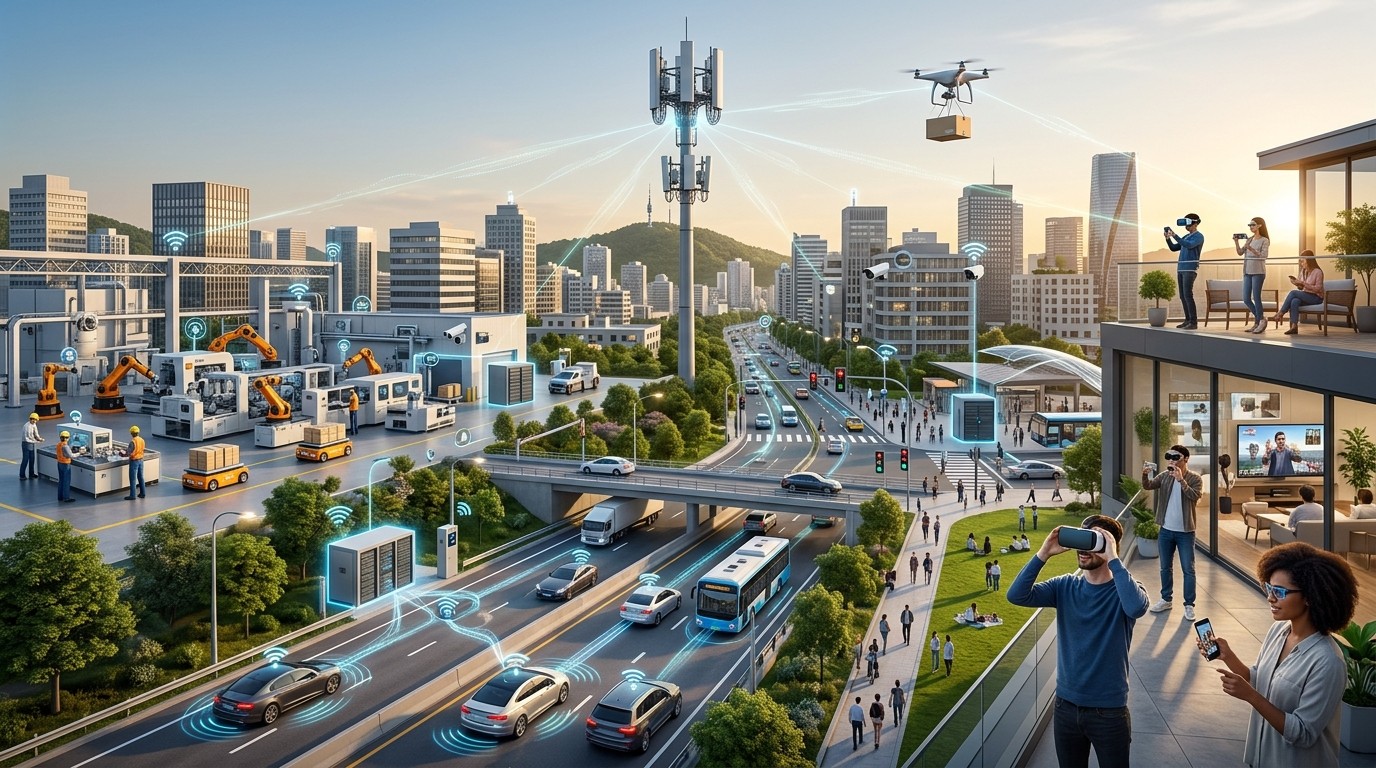
Telecom Edge Computing Use Cases fall into several practical categories. Some are focused on communication performance. Others focus on industrial control, intelligent transport, media delivery, or enterprise applications. A useful way to understand them is to group them by the type of benefit they create.
Low-latency communication use cases improve interactions that must feel immediate. This includes video calls, voice services, cloud gaming, and immersive applications. Processing near the user reduces lag and protects quality.
Operational efficiency use cases improve how the telecom network itself performs. These include traffic optimization, caching, predictive maintenance, and resource balancing. Here, the edge makes the network smarter and cheaper to run.
Enterprise and industry use cases support real-time operations in factories, hospitals, logistics hubs, smart buildings, and campuses. These environments often need deterministic performance and local decision-making.
Content and media use cases improve how streaming, live events, and personalized services reach users. The edge helps content arrive faster and more consistently.
Security and compliance use cases reduce exposure and support local processing of sensitive information. This matters in regulated industries and privacy-sensitive applications.
All of these fit under Telecom Edge Computing Use Cases because they share one principle: proximity creates value.
Communication and Collaboration
Real-time communication is one of the clearest areas where edge architecture delivers immediate value. Video conferencing, voice over IP, collaborative editing, and live customer support all work better when latency is low and packet delivery is stable. Even a small delay can make a conversation feel awkward, especially when multiple users are connected across devices and regions.
Telecom Edge Computing Use Cases improve this by positioning processing resources near the access network. That means encoding, transcoding, packet handling, and session support can happen with less delay. The result is a smoother call, cleaner audio, and more reliable video.
This matters particularly in business communication. A distributed workforce expects meetings to be seamless. A customer support team expects sessions to stay stable. A remote expert expects rapid response while guiding a technician in the field. In all of these scenarios, a slower network reduces confidence. Telecom Edge Computing Use Cases help preserve that confidence.
Telecom Edge Computing Use Cases also help messaging and collaboration platforms handle spikes. During major announcements, product launches, crises, or business peak times, traffic can surge suddenly. Edge resources absorb some of that pressure so the platform remains usable.
Cloud Gaming and Interactive Entertainment
Gaming is one of the most demanding consumer use cases because users react instantly to delay. A few milliseconds can affect gameplay performance, control precision, and overall satisfaction. That is why Telecom Edge Computing Use Cases are so relevant to cloud gaming and interactive entertainment.
In a cloud gaming model, the game logic and rendering may happen in a remote environment, but the user expects instant input response. Edge nodes reduce the distance between the player and the compute layer. That shortens the feedback loop and makes the experience feel far more natural.
Telecom Edge Computing Use Cases also support interactive entertainment that goes beyond gaming. This includes live polling, second-screen experiences, AR-based events, interactive streaming, and socially shared digital events. The more immersive the experience, the more important latency becomes.
Operators that support these applications are not just transporting data. They are helping create entertainment experiences that are sticky, monetizable, and brand-defining. That is why gaming is often one of the first use cases discussed in edge strategy planning.
Immersive Media and XR
Augmented reality and virtual reality are highly sensitive to timing. If the visual feedback arrives too late, users feel disoriented or disconnected from the experience. Telecom Edge Computing Use Cases are especially important here because immersive media cannot rely on large round-trip delays.
Edge resources can manage motion-sensitive inference, positional updates, scene rendering support, and synchronization tasks. This helps maintain visual consistency and reduces the discomfort that comes from lag. For enterprise training, remote design, virtual tours, and collaborative XR environments, that reliability matters.
Telecom Edge Computing Use Cases also help venue-based immersive experiences. Concerts, museums, sports arenas, and retail environments increasingly use AR and VR to create deeper engagement. Edge support lets the experience feel local, fast, and seamless.
The more interactive the media becomes, the more the edge matters. Static content can travel far. Real-time content cannot wait.
Smart Cities and Urban Infrastructure
Smart cities are built on rapid sensing and rapid response. Cameras, traffic lights, environmental sensors, public safety systems, and connected transit all generate continuous data. If that information must travel far before being processed, the city loses responsiveness.
Telecom Edge Computing Use Cases support smart city systems by enabling local intelligence. Traffic congestion can be detected quickly. Public safety events can be analyzed faster. Environmental anomalies can trigger immediate alerts. Transit systems can react to conditions in near real time.
This matters because cities are dynamic. Traffic density changes quickly. Emergency conditions evolve rapidly. Infrastructure failures can cascade. Telecom Edge Computing Use Cases help cities respond at the speed of the event rather than the speed of centralized processing.
They also help reduce unnecessary data movement. A city does not need every raw sensor stream shipped to a distant region if local analysis can produce the same decision faster and more efficiently. That efficiency matters both technically and financially.
Industrial Automation and Manufacturing
Industrial environments are among the strongest examples of why edge matters. Factories and production sites depend on precise timing, machine coordination, safety monitoring, and rapid feedback. A delay that might be acceptable in a consumer app could be catastrophic in a manufacturing line.
Telecom Edge Computing Use Cases support industrial automation by moving inference, analytics, and control-adjacent workloads closer to the machines themselves. This enables predictive maintenance, quality inspection, robotics support, and process monitoring.
Predictive maintenance is especially valuable. Sensors can detect vibration, temperature, or pressure anomalies before a machine fails. When local edge nodes analyze those signals immediately, the organization can respond before costly downtime occurs.
Quality inspection also benefits. Cameras and vision models can check products in real time, identify defects, and trigger corrective actions on the spot. Telecom Edge Computing Use Cases make that faster and more practical because the data does not need to travel first.
There is also a safety dimension. Industrial systems often need deterministic performance. The edge helps maintain that control while keeping essential processing close to the operational environment.
Healthcare and Medical Services
Healthcare applications need reliable responsiveness because lives can depend on speed. Telemedicine, remote monitoring, ambulance connectivity, and diagnostic support all benefit from edge deployment.
Telecom Edge Computing Use Cases help telemedicine by reducing video delay and stabilizing remote consultation sessions. Doctors and patients communicate more naturally when the connection feels smooth and responsive. Medical teams can also share imaging and data more effectively.
Remote monitoring is another important area. Wearables and connected medical devices generate continuous streams of vital information. Edge processing can analyze those signals rapidly and raise alerts when patterns indicate risk. That speed can be crucial for intervention.
Emergency services benefit too. Connected ambulances can send live data, route information, and patient updates to care teams before arrival. Telecom Edge Computing Use Cases help ensure the information reaches the right people quickly enough to be useful.
The healthcare value of edge is not just technical. It is deeply human. Faster response can improve outcomes, reduce anxiety, and support more confident care decisions.
Content Delivery and Live Streaming
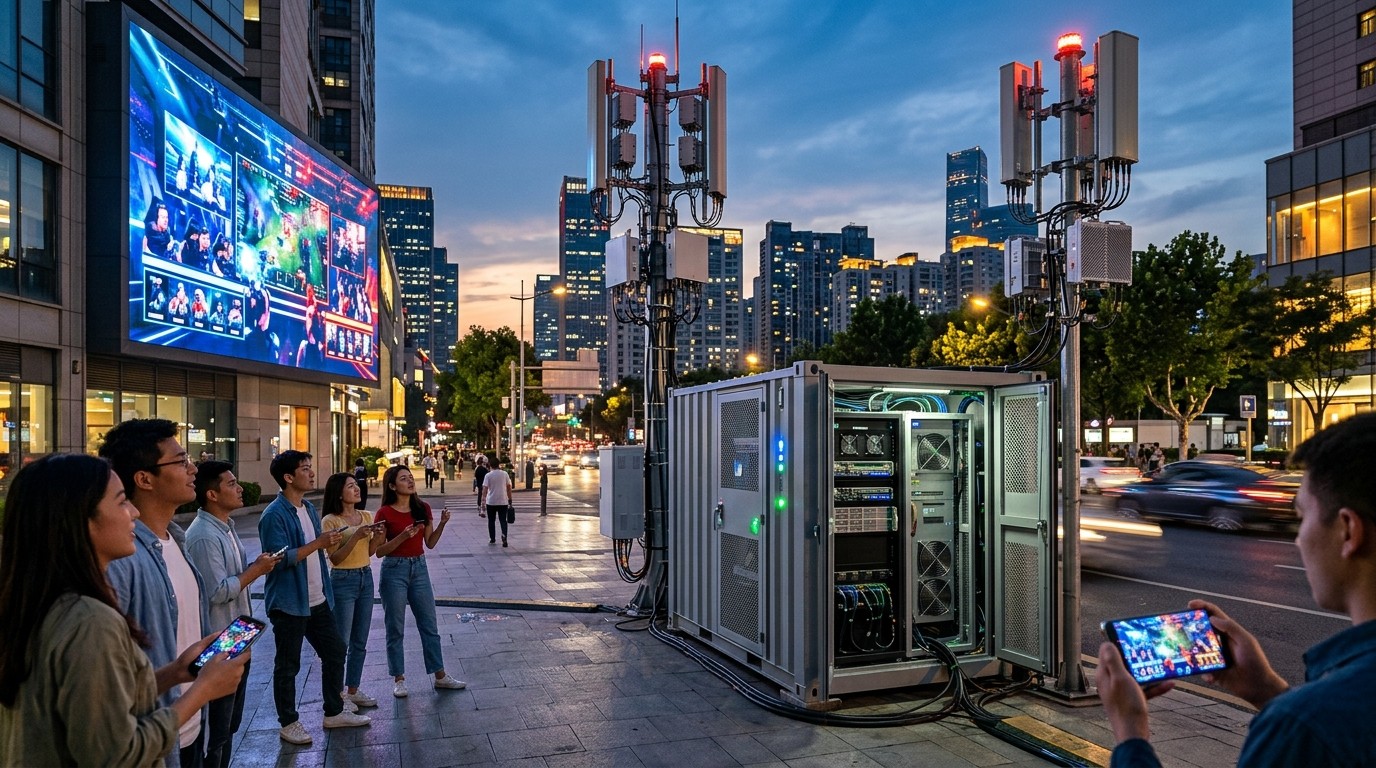
Content delivery is another major area where edge adoption creates visible improvements. Streaming services face constant pressure to deliver high-quality video with minimal buffering. When many users request the same content, centralized systems can become overloaded.
Telecom Edge Computing Use Cases support local caching and delivery optimization. Frequently accessed content can be stored closer to users, reducing repeated long-distance data transfer and improving playback speed. This lowers strain on the core network while making streaming feel more responsive.
Live events benefit even more. A major sports match, concert, or conference can generate traffic spikes that overwhelm ordinary delivery paths. Edge resources help distribute load and maintain better stability under pressure. That protects the viewing experience during the moments that matter most.
Telecom Edge Computing Use Cases also support adaptive delivery and personalization. The edge can help tailor content quality, responsiveness, and recommendation logic to local conditions without forcing every decision into the central cloud.
Enterprise Connectivity and Private Networks
Enterprises increasingly want connectivity that does more than provide access. They need networks that support business logic, local processing, and application-specific performance. This is where Telecom Edge Computing Use Cases become a strategic enterprise offering.
Private networks in campuses, warehouses, ports, hospitals, and factories often need local compute. That compute can support internal applications, real-time analytics, security systems, automation workflows, and operational dashboards. The edge provides a natural layer for those services.
Telecom Edge Computing Use Cases also help telecom providers create differentiated enterprise packages. Instead of selling only access, they can sell performance guarantees, application hosting, managed edge services, and integrated support. That expands the commercial relationship.
From the enterprise perspective, the edge makes digital operations faster and more predictable. From the telecom perspective, it creates higher-value customer relationships.
Security, Privacy, and Compliance
Telecom Edge Computing Use Cases often reduce the movement of sensitive data, which can help with privacy and compliance. When data is processed locally, less of it needs to travel across the network or be stored in distant systems.
That is useful in regulated sectors like healthcare, finance, transportation, and public services. It is also useful for any organization that wants tighter control over where data is handled.
Telecom Edge Computing Use Cases can also strengthen security operations. Local monitoring can identify suspicious traffic, abnormal device behavior, or system anomalies sooner than distant systems would. Faster detection means faster response.
However, distributed architecture also introduces complexity. More edge sites mean more surfaces to manage. Operators need strong access control, encryption, patching, orchestration, and policy enforcement. Security must be designed into the system from the start.
Network Optimization and Operational Intelligence
Telecom networks themselves benefit from edge deployment. Operational use cases often create immediate ROI because they improve how the telecom system runs.
Telecom Edge Computing Use Cases support traffic balancing, congestion awareness, caching, and dynamic workload placement. Edge analytics can help operators understand where bottlenecks are forming and how to redirect traffic more effectively.
This improves the customer experience without always requiring large capital expansion. Instead of overbuilding the entire network, operators can place resources where the pressure is greatest.
Telecom Edge Computing Use Cases also improve observability. Local metrics can reveal device health, site conditions, and traffic anomalies quickly. That makes maintenance smarter and more proactive.
Predictive maintenance of telecom infrastructure itself is another operational advantage. Edge systems can help identify failing components before service degradation becomes visible to customers.
Monetization Opportunities
Telecom Edge Computing Use Cases create new revenue logic for operators. The old model centered on connectivity and data volume. The new model can include applications, performance tiers, industry bundles, and premium low-latency services.
This is where Telecom Edge Computing Use Cases become a business model, not just an infrastructure choice. Operators can charge for:
- Low-latency service tiers
- Managed private edge environments
- Industry-specific platforms
- Application hosting
- Premium uptime guarantees
The opportunity is especially strong in enterprise markets where buyers care about outcomes. A factory does not just want connectivity. It wants stable robotics, inspection speed, and operational continuity. A hospital does not just want bandwidth. It wants reliable real-time communication and secure data handling.
Telecom Edge Computing Use Cases help transform that demand into revenue by aligning infrastructure capabilities with business results.
Planning a Successful Deployment
A strong edge program begins with clarity. Operators need to know which workloads are best suited for local processing. Not every application belongs at the edge. The most promising candidates are those with strict latency, locality, or reliability requirements.
The next step is pilot design. Telecom Edge Computing Use Cases should first be tested in controlled environments where the operator can measure latency reduction, user response, operational impact, and cost implications. A good pilot reveals both value and complexity.
Then comes standardization. Edge systems work best when orchestration, monitoring, and security are repeatable. Every site should not become a one-off engineering project. Telecom Edge Computing Use Cases scale more effectively when they are built on a consistent operating model.
Operators should also define success metrics early. These might include response time, throughput, uptime, customer satisfaction, adoption rate, or revenue uplift. Clear metrics keep the project focused on business value rather than technical novelty.
Business Psychology and Adoption
Technology adoption is never only about hardware. It is about perception, trust, and clarity. Telecom Edge Computing Use Cases are more likely to succeed when the value proposition is easy to understand.
Customers respond to benefits that feel concrete:
- Faster response
- Better reliability
- Smoother video
- Improved operations
- Safer systems
These outcomes reduce ambiguity. That matters because buyers hesitate when the value is hard to picture. The more tangible the benefit, the easier it is to justify adoption.
This is one reason telecom teams sometimes borrow ideas from Mobile App Marketing. They need simple positioning, clear proof, and outcome-driven messaging. Technical sophistication matters, but clarity is what drives action.
At the same time, teams watch Top Mobile App Marketing Trends because user expectations for speed, personalization, and frictionless experiences continue to rise across digital products. Those expectations influence telecom service design more than many people realize.
The Role of Industry Context
Different sectors use edge in different ways. In manufacturing, the focus may be control and safety. In entertainment, it may be latency and immersion. In healthcare, it may be responsiveness and privacy. In smart cities, it may be scale and coordination.
That is why Telecom Edge Computing Use Cases must be adapted to industry context. A one-size-fits-all deployment strategy rarely works. The best approach is to match the workload, the customer need, and the economic model.
This is also where the phrase Industry Edge Computing becomes relevant. Industry-specific edge strategy often overlaps with telecom infrastructure because telecom networks provide the connectivity and local processing layer that industrial services depend on.
Future Outlook
Telecom Edge Computing Use Cases will continue expanding as applications become more interactive, intelligent, and time-sensitive. The more businesses depend on real-time digital systems, the more important the edge becomes.
We are moving toward an environment where intelligence is distributed across cloud, core, and local edge layers. That structure will allow telecom networks to support more advanced services without forcing every task into a distant data center.
Future growth areas likely include autonomous mobility, digital twins, industrial AI, immersive collaboration, real-time commerce, and adaptive user experiences. Telecom Edge Computing Use Cases will sit at the center of many of those developments.
The long-term winners will be the operators that treat edge as a platform, not a one-off project. They will build flexible systems, strong partnerships, and clear business cases around it.
Conclusion
Telecom edge computing is no longer an abstract innovation story. It is a practical architecture that helps telecom operators respond to the needs of modern digital life. Whether the goal is faster communication, smarter cities, reliable healthcare, immersive entertainment, industrial automation, or enterprise-grade connectivity, the edge creates value by moving intelligence closer to the action. That proximity improves speed, reduces strain on core systems, and opens doors to new revenue models. The organizations that succeed with edge will be the ones that pair technical discipline with clear use-case selection, measurable results, and customer-focused thinking. In a market where users expect instant performance and business clients expect dependable outcomes, edge computing is becoming one of telecom’s most important strategic advantages.
Frequently Asked Questions (FAQ)
1. What are Telecom Edge Computing Use Cases?
Telecom Edge Computing Use Cases are practical scenarios where telecom operators place compute closer to users or devices to improve speed, responsiveness, and service quality.
2. Why are Telecom Edge Computing Use Cases important?
They are important because many modern applications need low latency, local processing, and reliable real-time performance.
3. Which industries benefit most from edge computing in telecom?
Healthcare, manufacturing, gaming, smart cities, transportation, media, and enterprise operations benefit heavily from edge-enabled telecom services.
4. Does edge computing replace cloud computing?
No. Edge complements cloud computing. The cloud handles centralized tasks, while the edge handles latency-sensitive or local workloads.
5. How does edge computing improve telecom networks?
It reduces congestion, lowers latency, improves responsiveness, and helps operators manage traffic more efficiently.
6. Can edge computing support AI applications?
Yes. It is highly useful for local AI inference, real-time analytics, and rapid decision-making.
7. Is edge computing secure?
It can be secure when properly designed, but distributed environments require strong security controls and operational discipline.
8. What business value does edge provide telecom operators?
It can improve customer experience, create premium service tiers, support enterprise offerings, and open new revenue opportunities.
9. What are the biggest deployment challenges?
Infrastructure complexity, security management, orchestration, and cost control are the main challenges.
10. What is the future of Telecom Edge Computing Use Cases?
The future includes more real-time applications, more distributed intelligence, and deeper integration with AI, automation, and enterprise digital services.