Edge Computing Use Cases reduce latency, improve resilience, and let organizations act on data where it is created, enabling faster decisions and more reliable user experiences.
Edge Computing Use Cases are becoming central to digital transformation because modern systems create too much data to send everywhere at once. Businesses need faster responses, lower network strain, and better control over operations. When data is processed near machines, vehicles, stores, towers, or sensors, teams can react in real time instead of waiting on distant servers. That is why Edge Computing Use Cases matter across industries that depend on speed, precision, and uptime. In practice, Edge Computing Use Cases also help teams turn raw telemetry into decisions before small problems become expensive.
The idea is simple, but the impact is large. Rather than sending every signal to the cloud, organizations process critical information close to the source and forward only what truly needs deeper analysis. That approach lowers bandwidth use, improves reliability during network disruptions, and makes it easier to support time-sensitive workflows. In practice, Edge Computing Use Cases support smarter monitoring, faster automation, safer control systems, and more responsive digital services.
What Edge Computing Really Means
At its core, edge computing shifts computation away from centralized infrastructure and closer to the point where data is generated. That point can be a factory floor, a retail store, a telecom tower, a hospital device, a vehicle, or a distribution hub. The closer processing happens to the action, the lower the delay.
Edge Computing Use Cases are valuable because many modern operations cannot tolerate waiting. A delay of even a few milliseconds can affect a machine, slow a checkout system, or weaken a security response. When teams understand this, they see that edge is not a replacement for cloud. It is a complement. Cloud systems still handle storage, orchestration, training, and large-scale analytics, while edge systems handle immediate decisions and local control.
This hybrid structure creates flexibility. It lets organizations use cloud resources for long-term intelligence while relying on local processing for urgent tasks. The result is a more balanced architecture that supports both scale and speed.
Why Businesses Care
The business case for Edge Computing Use Cases is built on four practical outcomes: lower latency, better resilience, stronger privacy, and more efficient bandwidth use. These benefits sound technical, but they translate into everyday value. Faster checkout, fewer service interruptions, less downtime, and smoother customer experiences all create measurable return.
Another reason businesses invest is control. When sensitive data stays closer to the source, it can reduce exposure and simplify compliance. That matters in healthcare, finance, manufacturing, and public infrastructure. It also matters when internet connectivity is unstable or expensive. Local processing helps organizations stay functional even when the connection to a central cloud is limited.
Many decision makers also like the scalability of the model. They can start with one site, one store, or one plant, then expand gradually. That makes Edge Computing Use Cases attractive to both large enterprises and smaller operators that want to modernize without rebuilding everything at once.
Core Benefits in Plain Language

There are several simple ways to understand the value of Edge Computing Use Cases. First, they make systems feel faster. When a sensor, app, or machine gets an immediate response, users notice the difference. Second, they reduce traffic over the network. That means less cost and less congestion.
Third, they help systems keep working during interruptions. A local node can continue making decisions even if the cloud connection is delayed or lost. Fourth, they improve the quality of data that reaches central systems because only important events are forwarded. That cuts noise and improves downstream analytics.
These benefits are especially important where every second matters. A retailer does not want a payment flow to stall. A factory does not want a line to pause because an unnecessary cloud round trip is slowing an alert. A telecom operator does not want service quality to suffer during traffic spikes. In each of those situations, Edge Computing Use Cases create practical stability.
A Quick View of Major Industry Patterns
| Industry | Common Need | What Edge Adds | Typical Outcome |
|---|---|---|---|
| Retail | Fast transactions | Local processing at store level | Shorter checkout delays |
| Manufacturing | Machine monitoring | Real-time inspection and control | Less downtime |
| Healthcare | Sensitive device data | Local analysis near equipment | Faster clinical responses |
| Logistics | Fleet visibility | On-vehicle and depot intelligence | Better route decisions |
| Energy | Remote asset monitoring | Local event detection | Safer operations |
| Telecom | Network optimization | Processing near towers and base stations | Better service quality |
These are only examples, but they show a consistent pattern. Edge Computing Use Cases solve problems when data volume is high, connectivity is uneven, or response time matters too much to rely only on distant infrastructure. The more immediate the decision, the stronger the fit.
Telecom Networks and the Need for Speed
Telecom operators face some of the clearest opportunities because their networks must support massive traffic with minimal delay. Video calls, gaming, IoT devices, industrial sensors, and smart city systems all create pressure on the network. That is where Edge Computing Use Cases become especially valuable.
In a telecom environment, local processing can manage traffic optimization, service quality monitoring, predictive maintenance, and content caching. The benefit is not just technical performance. It is also customer satisfaction. When users experience fewer lags and better reliability, churn goes down and trust rises.
Telecom Edge Computing Use Cases often include smart routing, real-time packet inspection, tower-level analytics, and low-latency services for premium customers. These use cases matter because the network itself becomes a platform for new revenue. Instead of only transmitting data, telecom companies can offer location-aware, latency-sensitive services that require processing near the edge.
Another reason telecom teams invest is operational insight. Local analytics can reveal equipment issues before they become outages. That means field teams can intervene earlier and protect service continuity. In this sense, Edge Computing Use Cases are not just about speed; they are about smarter network operations.
Manufacturing and Industrial Environments
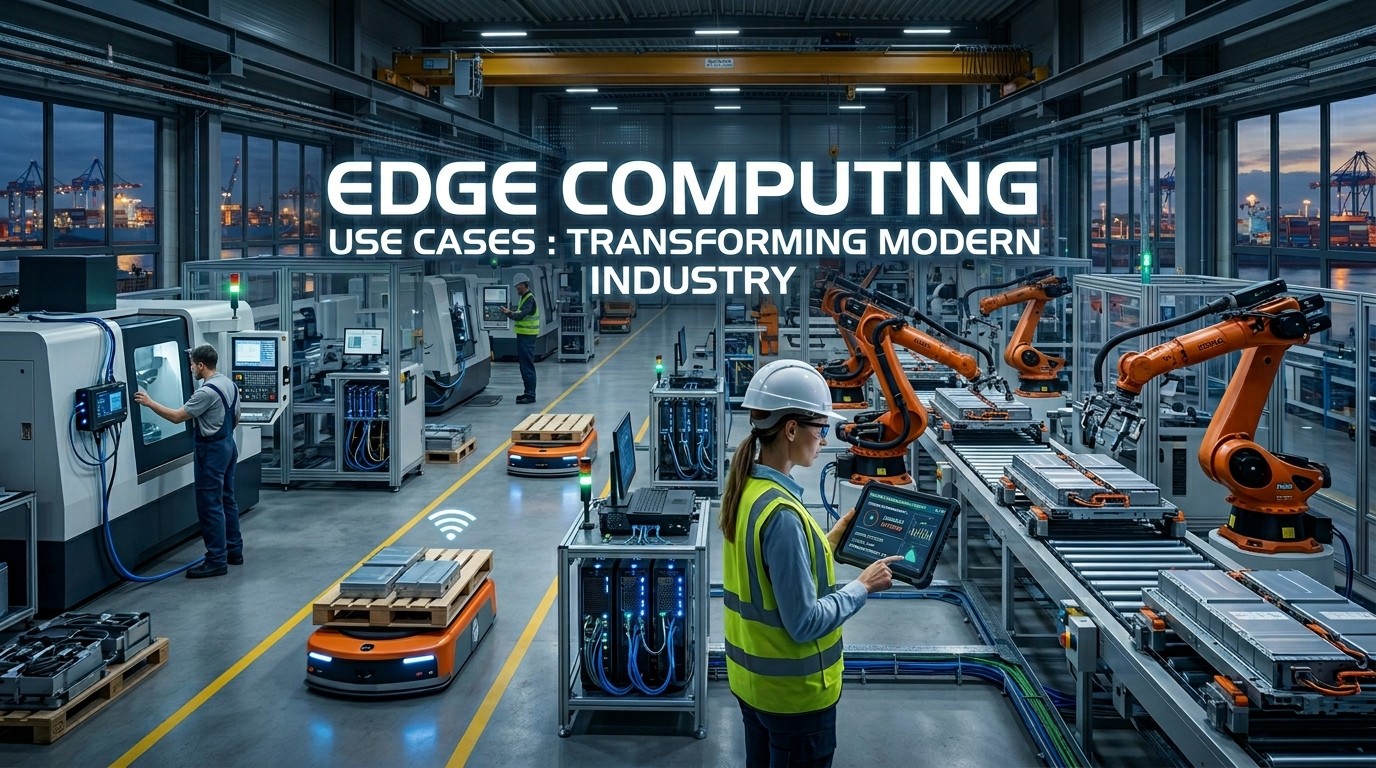
Factories are full of devices that generate continuous signals. Machines vibrate, heat up, slow down, and produce output variations that can reveal trouble long before a failure happens. In that environment, Edge Computing Use Cases support predictive maintenance, quality inspection, digital twins, and automated safety responses.
A local node can analyze sensor data instantly and alert operators when a threshold is crossed. That helps prevent waste, protect workers, and avoid expensive shutdowns. In visual quality control, edge systems can inspect products on the line and reject defects before they move downstream. That is faster and more efficient than sending every image to a distant cloud.
Industry Edge Computing Use Cases in manufacturing often focus on repeatability and resilience. Industrial sites cannot afford long pauses or unreliable links, so local compute becomes part of the control fabric. When implemented well, it supports leaner operations and better asset utilization.
This is also where coordination matters. Machines, controllers, and monitoring dashboards must agree on what happens next. A failure to synchronize can create false alerts or missed defects, so the architecture must be designed carefully. When that design is strong, Edge Computing Use Cases become a major driver of productivity.
Healthcare and Patient-Centered Systems
Healthcare is another sector where timing and privacy are both crucial. Medical devices, wearable monitors, imaging systems, and bedside equipment create large volumes of data that may need immediate interpretation. Edge Computing Use Cases allow hospitals and clinics to process that data near the patient, which can improve responsiveness while reducing unnecessary data exposure.
A local system can monitor heart rate abnormalities, respiration patterns, device status, or room occupancy without waiting for a remote server. That is useful in urgent care settings, remote clinics, and connected care environments. It also helps reduce latency in telemedicine workflows where quick feedback improves the experience for patients and staff.
Healthcare teams often care about compliance, auditability, and reliability. Local processing can support these goals by limiting unnecessary data movement and keeping critical functions running even when connectivity is imperfect. In this field, Edge Computing Use Cases are best understood as an operational safety layer as well as a digital innovation layer.
The value is not only technical. Patients and clinicians feel more confident when systems respond quickly and consistently. That confidence can influence adoption as much as raw performance. In hospitals, trust is as important as speed, and Edge Computing Use Cases help build both.
Retail, Commerce, and Customer Experience
Retail depends on speed, accuracy, and consistency at the point of interaction. Customers do not want to wait for a payment terminal, self-checkout kiosk, recommendation engine, or inventory lookup to sync with a distant server. Edge Computing Use Cases keep those experiences smooth by handling decisions locally.
A store can use edge systems to detect stock changes, personalize in-aisle offers, monitor shelf conditions, and coordinate checkout traffic. This makes the shopping experience more seamless. It also helps store teams respond in real time rather than discovering problems after the fact.
Retailers benefit when local devices can continue operating during network instability. That protects sales and preserves customer trust. It also helps physical stores become more intelligent without requiring every interaction to depend on the cloud. The result is a more responsive environment that blends digital convenience with in-person service.
For omnichannel brands, Edge Computing Use Cases also improve consistency across locations. A central platform can manage policy and analytics, while edge nodes handle local execution. That balance is especially useful during promotions, seasonal spikes, or busy shopping periods when every second counts.
Logistics, Transportation, and Moving Assets
Goods do not stay in one place, and that creates a different kind of challenge. Trucks, ships, trains, drones, and warehouse robots all generate movement data that is most useful when processed quickly. Edge Computing Use Cases are well suited to this world because they can support navigation, telemetry, route optimization, and condition monitoring in motion.
A vehicle may need to evaluate location, temperature, fuel consumption, or cargo conditions in real time. Waiting to send every signal to a cloud platform is often too slow, especially when conditions change rapidly. Edge systems let transport operators make local decisions, then synchronize important information later.
This is where reliability is essential. Networks may be inconsistent across highways, ports, or rural areas. Local processing helps maintain service continuity under those conditions. It also enables safer operations because alerts can trigger immediately if cargo is compromised or a vehicle experiences a problem.
Logistics teams often see Edge Computing Use Cases as a bridge between visibility and action. Tracking alone is not enough. The real value comes when the system can respond, reroute, or intervene before a delay becomes expensive.
Energy, Utilities, and Remote Infrastructure
Power grids, substations, wind farms, solar fields, and water systems often operate in remote or distributed environments. That makes latency, bandwidth, and resilience especially important. Edge Computing Use Cases help these systems monitor assets, detect anomalies, and support local control without depending entirely on central connectivity.
In energy operations, a local edge node can evaluate load changes, equipment vibration, temperature shifts, or power quality variations. That allows faster intervention and better preventive maintenance. In utilities, edge systems can help reduce service disruption and support safer management of critical infrastructure.
Remote assets also benefit from reduced data transfer. Sending every measurement back to a central location can be expensive and inefficient. By processing at the site, operators can forward only valuable events, summaries, or exceptions. That lowers overhead while keeping essential intelligence available.
Energy providers care deeply about uptime and safety. A delay in response can affect service, equipment lifespan, and public trust. That is why Edge Computing Use Cases are not a niche tactic in this sector. They are increasingly a core operational capability.
Smart Cities and Public Services
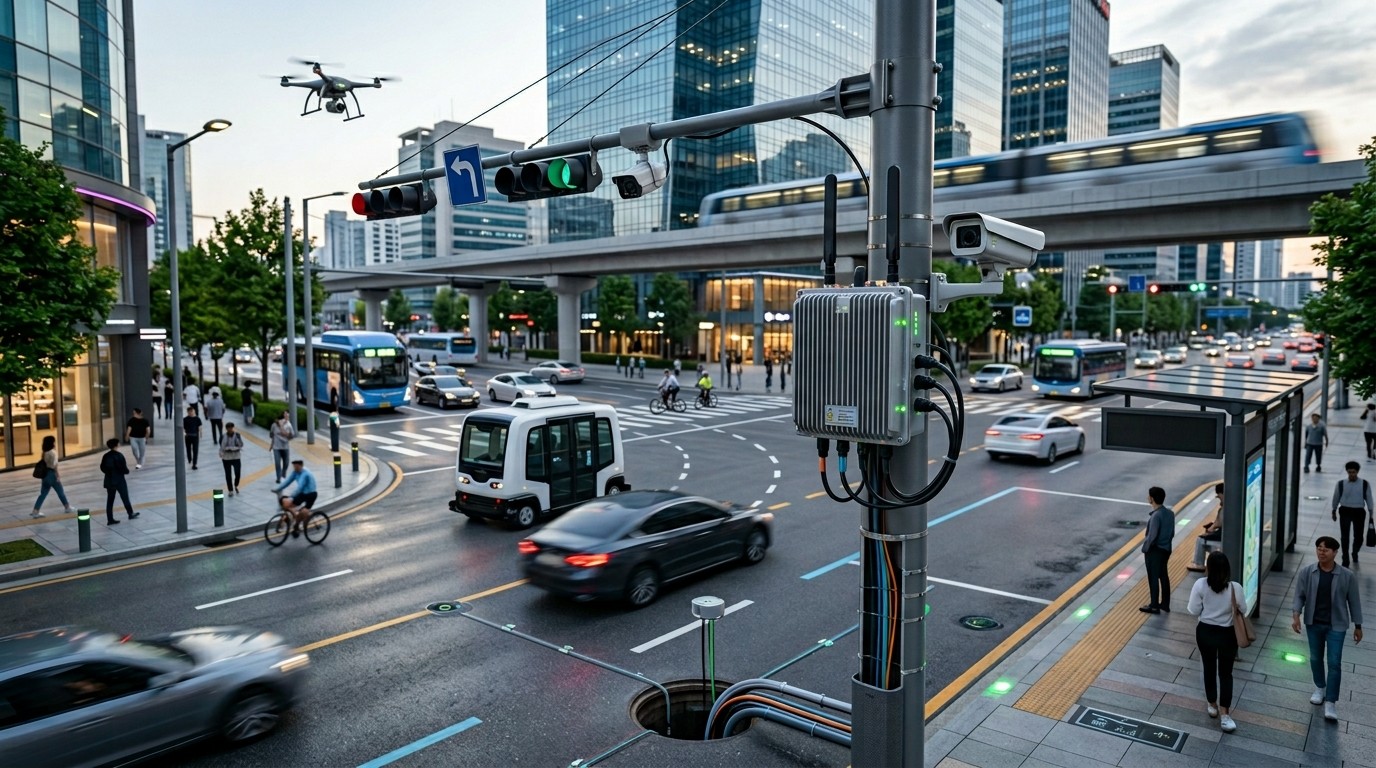
Cities generate constant streams of traffic data, environmental readings, surveillance footage, utility metrics, and public-service signals. The challenge is not collecting data; it is responding to it fast enough to matter. Edge Computing Use Cases help local governments and urban service providers process information near the source so they can act in real time.
Traffic lights can adapt to congestion. Street systems can identify outages. Public safety cameras can detect events without sending every frame to a remote server. Environmental monitors can flag air quality issues locally and trigger faster responses. All of this reduces delay and improves relevance.
Urban environments also benefit from distributed architecture because not every system can rely on a single central point. A localized model improves resilience during outages, spikes, or maintenance windows. That makes services more dependable for residents and administrators alike.
City planners often like that Edge Computing Use Cases support incremental deployment. They can begin with one district, one service, or one corridor, then scale based on results. That practical rollout model lowers risk while building momentum.
Security, Privacy, and Governance
Security is one of the strongest reasons organizations adopt edge architectures. Moving less raw data across networks reduces exposure. It also gives organizations more control over where sensitive data is processed and stored. Edge Computing Use Cases are especially relevant when privacy, compliance, and security obligations are strict.
Local processing can help filter data before it leaves a site. That means only the necessary information moves upstream. In many cases, this reduces the attack surface and simplifies governance. It can also support faster detection of suspicious activity because local systems do not have to wait for centralized analysis.
However, edge also introduces new responsibilities. Distributed nodes must be patched, monitored, authenticated, and managed carefully. Each endpoint can become a potential weakness if it is ignored. That is why governance needs to be part of the design from the beginning, not added later.
Organizations that succeed with Edge Computing Use Cases usually treat security as a lifecycle, not a one-time setup. They define access control, logging, update policies, device inventory, and response plans early. That discipline makes the architecture stronger and more sustainable.
Architecture Choices That Influence Results
Not every edge deployment looks the same. Some organizations use on-device processing, while others use local gateways, micro data centers, or site-level compute clusters. The right choice depends on workload complexity, cost, and latency sensitivity. Edge Computing Use Cases work best when the architecture matches the actual business need.
A sensor may only need lightweight processing. A factory may need a rugged local server. A telecom site may need a distributed platform close to radio access points. In each case, the design should focus on how quickly data must be handled and how long the system must remain functional when disconnected.
Integration is also important. Edge nodes need to communicate with cloud platforms, device management tools, analytics systems, and security frameworks. If that integration is clumsy, the benefits shrink. The goal is to keep local decisions fast while preserving centralized visibility.
When planning architecture, teams should think about scalability, maintenance, and observability. A system that looks efficient in a pilot can become difficult to manage at scale if monitoring and orchestration are weak. Strong Edge Computing Use Cases are therefore as much about system design as about hardware placement.
Deployment, Testing, and Operational Discipline
One overlooked reason edge projects fail is poor rollout discipline. It is tempting to deploy quickly and hope the system will behave. But distributed environments require testing across devices, sites, connectivity conditions, and load patterns. Edge Computing Use Cases need structured validation before they are trusted in production.
Here, Automated Software Deployment becomes important because updates must move reliably across many distributed nodes. Manual rollout does not scale well when dozens or hundreds of sites are involved. Automation helps stgfandardize configuration, reduce drift, and accelerate patching.
Quality assurance also matters. A Software Test Automation Engineer can help validate edge behavior under real-world conditions such as intermittent connectivity, partial failures, and data synchronization delays. That role becomes even more valuable when the system must behave correctly across different hardware and network states.
Operational discipline also includes observability. Teams should monitor health, latency, error rates, device status, and data consistency. Without that visibility, it is hard to know whether the system is delivering real value. Strong deployment practices turn Edge Computing Use Cases into dependable infrastructure rather than experimental technology.
How to Decide Whether Edge Is the Right Fit
Not every workload belongs at the edge. The simplest test is to ask three questions. Does the task need a fast response? Does it generate too much data to send continuously? Does it need to continue working when connectivity is weak or interrupted? If the answer is yes to one or more of those questions, Edge Computing Use Cases may be a strong fit.
Another helpful question is whether the local decision has immediate consequences. If the system is only producing long-term reports, the cloud may be enough. But if the system is controlling a machine, improving a live customer experience, or protecting a critical asset, edge becomes more attractive.
Cost also matters. Edge can save bandwidth and improve performance, but it also adds distributed management overhead. The right decision depends on whether the operational gain exceeds the added complexity. In many industries, the answer is yes because the alternative is slower service or unreliable control.
That is why Edge Computing Use Cases should be chosen based on the business problem, not on the novelty of the technology. Clear use-case fit always beats abstract enthusiasm.
Implementation Roadmap for Practical Teams
A sensible rollout starts with one high-value, low-risk pilot. Choose a use case with clear latency or resilience needs, a measurable outcome, and manageable scope. Then define success metrics before deployment. Those metrics might include response time, downtime reduction, bandwidth savings, or defect detection accuracy.
After the pilot, review the operational data carefully. Did the edge node improve response speed? Did the site stay functional during disruptions? Did the team gain usable insights? These questions matter more than technical elegance because they reveal whether Edge Computing Use Cases are helping in the real world.
Next, standardize what worked. Create templates for configuration, monitoring, security, and deployment. That makes expansion easier and reduces the chance of inconsistent setups across sites. At scale, consistency is a performance feature.
Finally, expand in phases. Add more sites, more devices, and more workloads only after the foundation is stable. A gradual path reduces risk and gives teams time to learn. That is usually the safest and smartest way to make Edge Computing Use Cases part of a broader digital strategy.
Common Mistakes to Avoid
A frequent mistake is overengineering the first version. Teams sometimes design a complex distributed system before proving that a smaller one delivers value. Another mistake is ignoring maintenance. Devices at the edge still need updates, monitoring, and support.
Some organizations also underestimate coordination. If edge systems and central platforms do not share data properly, teams get fragmented views and inconsistent decisions. Edge Computing Use Cases should strengthen operations, not create a second disconnected environment.
Another pitfall is treating edge as purely technical. It is also a business decision. The strongest deployments are tied to measurable goals such as reducing downtime, improving customer experience, or increasing operational safety. When the business objective is clear, the technology becomes easier to justify and sustain.
Future Direction and Long-Term Outlook

The long-term direction points toward more distributed intelligence. As devices become smarter and networks become more capable, organizations will continue moving selected decisions closer to the edge. That does not mean cloud disappears. It means the workload is split more intelligently.
AI, computer vision, industrial sensors, and autonomous systems will increase demand for local processing. That will make Edge Computing Use Cases even more relevant in industries that depend on responsiveness and reliability. The best systems will likely blend cloud training, local inference, and centralized orchestration in one coordinated model. As this matures, Edge Computing Use Cases will become a standard part of operational design rather than a special project.
Standardization will also improve. Better tools for deployment, monitoring, and security will make edge easier to manage at scale. As that happens, adoption will become less experimental and more routine. Businesses that prepare early will be better positioned to use this shift as a competitive advantage.
In the future, the most valuable Edge Computing Use Cases will not simply be faster. They will be better integrated, more resilient, and more aligned with human and operational needs.
Conclusion
Edge Computing Use Cases are reshaping how industries collect, process, and act on information. Their value comes from reducing delay, improving resilience, and supporting decisions where data is created. Across telecom, manufacturing, healthcare, retail, logistics, and energy, the same pattern appears: local processing makes systems more responsive and reliable. When organizations pair the architecture with disciplined deployment, automation, security, and testing, edge becomes more than a technical trend. It becomes an operating model that improves performance, protects continuity, and supports growth. Results come from matching each use case to a real business need, then scaling once the value is proven.
Frequently Asked Questions (FAQ)
1. What are the most common Edge Computing Use Cases?
The most common applications include real-time monitoring, predictive maintenance, low-latency control, smart retail, fleet tracking, and local analytics for remote or distributed assets.
2. Why do businesses use edge instead of only cloud?
Businesses use it when speed, reliability, privacy, or bandwidth efficiency matters more than sending every data point to a distant server.
3. Which industries benefit the most?
Telecom, manufacturing, healthcare, retail, logistics, energy, and smart city systems often see the strongest value because they need fast local decisions.
4. Are edge systems hard to manage?
They can be, because distributed nodes need monitoring, patching, and security. Good orchestration and standard deployment practices make them much easier to operate.
5. How does edge improve customer experience?
It reduces delays, keeps services responsive, and helps systems continue working during network interruptions, which makes the experience feel smoother and more dependable.
6. What skills are useful for edge projects?
Cloud architecture, networking, device management, security, observability, automation, and testing are all important for successful edge implementations.
7. Can edge and cloud work together?
Yes. In most real deployments, edge handles immediate decisions while cloud handles storage, orchestration, training, and broader analytics.
8. Why is testing important for edge deployments?
Testing ensures the system behaves correctly under weak connectivity, partial failures, and real-world device conditions before it is trusted in production.
9. Is edge only for large enterprises?
No. Smaller teams can also benefit, especially when they need local responsiveness, remote monitoring, or more efficient use of bandwidth and connectivity.
10. What is the best first step?
Start with one clear use case, define measurable success metrics, and run a small pilot before expanding to more sites or workloads.