Edge Computing Use Cases are growing because businesses want faster decisions near the data source, lower latency, and better reliability across industries.
Edge Computing Use Cases are moving from theory into day-to-day operations because the value of data drops when it arrives too late. AWS says edge computing helps organizations collect and analyze raw data more efficiently, while Azure explains that edge processing bypasses centralized cloud and datacenter locations to improve response times and reliability. In practice, that means businesses can react where the data is created instead of waiting for a distant system to catch up. The result is not just speed. It is better decisions, fewer bottlenecks, and a calmer operational experience for teams that cannot afford delay.
One reason Edge Computing Use Cases keep expanding is that modern systems are becoming more distributed. Cloudflare defines edge computing as bringing computation as close to the source of data as possible to reduce latency and bandwidth use, and AWS says edge computing can improve safety, performance, automation, and user experience when used appropriately. That combination explains why companies are no longer asking whether the edge matters; they are asking which workflows should move there first. This shift is especially important in businesses that rely on live sensors, fast customer interactions, or multiple connected locations.
Why the trend is accelerating
Edge Computing Use Cases are gaining momentum because AI models, sensors, cameras, and connected devices all create more demand for local decision-making. NVIDIA says the convergence of AI, cloud-native applications, IoT sensors, and 5G networking is revolutionizing edge computing, and its platform pages highlight enterprise, industrial, embedded, and network edge AI as separate but connected domains. That matters because the edge is no longer only about reducing delay. It is also about enabling intelligent systems to act at the point of action, where the consequence of a decision is immediate.
Edge Computing Use Cases are also becoming more valuable because teams want to avoid sending every raw signal back to a central cloud. Cloudflare and AWS both emphasize that moving compute closer to the source reduces the amount of long-distance communication and can improve efficiency. That trend changes how leaders think about architecture. Instead of treating the edge as a backup plan, they now see it as a practical way to improve operational clarity, lower network strain, and keep important workflows moving even when connectivity is imperfect.
Edge Computing Use Cases are particularly strong where response time, privacy, or bandwidth cost matter together. Azure says manufacturing sensors can detect equipment anomalies, retail systems can adjust inventory in real time, and security cameras can notify personnel of issues without suffering the latency or bottlenecks of a purely centralized design. That pattern shows why the edge is not just one trend but many smaller trends converging at once. It is the shape of modern operations, not a side feature of them.
Manufacturing and industrial operations
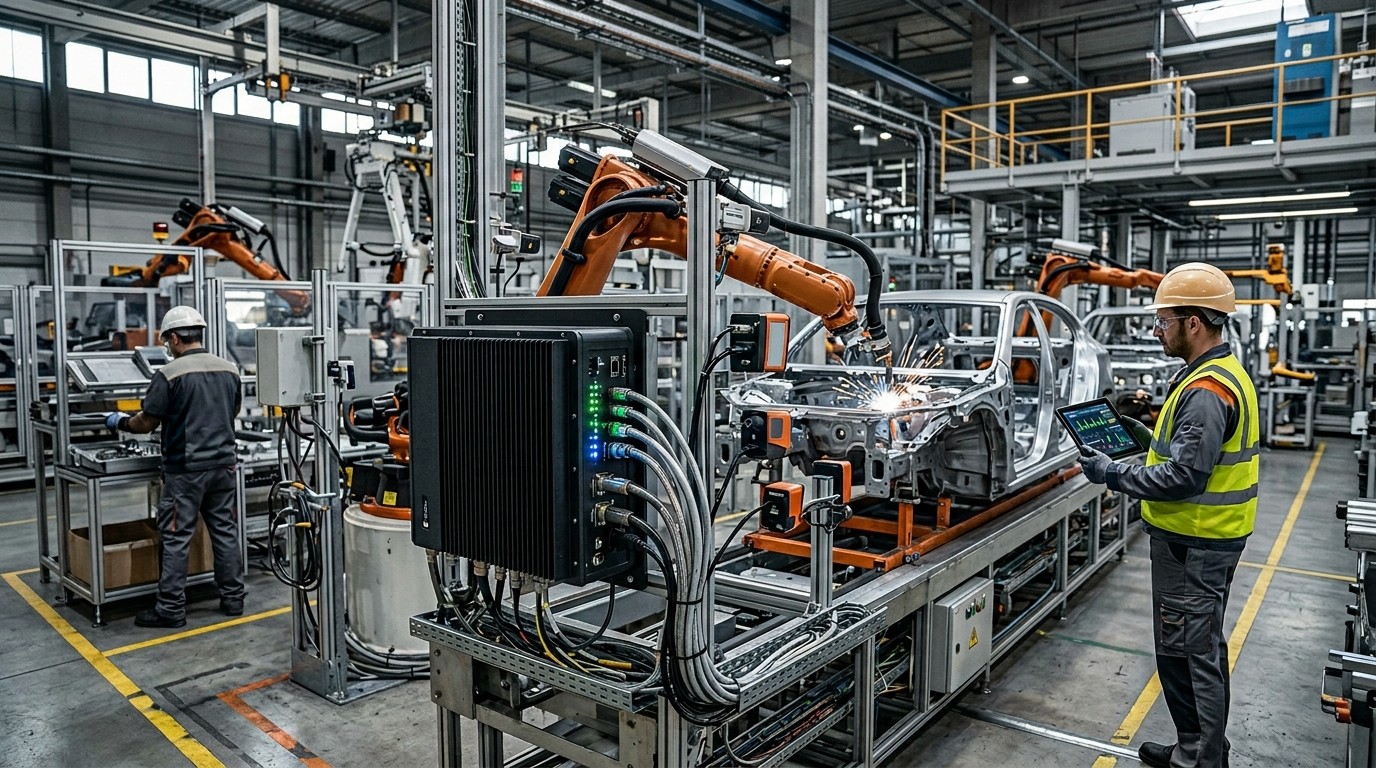
Edge Computing Use Cases in manufacturing are among the most visible because factories produce rich sensor streams that are most valuable when processed immediately. AWS gives a manufacturing example where edge devices send sensor alerts to cloud models that predict failure likelihood and send actions back to the edge for cooling or maintenance scheduling. Azure similarly notes that manufacturing sensors can detect equipment anomalies without central latency getting in the way. That means downtime can be reduced before a machine becomes a larger problem.
In this environment, Industry Edge Computing is less about abstract architecture and more about protecting output. NVIDIA’s industrial edge platform emphasizes security, functional safety, and long lifecycle support, which is important in places where systems cannot be casually interrupted. Edge Computing Use Cases here often include predictive maintenance, line monitoring, process control, and quality alerts because every minute of delay can affect yield, scrap, or throughput. The value is practical: better visibility, faster action, and fewer unplanned interruptions.
Edge Computing Use Cases are also powerful for machine vision. NVIDIA describes edge AI platforms that let hospitals, stores, farms, and factories process huge volumes of sensor data in real time, while AWS and Azure both frame edge computing as a way to improve performance and automate processes. In manufacturing, that translates into defect detection, robotic coordination, and local decisions that do not need to wait for a faraway server. The psychological benefit matters too: operators trust systems more when the feedback loop is visible and immediate.
Edge Computing Use Cases in robotics and digital-twin style operations are also growing because the edge gives manufacturers a place to run richer models without overwhelming central systems. NVIDIA highlights robotics, industrial edge AI, and rapid deployment of autonomous machines, while AWS’s Snow Family materials point to IoT for manufacturing, private LTE/5G deployments, and autonomous vehicle fleets as strong edge-fit examples. The current trend is clear: industrial teams want local intelligence that can adapt quickly, stay resilient, and support real-world motion.
Retail, logistics, and customer experience
Edge Computing Use Cases in retail are growing because stores and warehouses need faster reactions to inventory changes, customer behavior, and checkout flow. Azure explicitly says retail systems can adjust inventory in real time, and NVIDIA’s 2026 retail page describes intelligent stores, intelligent supply chains, and omnichannel management as core industry directions. That means the edge is no longer only about IT performance; it is also about sales, shrink reduction, and better fulfillment.
Retail leaders are using Edge Computing Use Cases to connect cameras, sensors, and operational systems without flooding central infrastructure. NVIDIA says retailers are building intelligent stores that reduce shrinkage, eliminate stockouts, and offer visibility into in-store behavior, while AWS’s 2024 edge intelligence blog describes retailers using AI-driven inventory tracking and automated restocking to reduce stockouts and optimize supply chains. This is one of the clearest examples of the edge turning data into immediate commercial action.
Edge Computing Use Cases also support logistics because warehouses need rapid sorting, picking, packing, and routing decisions. NVIDIA says intelligent supply chains use video analytics, robotics, automation, and management to accelerate throughput and improve order accuracy. Cloudflare’s edge case studies add another practical angle: Soracom says edge processing helps handle massive IoT data efficiently with cost efficiency and speed. The shared trend is obvious: where there is motion and volume, the edge reduces friction.
Edge Computing Use Cases in retail also help with personalized experiences. NVIDIA’s retail pages highlight omnichannel journeys and generative AI for shopping advisors, product descriptions, and service responses. That matters because modern retail is not just about inventory; it is about context-sensitive interaction at the moment of decision. When local compute can power personalization without lag, the customer experience feels more responsive and less generic.
Healthcare and life sciences
Edge Computing Use Cases in healthcare are especially important because latency and privacy both matter. AWS says edge devices can monitor critical patient functions such as temperature and blood sugar levels, store data locally, improve privacy protection, and reduce the volume sent to central locations. NVIDIA’s healthcare pages also emphasize real-time robotics, medical-device insights, and deterministic edge AI deployment. Together, those sources show why the edge is increasingly tied to patient monitoring, clinical workflows, and safer, faster responses.
Healthcare teams are also using Edge Computing Use Cases to simplify patient intake and care workflows. AWS’s 2024 edge intelligence blog says healthcare providers are deploying edge-based virtual assistants to streamline patient intake and improve care efficiency. That is a meaningful trend because patient-facing delays often create frustration before clinical care even begins. When intake, triage, and on-device processing become more responsive, the overall experience feels less fragmented and more coordinated.
Edge Computing Use Cases in medical devices and remote care are also rising because data often needs to be useful before it is centralized. NVIDIA’s healthcare materials describe raw-data-to-insights pipelines and real-time robotics at the edge, which fits well with facilities that need local action and strong reliability. The edge reduces dependence on constant connectivity, which is helpful in clinics, mobile environments, and other settings where infrastructure may be uneven.
Edge Computing Use Cases in this sector also reflect a broader trend toward privacy-aware architecture. AWS notes that local storage can improve privacy protection, and Azure says edge systems can avoid bottlenecks that compromise operations or safety. In healthcare, that combination is especially relevant because sensitive data and time-sensitive decisions often travel together. The edge helps teams manage both without forcing every step through a distant central system.
Telecom and network-edge strategy
Edge Computing Use Cases in telecom are expanding because the network itself is becoming a computing platform. GSMA’s work on telco edge cloud and operator services describes local compute, latency, storage, and differentiated applications as part of the network opportunity. NVIDIA’s network-edge page similarly describes accelerated platforms that combine 5G/6G RAN functionality with edge AI processing. This is a major trend because telecom is no longer just carrying traffic; it is increasingly hosting the logic that powers low-latency services.
Telecom Edge Computing is especially important for applications that need immediacy, such as AI-driven network control, industrial connectivity, and distributed experiences. GSMA’s materials on 5G and edge computing note that operators are using edge resources to support new services, while NVIDIA describes the ARC family as part of the move toward commercial AI-RAN deployments. That means the trend is not only about faster websites or apps; it is about turning telecom infrastructure into a local compute layer for entire ecosystems.
Edge Computing Use Cases in telecom are also driven by immersive and latency-sensitive services. GSMA’s edge discovery materials point to AR/VR applications and gaming as examples of workloads that benefit from the nearest edge server, and its 5G publications describe the role of edge in unlocking new revenue models. Cloudflare’s edge definition reinforces why that matters: moving compute closer to the user reduces long-distance communication and lowers latency. That combination is exactly what makes the telecom trend so durable.
Edge Computing Use Cases here also intersect with security and service differentiation. GSMA’s private-network discussions and Cloudflare’s zero-trust commentary both show that operators are thinking about latency, local compute, and protection together. That matters because telecom edge is not just a performance story. It is also a trust story, where reliability, privacy, and application responsiveness must all hold at the same time.
Office systems and workplace productivity
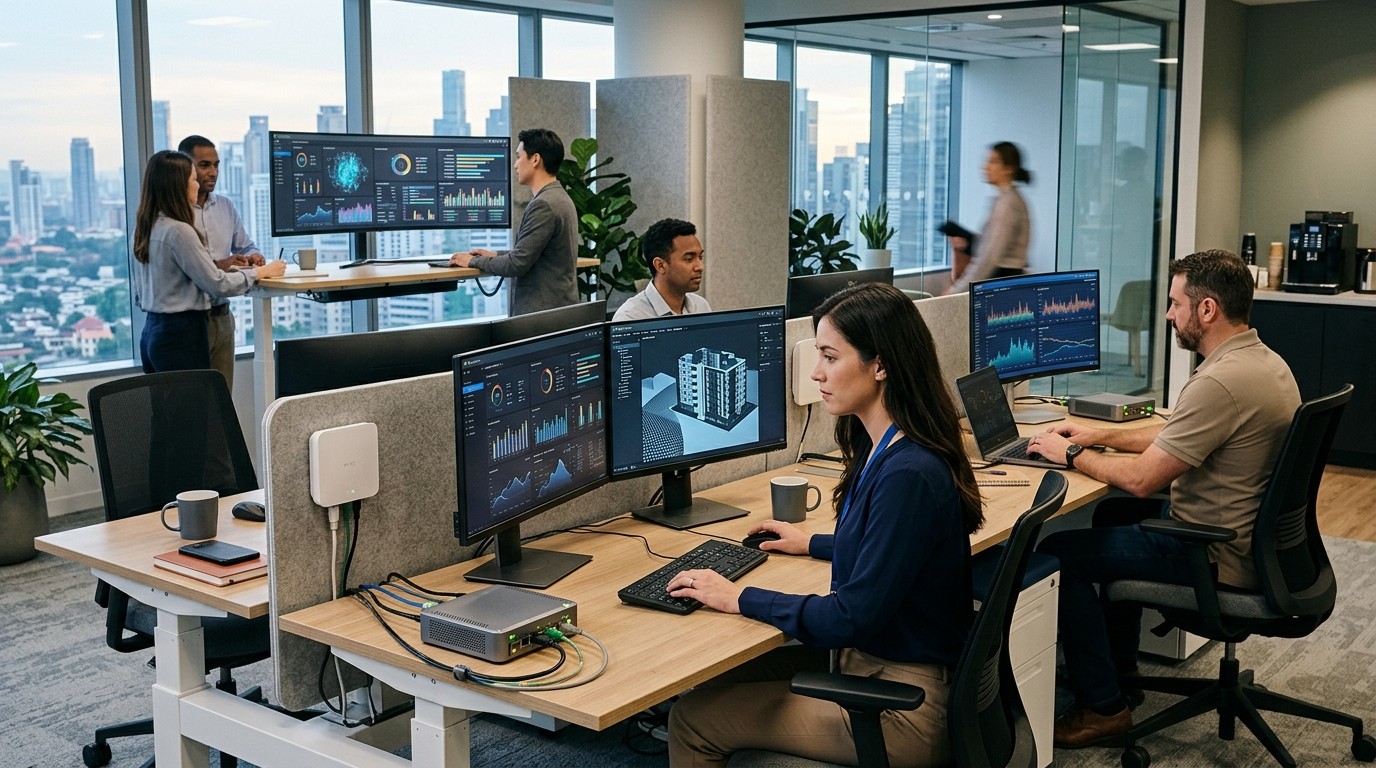
Edge Computing Use Cases are not limited to factories or carrier networks. In office environments, they show up when branch locations, shared devices, local workflows, or private internal systems need fast response without sending every task back to a central data center. AWS says edge computing can improve processes and user experience, and Azure notes that edge processing can make systems more reliable. That is why enterprise workflow layers can benefit from local compute even when the use case looks less dramatic than an industrial robot or a smart store.
Office Automation Software and Workplace Automation Tools become more useful when the surrounding infrastructure is responsive. Think of document routing, approvals, scans, local kiosks, branch reporting, or secure internal workflows. Those systems do not always need the full public-cloud path for every action. Edge Computing Use Cases make it easier for those workflows to remain quick and dependable, especially in distributed organizations where teams work across multiple locations and expect immediate feedback from internal systems.
Edge Computing Use Cases in the office also help leaders keep control over user experience. When staff are waiting on local systems, delays feel larger than they are because productivity is interrupted in real time. The edge can reduce that friction by keeping critical actions near the branch or device. That creates a more stable working rhythm, which is one of the biggest hidden benefits of good internal infrastructure.
Edge Computing Use Cases also pair well with collaboration and analytics tools because the edge can handle local preprocessing before information reaches a central dashboard. That does not eliminate the cloud; it simply moves the most time-sensitive work closer to where it happens. For office teams, that can mean faster forms, faster approvals, and fewer interruptions, which ultimately helps people spend more time on real decisions instead of waiting on systems.
Security, privacy, and resilience
Edge Computing Use Cases often become attractive because they help control risk as much as they help reduce latency. AWS says edge computing can improve safety and performance, while Azure notes that some systems can avoid the bottlenecks that compromise operations or safety. That matters in every industry, but especially in sectors that handle sensitive data or critical physical systems. When data stays closer to its source, organizations can make some security and privacy decisions more locally.
Edge Computing Use Cases also support resilience because local processing can continue when connections are shaky or delayed. Cloudflare defines edge computing as moving compute closer to the source to reduce long-distance communication, and that design naturally supports more resilient service behavior. If a system is always depending on a distant route for every decision, it is more exposed to disruption. The edge reduces that dependency and gives operations more breathing room.
Edge Computing Use Cases in privacy-sensitive environments like healthcare show why local processing matters. AWS explicitly notes that edge storage can improve privacy protection and reduce the data volume sent to central locations. This trend extends beyond healthcare because many regulated or sensitive environments face similar concerns. As organizations adopt more cameras, sensors, and AI-enabled tools, they often want the convenience of intelligence without giving up control over where data lives or how quickly it is processed.
How to choose the right use cases
Edge Computing Use Cases should be prioritized by the size of the problem, the speed required, and the amount of data involved. If a workflow is slow but not urgent, the cloud may be enough. If the workflow is time-sensitive, high-volume, or safety-critical, the edge becomes much more compelling. AWS and Azure both emphasize speed, reliability, and operational improvement, which provides a practical decision rule: move the tasks that gain the most from being closer to the source.
Edge Computing Use Cases are strongest when the business can describe a concrete outcome. That might be fewer machine failures, faster retail replenishment, safer patient monitoring, or more reliable branch workflows. If the expected gain is vague, the project will be hard to justify. NVIDIA’s industry pages show this clearly by connecting edge AI to specific outcomes such as quality, efficiency, throughput, and real-time decision-making across manufacturing, retail, healthcare, and telecom.
Edge Computing Use Cases also need to be evaluated against network cost and bandwidth pressure. Cloudflare and AWS both highlight reduced bandwidth use and more efficient data handling as major benefits. That means data-heavy applications such as cameras, sensors, and distributed telemetry should be strong candidates. If the system generates lots of data and only a small portion needs to reach the cloud, the edge can become the cleaner design choice.
Edge Computing Use Cases are easier to justify when the teams already have a strong internal workflow. That is why many organizations begin with one plant line, one store format, one clinic workflow, or one branch-office process instead of trying to redesign everything at once. The smaller pilot gives a clearer answer and reduces implementation risk. Once the first result is visible, scaling the pattern becomes much easier.
A practical rollout roadmap
Edge Computing Use Cases usually succeed fastest when organizations start with a narrow pilot, define the metric, and then expand the architecture only after the first proof point. AWS’s edge-to-cloud integration materials emphasize turning factories into smart, adaptive operations, which suggests that edge strategy should be iterative rather than all-at-once. A pilot lets teams test latency, reliability, workflow fit, and operational adoption before committing to larger deployments.
A good roadmap for Edge Computing Use Cases begins with the workflow, not the hardware. First identify the moment where delay hurts most, then decide whether local compute can shorten that loop. After that, define what data should stay local and what should move upstream. This sequencing keeps the project aligned with the business goal and prevents teams from buying infrastructure before they know what it needs to do.
Edge Computing Use Cases should also be measured with a practical scorecard. If the edge reduces downtime, improves throughput, speeds up checkout, or protects privacy, it has likely earned its place. NVIDIA, AWS, Azure, and GSMA all point toward the same bigger picture: the edge is becoming part of a broader distributed system that supports AI, automation, low latency, and local control. That trend will reward organizations that start with clear use cases and expand carefully.
Trends into 2026 and beyond
Edge Computing Use Cases will keep growing as AI becomes more operational and less experimental. NVIDIA’s 2026 retail page shows that retailers are scaling agentic AI, supply-chain intelligence, and productivity gains, while GSMA’s 2026 and 2025 materials continue to position edge, private networks, and deterministic services as part of the next phase of mobile and enterprise infrastructure. The trend line is clear: organizations want smarter systems that act quickly where the data exists.
Edge Computing Use Cases will also stay important because new workloads are becoming more real-time, more visual, and more distributed. NVIDIA’s enterprise edge materials highlight industrial edge AI, network edge AI, robotics, and visual AI agents, while Cloudflare’s materials continue to frame edge computing around lower latency, reduced bandwidth, and better privacy. The next wave is not only about moving compute closer to users. It is about moving intelligence closer to decisions.
Conclusion
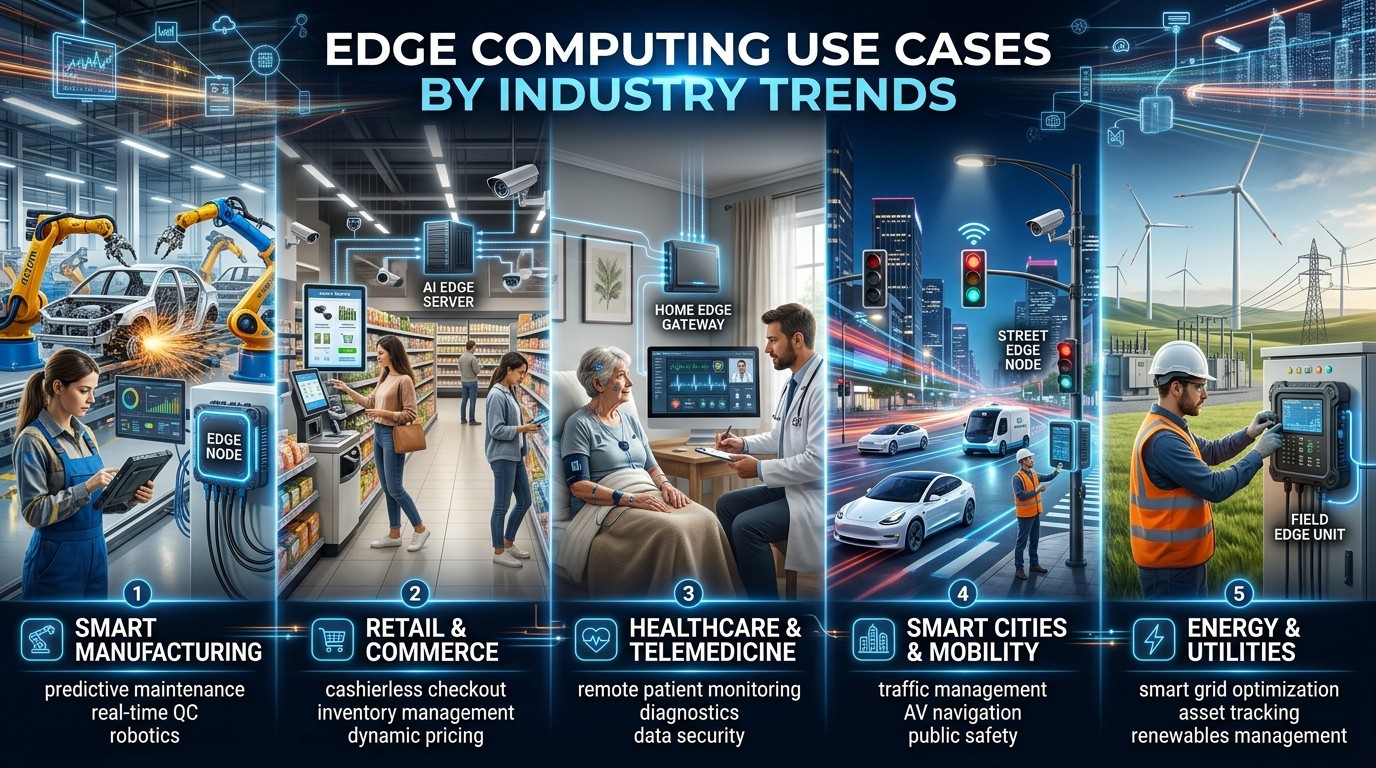
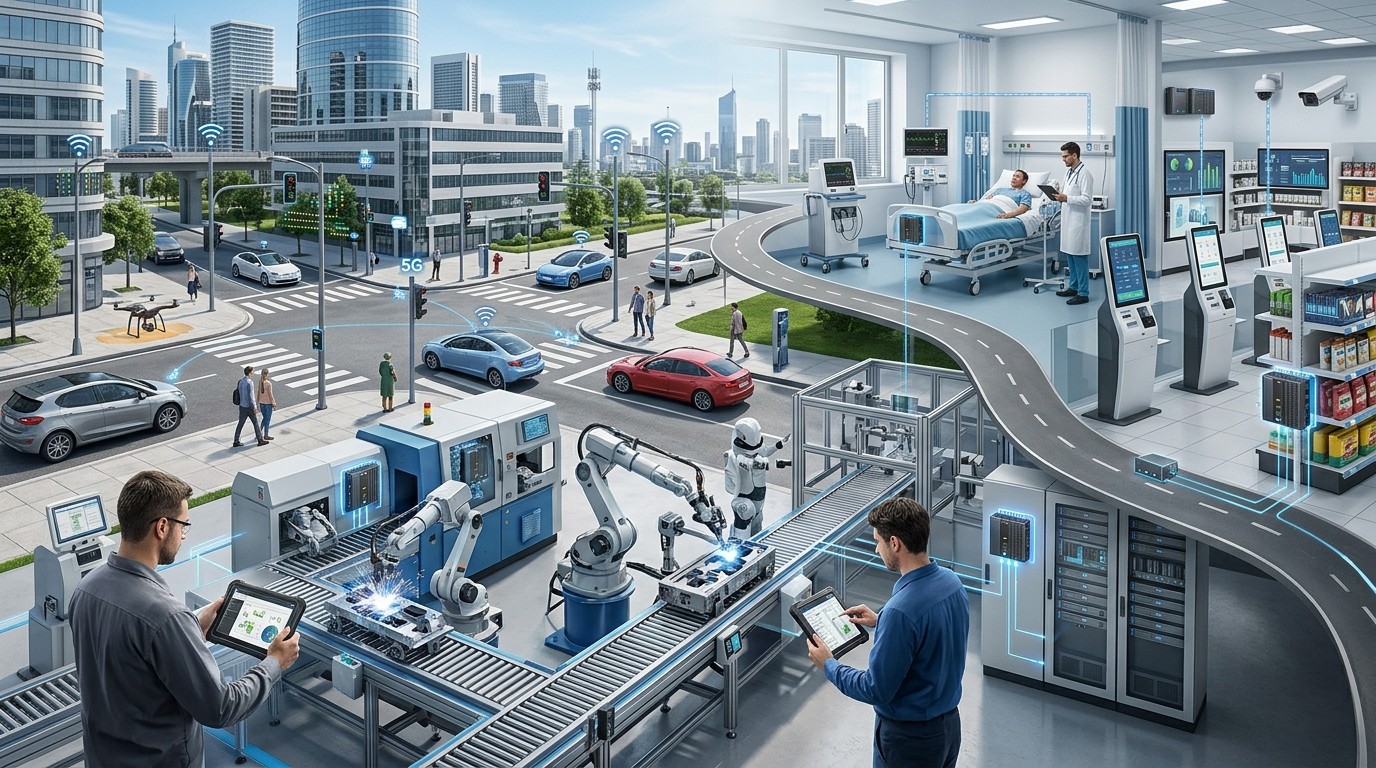
Edge Computing Use Cases are no longer limited to a few niche environments. They now appear wherever data needs to be acted on quickly, safely, and efficiently. Manufacturing uses the edge for sensors, maintenance, and machine vision. Retail uses it for inventory, checkout, and supply chains. Healthcare uses it for monitoring, intake, and privacy-sensitive processing. Telecom uses it to turn networks into local compute platforms. Office teams use it to keep distributed workflows responsive. The common thread is simple: the closer the intelligence is to the action, the easier it becomes to make fast, useful decisions.
Frequently Asked Questions (FAQ)
1. What are Edge Computing Use Cases?
Edge Computing Use Cases are practical scenarios where data is processed closer to where it is created so decisions happen faster and with less network dependence. AWS, Azure, and Cloudflare all describe edge computing in terms of lower latency, better efficiency, and improved reliability.
2. Which industries benefit the most?
Manufacturing, retail, healthcare, telecom, logistics, and distributed office operations are among the strongest beneficiaries because they all need rapid response, local awareness, or lower bandwidth pressure. NVIDIA’s industry pages and AWS’s examples all point toward these sectors as major edge adopters.
3. Why is manufacturing such a strong fit?
Manufacturing is a strong fit because sensors, machine vision, maintenance, and robotics all benefit from immediate processing. AWS and Azure both use manufacturing as a core example of how edge systems can detect anomalies, reduce downtime, and improve operational performance.
4. How does retail use the edge?
Retail uses the edge for real-time inventory changes, intelligent stores, omnichannel experiences, and supply-chain visibility. NVIDIA’s 2026 retail page specifically highlights intelligent stores, intelligent supply chains, and AI-driven workflows as key industry priorities.
5. Why is healthcare a major edge sector?
Healthcare needs low latency and privacy-aware data handling. AWS says edge devices can monitor critical patient functions locally and improve privacy protection, while NVIDIA’s healthcare material highlights real-time robotics and deterministic edge AI deployment.
6. What is the telecom angle?
Telecom Edge Computing turns carrier networks into local compute platforms that support low-latency services, private networks, AI-RAN, AR/VR, and gaming. GSMA and NVIDIA both describe telecom edge as a major part of the next network cycle.
7. Can office workflows use edge too?
Yes. Office Automation Software and Workplace Automation Tools can become more responsive when branch offices or local systems handle latency-sensitive tasks closer to users. AWS and Azure both note that edge computing can improve processes, reliability, and user experience.
8. Is edge only about speed?
No. Edge computing is also about resilience, bandwidth savings, privacy, and better control over where data is processed. Cloudflare and AWS both emphasize latency reduction and efficient data handling, but AWS also highlights safety, performance, and automation benefits.
9. How should a company choose a first project?
Start with the workflow where delay hurts most and where the data is too frequent or too large to handle centrally without friction. A small pilot with a clear metric is usually the best way to validate the first deployment. AWS’s edge-to-cloud guidance supports exactly that kind of iterative rollout.
10. What will edge look like over the next few years?
The direction is toward more AI at the edge, more networked compute, more private 5G use, and more real-time automation across industries. NVIDIA, GSMA, AWS, Azure, and Cloudflare all point toward that distributed future.