Efficient Edge Computing helps manufacturers reduce latency, improve visibility, and react faster by processing data closer to machines, sensors, and production events in real time.
Modern factories generate huge volumes of operational data every second. Machines report vibration, temperature, throughput, and quality signals. Cameras inspect products. Sensors track movement, energy use, and equipment health. When all of that data is sent to a distant cloud first, decisions can slow down. That is where Efficient Edge Computing becomes valuable. It places processing power near the source of action so a plant can respond in the moment instead of waiting on a remote server.
Efficient Edge Computing matters because manufacturing depends on timing, stability, and precision. A delay of a few seconds can mean a defective batch, a missed maintenance alert, or a slower production line. In a tightly coordinated environment, local intelligence can make the difference between smooth operations and costly disruption. Efficient Edge Computing gives plants the ability to act quickly while still connecting to enterprise systems for long-term planning and reporting.
Manufacturers also face pressure from labor shortages, energy costs, supply chain volatility, and quality expectations. These pressures reward systems that can detect patterns early and respond automatically. Efficient Edge Computing supports that goal by helping sites process data where it is created. That reduces bandwidth strain, lowers dependence on always-on cloud connectivity, and improves resilience when networks are unstable.
At the same time, this approach is not only technical. It is operational and human. Plant managers want fewer surprises. Maintenance teams want clearer alerts. Quality engineers want trustworthy data. Executives want faster decisions and stronger margins. Efficient Edge Computing serves all of those needs by turning raw machine data into practical action.
Why Manufacturing Needs Processing Near the Machine
Factories have a unique problem: the value of data drops quickly when it arrives too late. If a robotic arm slips out of tolerance, a conveyor backs up, or a temperature spike threatens product quality, the system must react immediately. Efficient Edge Computing helps solve that timing problem by analyzing data near the machine instead of sending every event to a distant location first.
This local processing is useful in environments where milliseconds or seconds matter. A vision system can reject a bad item before it moves further down the line. A motor can be slowed before overheating becomes serious. A production dashboard can update instantly so supervisors see what is happening now, not what happened several minutes ago. Efficient Edge Computing gives the plant a stronger reflex.
There is also an economic reason to keep some workloads at the edge. Constantly moving large data streams to the cloud can increase network costs and create unnecessary bottlenecks. Efficient Edge Computing helps filter, compress, and prioritize information before it leaves the site. That means only useful data goes upstream, while time-sensitive control stays local.
Another advantage is resilience. When connectivity is weak or interrupted, production cannot always stop. A local edge layer allows critical logic to continue even if external services are delayed. Efficient Edge Computing therefore supports continuity in a way that central-only architectures often cannot. For manufacturers, continuity is not a luxury. It is the difference between predictable output and expensive downtime.
Key Manufacturing Use Cases
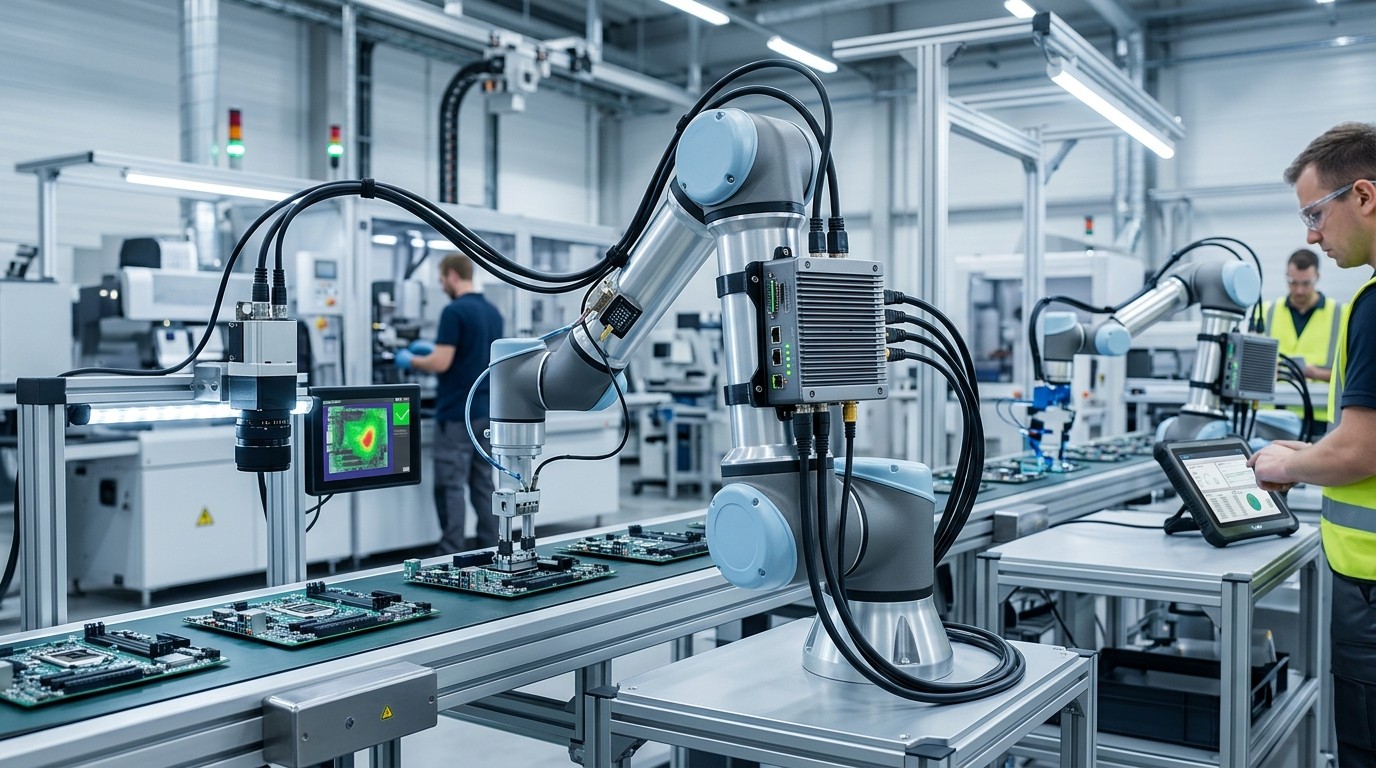
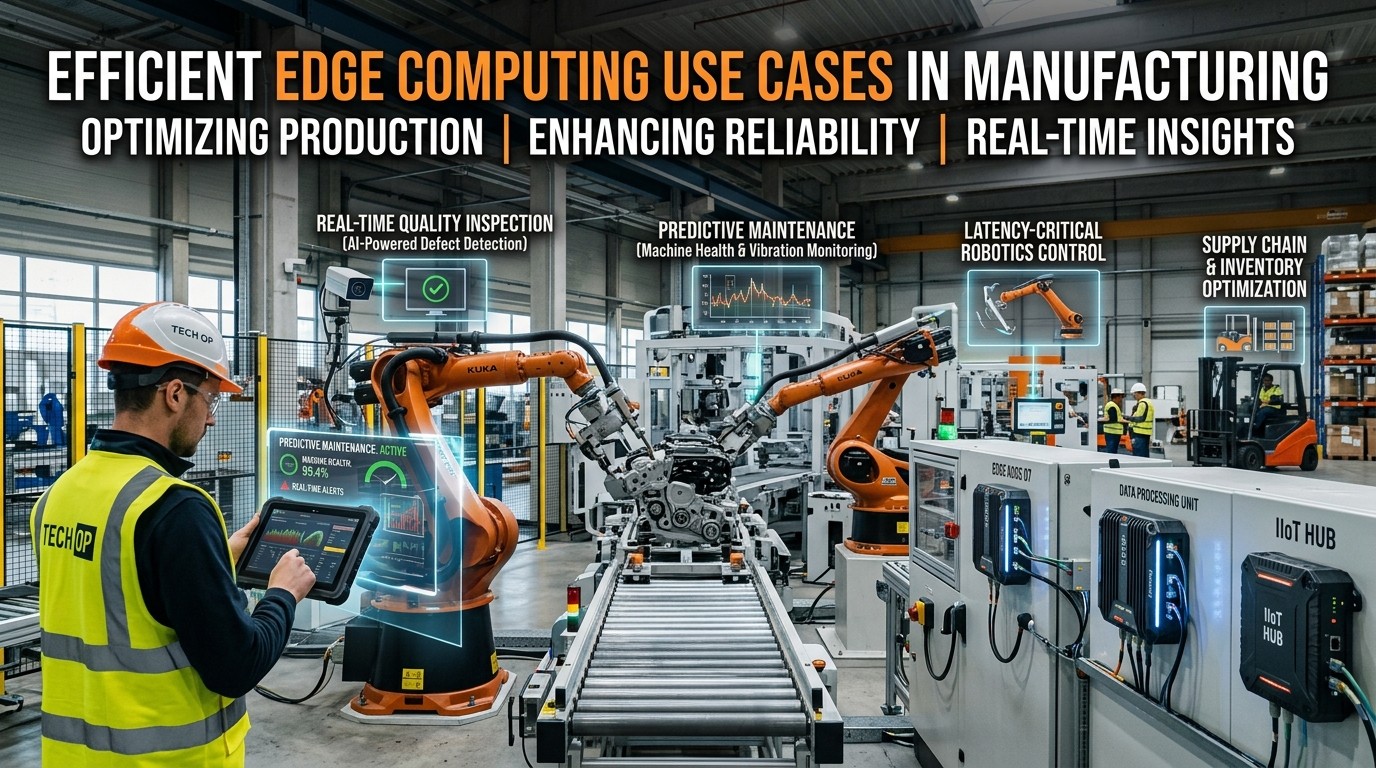
The practical value of Efficient Edge Computing becomes clearer when you look at specific factory scenarios. In each one, the edge is not just a technical option. It is a way to remove friction from the production process.
Predictive maintenance
Predictive maintenance is one of the strongest use cases. Sensors on motors, pumps, belts, and compressors can detect unusual vibration, temperature shifts, or current draw. Efficient Edge Computing processes those signals nearby so alerts can be generated before a failure spreads. This helps maintenance teams intervene earlier and plan repairs with less disruption.
Quality inspection
Computer vision systems are increasingly common on production lines. Cameras can inspect shape, color, label placement, weld quality, and surface defects. Efficient Edge Computing allows models to score images immediately and trigger rejection or rework in real time. That improves consistency and reduces the cost of shipping defective products.
Production line optimization
Line balancing, throughput monitoring, and bottleneck detection all benefit from fast local analysis. Efficient Edge Computing can summarize machine states, identify slow stations, and help supervisors rebalance work before delays accumulate. That leads to smoother flow and better use of equipment.
Energy management
Factories often consume significant power, and energy usage can change by shift, machine load, or ambient conditions. Efficient Edge Computing can analyze energy patterns locally and surface opportunities to reduce waste. This supports sustainability goals while lowering operating costs.
Worker safety
Safety systems can use edge intelligence to detect restricted-zone entry, equipment misuse, or abnormal motion. Efficient Edge Computing helps these systems respond quickly enough to warn staff or stop hazardous actions. That kind of responsiveness is especially important in environments with heavy machinery and moving parts.
Inventory and material tracking
Warehouses and production floors both need accurate tracking. Efficient Edge Computing can process barcode, RFID, and sensor data near the source so stock movement is updated faster. That reduces mismatches between physical materials and digital records.
The Architecture Behind Effective Deployment
Successful deployments depend on more than buying hardware. Efficient Edge Computing works best when the architecture matches the realities of the plant. That means understanding where data originates, what must be processed instantly, and what can be stored or analyzed later.
At the device layer, machines, sensors, cameras, and controllers generate signals. At the edge layer, local compute nodes filter, analyze, and respond. At the cloud layer, long-term storage, dashboards, and cross-site analytics provide strategic visibility. Efficient Edge Computing links these layers without forcing everything into one location.
The most effective architecture usually begins with data prioritization. Not every signal deserves the same treatment. A machine fault may need immediate action, while an hourly trend report can wait. Efficient Edge Computing helps separate urgent events from background data so the system remains efficient rather than overloaded.
Security also matters. When computation spreads across more endpoints, the attack surface can grow. That is why access control, device authentication, encryption, patching, and monitoring must be part of the design. Efficient Edge Computing should not create new blind spots. It should reduce operational risk while improving responsiveness.
Another design principle is modularity. Plants change over time. Production lines expand, contracts change, and equipment gets upgraded. Efficient Edge Computing should therefore be built in a way that lets teams add or remove workloads without reengineering the entire site. That flexibility protects the investment and makes scaling easier.
How Edge Supports Human Decision-Making
Manufacturing is often described in technical terms, but people still make the final decisions. Supervisors interpret alerts. Engineers tune thresholds. Operators react to alarms. Leaders allocate budget. Efficient Edge Computing helps each of these people by converting dense data into timely, understandable signals.
A plant team under pressure does not need more noise. It needs clearer context. Efficient Edge Computing can reduce alert fatigue by surfacing only the events that matter most. Instead of flooding operators with raw sensor streams, it can produce ranked events, suggested actions, and localized warnings. That helps people respond with confidence.
This also improves trust. When teams know that the system is seeing conditions in real time and reacting locally, they are more likely to rely on it. Efficient Edge Computing becomes part of the decision culture. It creates a stronger relationship between automation and judgment, where the system handles speed and the human handles nuance.
There is a psychological benefit as well. People work better when uncertainty is lower. If maintenance crews can see which asset is degrading, they plan more effectively. If quality teams can confirm defects immediately, they feel more in control. Efficient Edge Computing reduces uncertainty by delivering the right information at the right moment.
Where Data Should Stay and Where It Should Move
A common mistake is assuming that every piece of data must go to the cloud. In reality, the best manufacturing systems separate data by purpose. Efficient Edge Computing helps determine what should stay local and what should be shared upstream.
Data that is time-sensitive, such as machine control, safety alerts, or immediate quality decisions, should usually stay near the plant. Data that supports broader analysis, such as weekly trends, model training, or enterprise reporting, can move to centralized systems. Efficient Edge Computing acts as the filter between those two worlds.
This separation creates several benefits. It lowers bandwidth consumption, reduces storage costs, and shortens response times. It also makes it easier to protect sensitive operational data. When only the most valuable summaries leave the site, the enterprise still gets insight without overwhelming the network. Efficient Edge Computing turns raw noise into usable intelligence.
A practical rule is simple: keep urgent actions local, send strategic history upward. That principle fits most manufacturing environments and helps teams decide where each workload belongs. Efficient Edge Computing is especially useful because it makes that split more practical to maintain over time.
Comparing Edge and Cloud in Manufacturing
Cloud computing remains important. It is excellent for large-scale reporting, model development, and multi-site analytics. Yet cloud alone cannot solve every manufacturing problem. Efficient Edge Computing fills the gap by handling work that needs speed, locality, and resilience.
| Requirement | Cloud Strength | Edge Strength |
|---|---|---|
| Immediate response | Limited by latency | Very strong |
| Long-term storage | Strong | Moderate |
| Local machine control | Weak | Strong |
| Multi-site analytics | Strong | Moderate |
| Bandwidth efficiency | Moderate | Strong |
| Offline continuity | Weak | Strong |
The table shows why the most effective strategy is usually hybrid. Efficient Edge Computing handles the urgent layer, while cloud systems manage the strategic layer. Together they create a more balanced environment than either approach alone.
This balance also supports gradual adoption. Manufacturers do not have to replace everything at once. They can start with one line, one plant area, or one high-value use case. Efficient Edge Computing can then expand as teams prove the business case and build confidence.
Industry Edge Computing in Competitive Operations
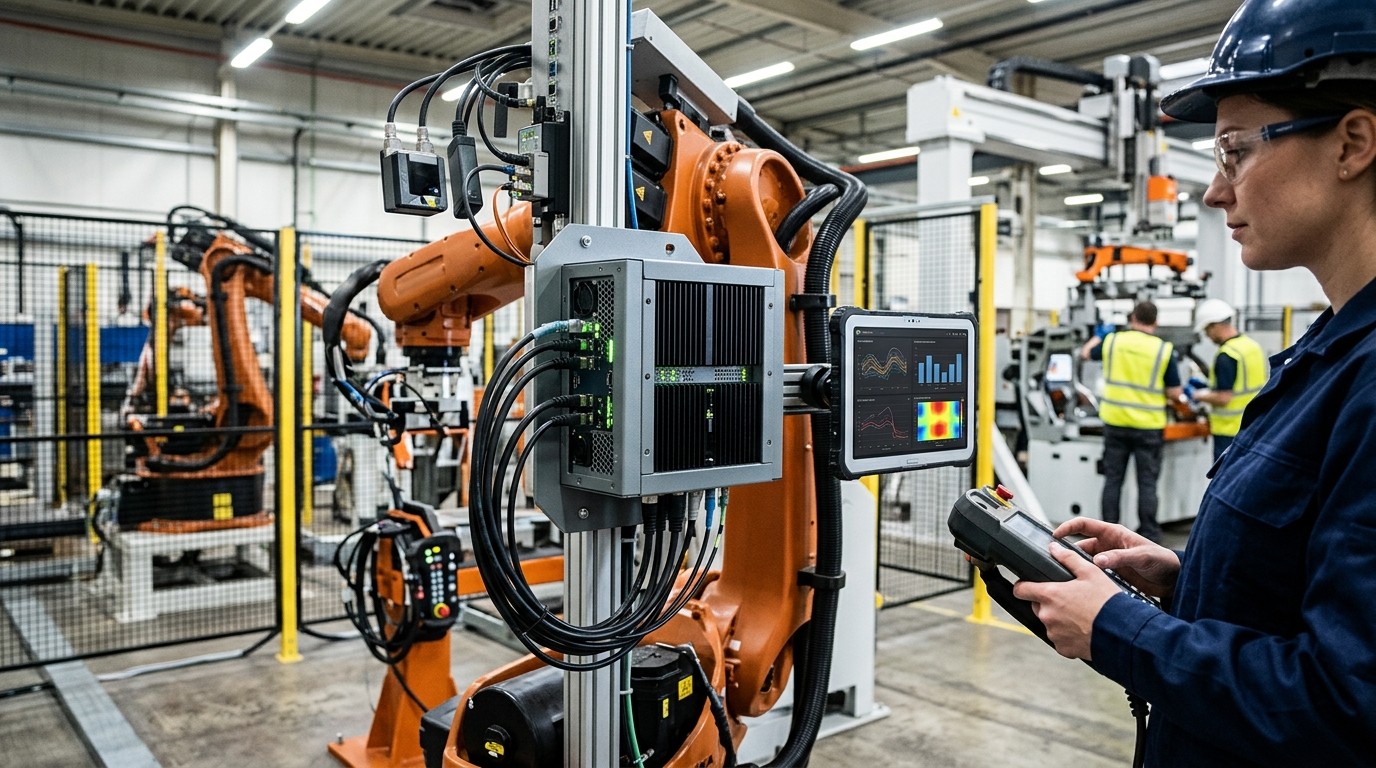
Industry Edge Computing is becoming a broader competitive advantage across manufacturing sectors. Companies that can make faster decisions at the plant floor often reduce waste, improve quality, and recover from disruptions more quickly. That advantage compounds over time.
In many facilities, the first gains come from visibility. Teams suddenly see machine conditions more clearly. Then the next gains come from action. Systems start to react automatically. Efficient Edge Computing supports both stages by enabling real-time analysis where it matters most.
This trend is not isolated to factories. Industry Edge Computing also influences logistics, warehousing, utilities, and process industries. The common thread is the need for fast and local response. Manufacturing stands out because production lines are so dependent on rhythm and timing. When one station slows, the rest can feel it immediately. Efficient Edge Computing helps keep that rhythm steady.
Telecom Edge Computing as a Supporting Model
Telecom Edge Computing This model offers a useful reference point because telecom networks have long needed low latency, high reliability, and distributed processing. The lessons from that sector apply well to manufacturing. Both environments must support real-time events, handle large volumes of signals, and maintain service continuity under pressure.
This model shows how local compute can improve responsiveness for time-critical workloads. In manufacturing, that same principle supports robotics, inspection, and safety systems. The lesson is that distributed intelligence works best when it is placed close to the point of action. Efficient Edge Computing adapts that lesson and applies it to production environments.
Manufacturers do not need to copy telecom exactly. However, they can learn from the telecom mindset: design for resilience, manage latency deliberately, and place compute where it creates the most operational value. Efficient Edge Computing becomes stronger when it follows those principles.
Mobile App Marketing Trends and Promotion Ideas in a Factory Context
At first glance, Mobile App Marketing Trends may seem unrelated to plant operations, but the underlying lesson is useful. Modern software adoption depends on clear value, simple onboarding, and consistent engagement. The same principle helps plant teams adopt edge tools more quickly. Efficient Edge Computing succeeds when the people using it understand why it matters and how it helps them.
Likewise, Mobile App Promotion Strategies can teach a manufacturing team something important about rollout. The best promotions do not try to sell everything at once. They start with a focused promise, a simple use case, and a strong reason to care. Efficient Edge Computing deployments often work better when they are introduced the same way, beginning with one visible problem such as maintenance delays or inspection lag.
This is not about turning a factory into an app company. It is about borrowing communication discipline from digital product teams. Clear messaging, staged rollout, and user-focused benefits make new technology easier to adopt. Efficient Edge Computing benefits when the rollout story is simple and credible.
Planning a Pilot Project
A pilot project is usually the smartest way to start. It limits risk, creates learning, and gives decision-makers something concrete to evaluate. Efficient Edge Computing should be tested where the business pain is measurable and the outcome is easy to track.
A strong pilot usually has four parts. First, define one operational problem. Second, choose one line or process where that problem is visible. Third, identify the data sources needed for local processing. Fourth, decide how success will be measured. Efficient Edge Computing becomes more convincing when its results are visible in fewer failures, faster inspections, lower downtime, or improved throughput.
Pilots also build internal alignment. When operators, engineers, and managers see the same results, they are more likely to support expansion. Efficient Edge Computing is easier to scale when it has already proven its value in a specific environment.
Table of Common Manufacturing Use Cases
| Use Case | Problem Solved | Local Benefit | Business Outcome |
|---|---|---|---|
| Predictive maintenance | Unexpected equipment failure | Faster detection | Less downtime |
| Quality inspection | Defects reaching customers | Immediate rejection | Lower scrap and returns |
| Worker safety | Delayed hazard response | Real-time alerts | Fewer incidents |
| Energy monitoring | Hidden waste | Local pattern analysis | Lower operating cost |
| Inventory tracking | Stock mismatches | Faster updates | Better material accuracy |
| Production monitoring | Bottlenecks and slowdowns | Rapid visibility | Higher throughput |
Efficient Edge Computing supports each of these use cases because it reduces the delay between observation and action. That delay is often the real cost inside industrial systems.
Common Challenges and How to Handle Them
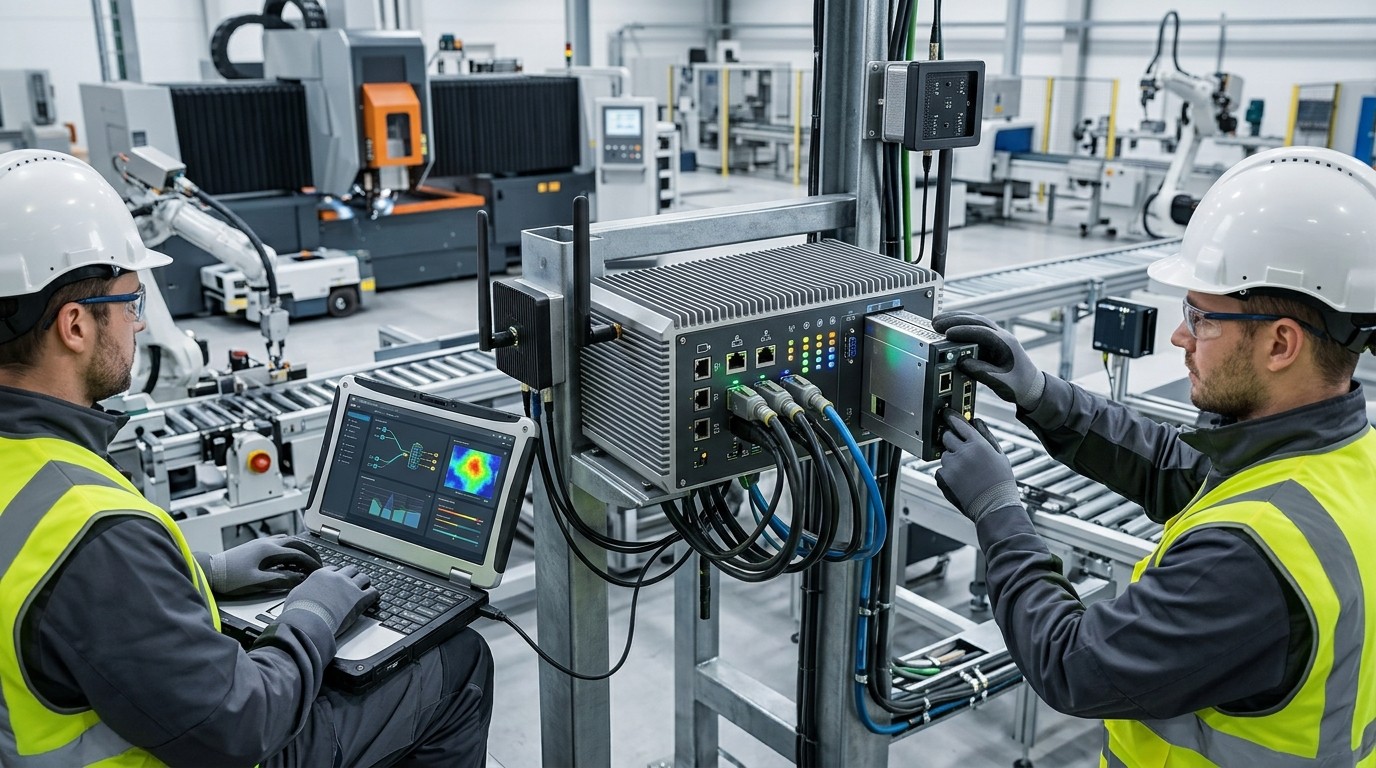
Every technology shift comes with friction. Efficient Edge Computing is powerful, but it is not effortless. Plants may face integration issues, device compatibility concerns, staff training gaps, and security requirements. Recognizing these challenges early makes rollout smoother.
One challenge is complexity. Manufacturing sites often already have multiple generations of equipment. New edge systems must coexist with older machines and software. Efficient Edge Computing should be introduced with an integration plan that respects the existing environment rather than replacing everything at once.
Another challenge is governance. As more local nodes appear, teams need clear ownership. Who patches the device? Who responds if a model drifts? Who approves updates? Efficient Edge Computing works best when responsibilities are defined from the start.
A final challenge is proof. Leaders usually want evidence before they scale. That is why pilot design matters so much. Efficient Edge Computing earns confidence when it produces measurable, repeatable improvements that line up with business goals.
Why Scalability Matters
A solution that works in one corner of a plant may fail when expanded unless the architecture is built for scale. Efficient Edge Computing should therefore be designed with repeatability in mind. That means using common templates, standardized monitoring, and clear deployment processes.
Scalability also matters because plants rarely stay the same. New lines are added. Demand changes. Product variants increase. Efficient Edge Computing should be flexible enough to adapt without creating a new project every time the site evolves. The best systems grow with the business instead of slowing it down.
Conclusion
Manufacturing succeeds when it can sense, decide, and act quickly. Done well, it also improves visibility, accountability, and operational confidence across teams daily now. That is the core reason the local model is becoming so valuable. By processing data close to machines and production events, it reduces latency, improves reliability, and helps teams respond before small issues turn into larger losses. It also supports quality, safety, energy management, and maintenance in a way that central-only systems often cannot. As factories become more connected and more data-rich, the advantage of local intelligence grows. Efficient Edge Computing gives manufacturers a practical path to faster insight, better control, and stronger operational resilience.
Frequently Asked Questions (FAQ)
1. What is Efficient Edge Computing in manufacturing?
It is a system that processes data close to the machines and sensors so factories can react faster and reduce dependence on remote cloud processing.
2. Why is low latency important on the factory floor?
Low latency helps plants detect and respond to failures, defects, and safety risks before they spread through the line.
3. Does Efficient Edge Computing replace the cloud?
No. It usually works with the cloud in a hybrid model, where the edge handles urgent tasks and the cloud handles long-term analytics.
4. What are the best first use cases?
Predictive maintenance, quality inspection, energy monitoring, and worker safety are often the strongest starting points.
5. Is this only for large factories?
No. Smaller plants can also benefit, especially when they need faster decisions, lower bandwidth use, or better reliability.
6. What equipment is needed?
Typical setups include sensors, cameras, local compute nodes, industrial networking, and software for monitoring and analysis.
7. Is security a concern?
Yes. Distributed systems need strong authentication, patching, access control, and encryption to reduce risk.
8. How do companies start?
Most begin with a pilot project focused on one measurable operational problem and one production area.
9. Can older machines use it?
Often yes. Edge systems can usually connect to legacy equipment through gateways, controllers, or integration software.
10. What is the main business benefit?
The biggest benefit is faster, more reliable action at the point of operation, which can reduce downtime, waste, and quality losses.