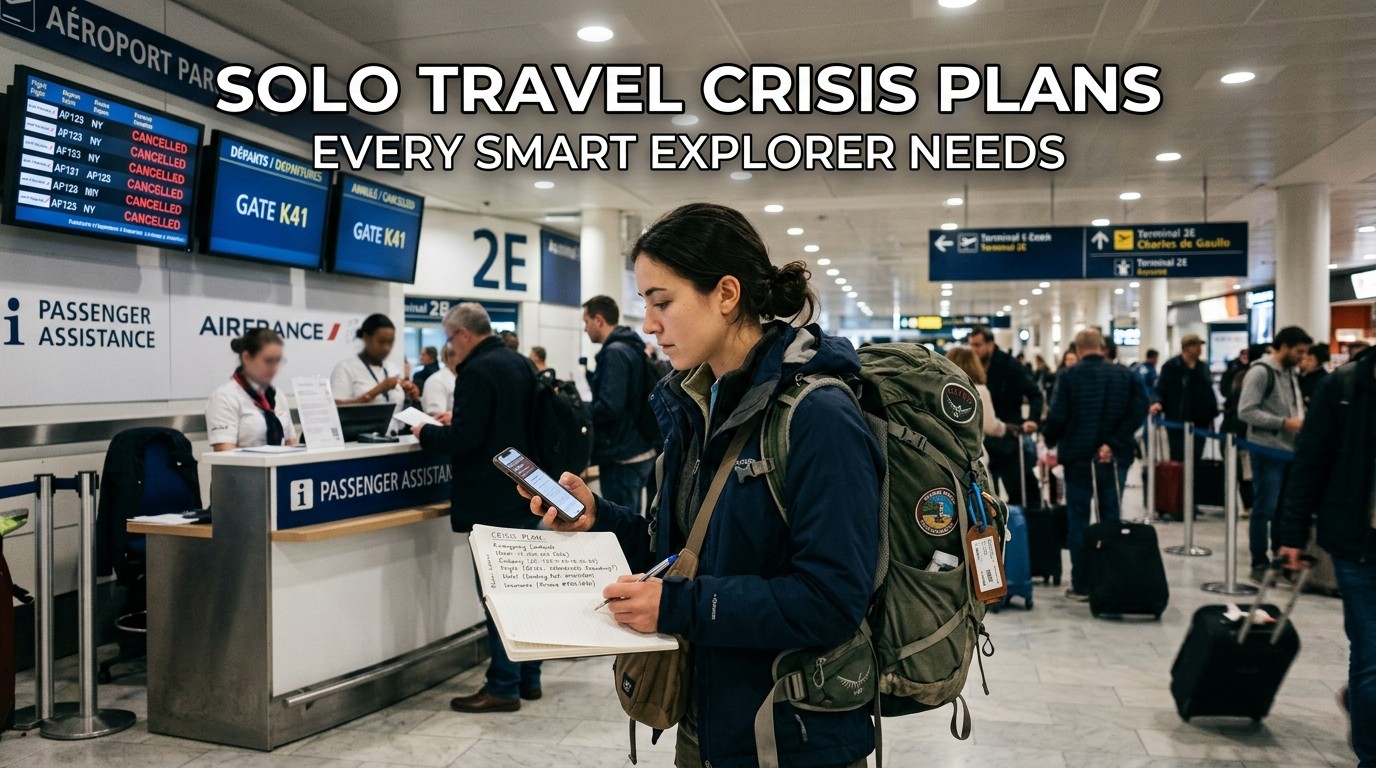
Solo Travel Crisis Plans help travelers handle delays, illness, money issues, and communication breakdowns with clear backup steps that keep trips calmer, safer, and more manageable.
Traveling alone feels liberating because every decision is yours, yet that same freedom can become stressful when a train is late, a booking changes, or a plan slips away. Solo Travel Crisis Plans turn those uncertain moments into a calm sequence of actions, so you are not inventing solutions while tired, rushed, or emotionally overloaded. That kind of structure also helps you enjoy the trip more fully, because you spend less time negotiating with uncertainty and more time noticing the place itself.
The best version of preparation starts before the trip, not after the problem. Solo Travel Crisis Plans should be written in a quiet moment at home, when you can think clearly about what actually needs protection: time, money, documents, health, and the confidence that helps you keep moving forward instead of freezing in panic. Once you write the steps down, the plan becomes easier to trust, especially when stress makes memory unreliable and every choice suddenly feels heavier than it should.
Solo travel is not about expecting disaster. It is about respecting the fact that even good trips can be interrupted by weather, delays, illness, or simple human error. Solo Travel Crisis Plans reduce the emotional damage of those interruptions by giving you a plan that is practical, short, and ready before you need it. That mindset is useful because calm preparation creates room for spontaneity later, which is usually the part of solo travel people remember most fondly.
A thoughtful plan also protects your energy. When you know what to do first, you spend less time worrying about what might happen and more time enjoying the trip itself. Solo Travel Crisis Plans work because they lower the mental burden of improvisation, which is often where expensive mistakes begin. It is easier to stay present on the road when the essential decisions were already handled in advance, before exhaustion or distraction had any chance to interfere.
Build the core system before you leave
Start by studying the destination like a risk manager rather than a tourist brochure reader. Solo Travel Crisis Plans are stronger when they reflect transport quality, neighborhood safety, access to clinics, local communication habits, and the distance between your accommodation and the help you might need in a real emergency. Research should be practical rather than obsessive, with attention given to the places you will actually use instead of every attraction listed in a guidebook.
Think in layers instead of one giant checklist. Your first layer is prevention, your second layer is backup, and your third layer is recovery. Solo Travel Crisis Plans become much more effective when each layer has a clear job, because that structure helps you respond in order instead of reacting emotionally. A layered approach keeps the plan flexible, so you can adapt without rewriting your whole trip whenever one small detail changes unexpectedly.
Financial stress can make minor problems feel much larger than they are. Solo Travel Crisis Plans should include a backup card, a small cash reserve, and a spending limit for emergencies so you do not make rushed decisions simply because you are worried about the next payment. Backups should feel boring in the best possible way, because the goal is reliability rather than excitement when money pressure suddenly appears.
Money planning is not only about having enough funds; it is about access. Keep payment methods in separate places, note where you can withdraw cash, and know how your bank handles foreign transactions. Solo Travel Crisis Plans are more useful when you can still pay for transport, food, or lodging after one method fails. That reserve creates breathing room, which means a single mistake or delay does not force you into worse choices just to keep moving.
Communication makes the trip feel less lonely

Communication is another layer that many solo travelers underestimate. Share the route with one trusted person, set realistic check-in times, and store contacts in more than one place. Solo Travel Crisis Plans help because a calm outside observer can confirm details, notice gaps, and reduce the feeling of isolation if something changes. Consistency matters because people under pressure often forget details, and repeated reminders can make your plan easier to use without additional mental effort.
A short message template can save time during stress. It should say where you are, what happened, and what kind of help you need next. Solo Travel Crisis Plans work better when your support person does not have to guess whether you are delayed, confused, or actually in danger. Clear communication can also prevent misunderstandings that grow larger when nobody knows whether the issue is minor, urgent, or already resolved.
Airport pressure has a way of speeding up every thought at once, which is why a prewritten response matters. Solo Travel Crisis Plans should include a calm answer for gate changes, missed connections, baggage questions, and document checks so you can stay focused on the next step instead of the whole disaster at once. Airports reward travelers who stay calm, because a measured response usually gets better service than visible panic or rushed guessing at the counter.
When flight anxiety rises, some travelers use Severe Flight Anxiety Psychology Hacks to slow the body first and the thoughts second. Breathing steadily, naming the sensation, and focusing on one simple task can make the cabin feel less threatening and the mind less willing to catastrophize. Grounding works best when it is paired with a realistic expectation that turbulence, noise, and movement are uncomfortable but usually temporary sensations.
A strong mental frame matters because fear often feels bigger in the body than it is in reality. Solo Travel Crisis Plans become more effective when you remember that a stressed nervous system is not the same thing as an actual emergency, and that small grounding actions can restore useful thinking. Fear loses some of its force when you treat it as information about stress rather than a prediction about the outcome of the flight.
Booking choices affect how much risk you carry later. Flexible fares, sensible layovers, and realistic departure times are not glamorous, but they reduce future problems. Solo Travel Crisis Plans work best when the ticket itself gives you breathing room instead of locking you into one rigid path. Flexibility is valuable because travel rarely follows the perfect route, and the ability to adjust without resentment can save both time and energy.
Watch bookings and delays with more intention
Before searching fares, Solo Travel Crisis Plans can benefit from Flight Price Alerts, which watch for changes without making you check prices all day, because constant checking can create unnecessary urgency and emotional booking decisions. Watching fares passively is usually healthier than refreshing every hour, because the process becomes a tool instead of a source of obsession.
A simple Google Flights Guide can make comparison easier by showing dates, route options, and price patterns in one place, which helps solo travelers choose calmly rather than chase the lowest fare blindly. Clear comparisons help you see the tradeoff between price and flexibility, which is often where the best solo-travel decisions are made.
Travel Psychology And Risk Management matters because solo travelers do not only face practical problems; they also face the way fear, fatigue, and anticipation change judgment. Solo Travel Crisis Plans work best when you understand your triggers, recognize when caution is useful, and notice when panic is trying to take control. Knowing your own patterns makes the plan feel personal, and that personal fit matters more than copying someone else’s emergency checklist exactly.
Delay planning should be specific, not vague. If a connection fails, know which desk to visit first, what documents to show, and what backup route to search. Solo Travel Crisis Plans are easier to follow when the first three actions are obvious before the problem happens. Even small delay plans can reduce frustration, because a person with a next step feels less trapped than a person who has to invent one.
Handle health, documents, and digital safety
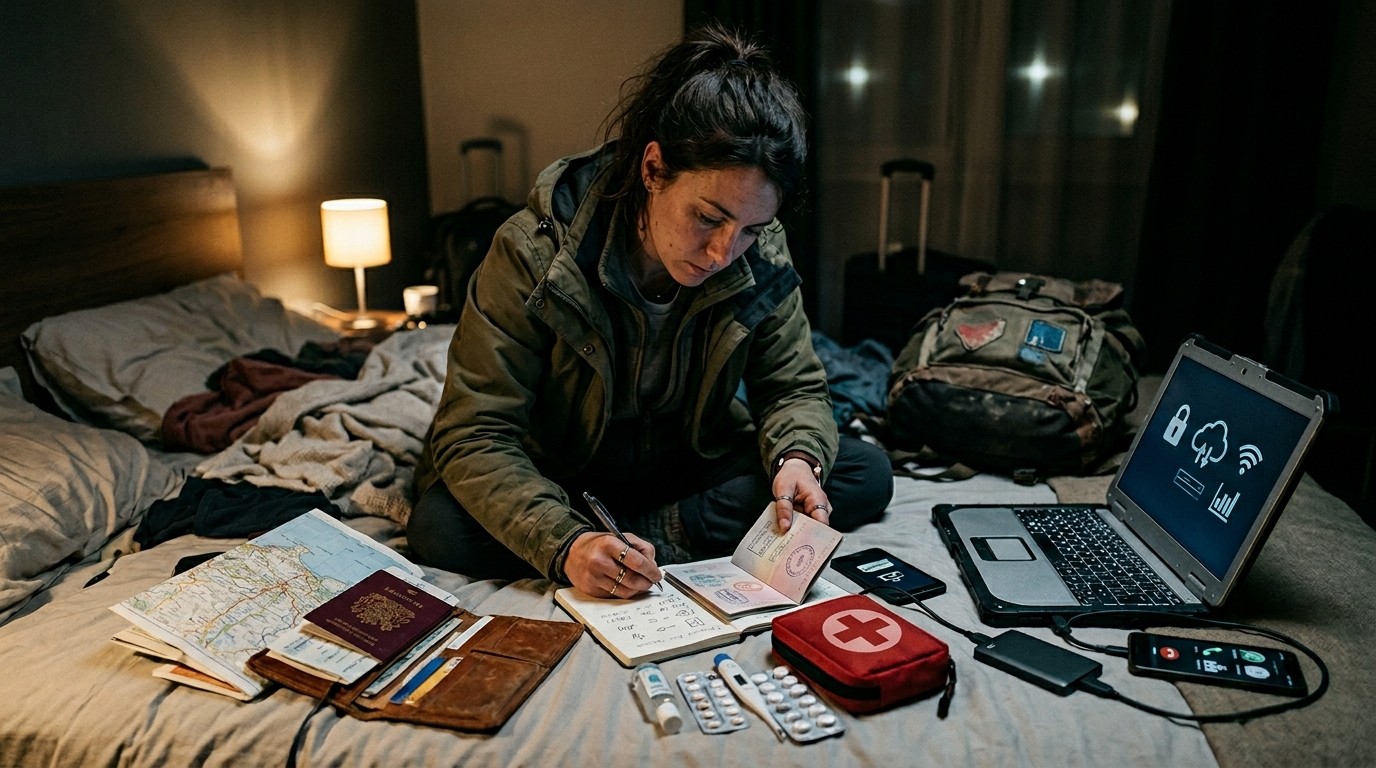
Health issues demand a different kind of calm. Know the nearest clinic, the local emergency number, and the basic process for contacting travel insurance. Solo Travel Crisis Plans should tell you where your medicine is, where your copies are, and what symptoms mean you need help immediately. Medical preparation is especially helpful when you are tired or unfamiliar with local systems, since confusion makes even simple problems feel larger.
Documents are tiny objects with huge power, which is why passport copies, ID scans, and reservation records deserve special protection. Solo Travel Crisis Plans are stronger when the originals, printed copies, and digital backups are separated, because one loss should never erase every way of proving who you are. Separate storage also makes replacement easier, because you immediately know where to look instead of wondering whether a document was lost with the bag.
Digital safety matters because phones now carry maps, money, tickets, and identity. Use strong passwords, two-factor authentication, and offline access where possible. Solo Travel Crisis Plans should assume the internet may fail at the exact moment you need directions, confirmation codes, or emergency contact details. Strong digital habits do not remove risk completely, but they do reduce the number of ways a single device failure can derail a trip.
If you lose a bag, the problem is not only clothing. It is also medication, chargers, toiletries, and the comfort of having your familiar essentials nearby. Solo Travel Crisis Plans work best when your response list includes immediate comfort items, proof of contents, and the steps required to file a report. A little preparation here prevents a lot of frustration later, especially when essential items are needed immediately rather than after a long search.
Make accommodation and local support work for you
Hotel choice shapes how quickly you can recover from trouble. A front desk, visible staff, reliable internet, and a clear location near transport make a big difference. Solo Travel Crisis Plans are easier to execute when your accommodation can help with printing, calling, or explaining a local issue. Good accommodation support can also reduce loneliness, because helpful staff often become the first stable point when the day has gone sideways.
Weather can change the logic of a trip faster than almost anything else. Rain, heat, snow, or wind may not sound dramatic in advance, but they can affect transport and energy. Solo Travel Crisis Plans should include weather-aware timing, clothing, and indoor alternatives that keep the journey moving. Weather-aware planning protects both safety and mood, since exhaustion becomes harder to manage when you are wet, overheated, or stuck in the wrong place.
Language barriers can turn a small issue into a confusing one, so it helps to prepare key phrases and offline translation tools before leaving. Solo Travel Crisis Plans become more useful when you can communicate a problem clearly instead of trying to explain under pressure with almost no context. Translation prep helps because clear words often prevent small misunderstandings from becoming larger problems involving money, timing, or missed directions.
That same logic applies to local support. Learn where the nearest pharmacy, police station, clinic, and transit hub are before arrival so you are not searching blindly later. Solo Travel Crisis Plans are much stronger when support points are mapped in advance rather than discovered in panic. Mapping support points ahead of time makes the destination feel less abstract, which in turn reduces the helplessness that can appear during an emergency.
Keep your mind organized under pressure
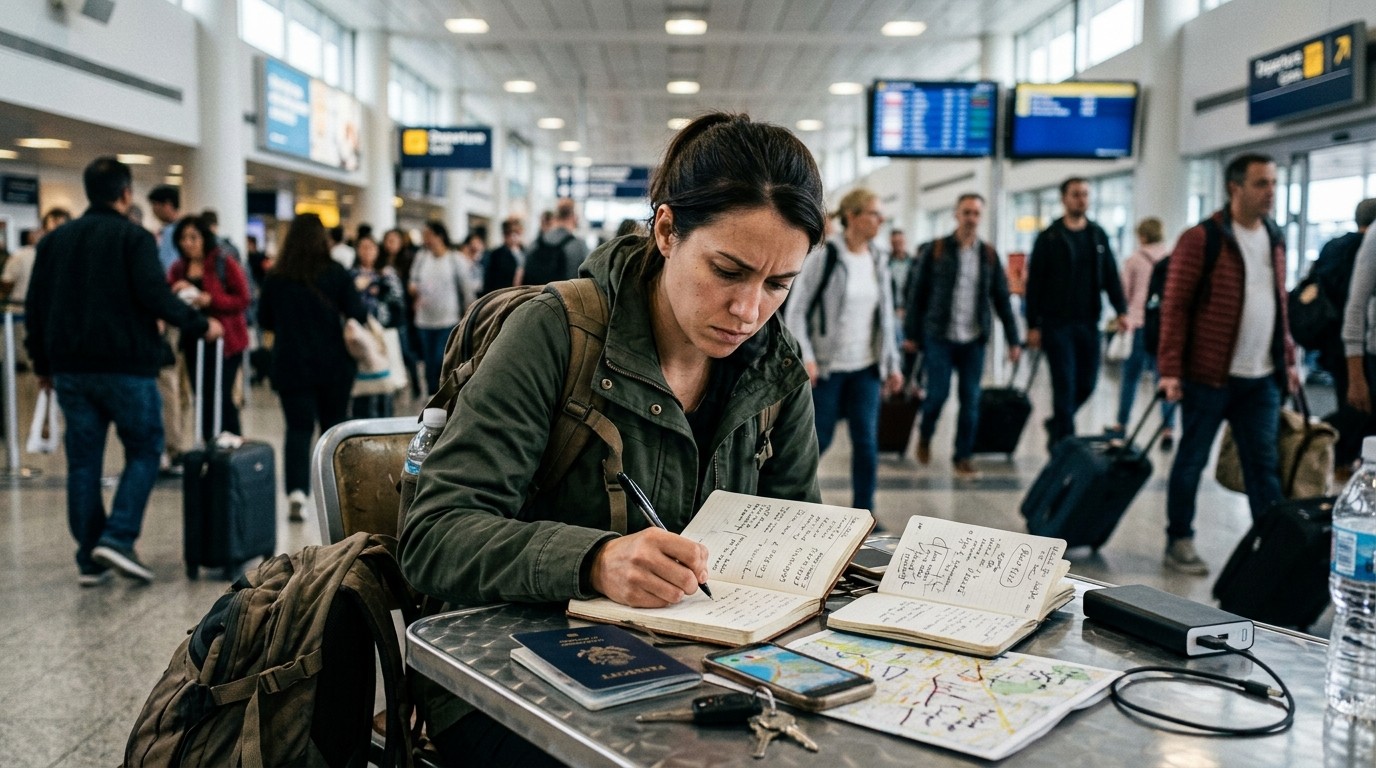
Decision fatigue is one of the quiet threats of solo travel, especially on long travel days when you have already made too many small choices. Solo Travel Crisis Plans reduce that fatigue by telling you which decisions matter first and which details can wait until you are safely settled. Simple plans are easier to remember because they leave less room for hesitation, and hesitation is often what slows recovery the most.
A simple check-in rhythm can also reduce emotional strain on both sides. You do not need constant reporting; you need dependable moments of contact that confirm arrival, movement, or a delay. Solo Travel Crisis Plans become more human when they protect independence without creating unnecessary silence. Regular contact works well because it respects independence while still letting someone close to you notice if the trip stops following the expected pattern.
Packing should support the plan instead of competing with it. Carry essentials where they are easy to reach, keep backups separate, and avoid burying important items deep in the bag. Solo Travel Crisis Plans are easier to follow when the pack itself is organized around emergencies, not just convenience. Organization in the bag usually reflects organization in the mind, and a tidy packing system makes urgent decisions much faster to carry out.
Reflection after a trip is one of the most overlooked parts of safety. Write down what felt smooth, what caused stress, and what you would change next time. Solo Travel Crisis Plans improve when you learn from real situations, because every recovered problem teaches you something useful about your habits. Reviewing what happened after the trip turns each problem into training, so the next journey begins with more evidence and less guesswork.
Confidence is not the absence of fear. It is the ability to keep functioning while fear is present. Solo Travel Crisis Plans work best when they support that kind of confidence by giving you a sequence of actions that can survive surprise, fatigue, and pressure without falling apart. Real confidence is built through repetition, so every time you use the plan successfully, the next stressful moment feels a little less overwhelming.
A support network can make solo travel feel less lonely without removing your independence. A trusted host, friend, family member, or fellow traveler can confirm details, help translate, or suggest safer routes. Solo Travel Crisis Plans are stronger when they allow support without making you dependent on strangers. Support does not weaken independence; it strengthens it by giving you more ways to respond without surrendering control of the trip.
Keep the plan practical, not dramatic
Some of the smartest trips are the ones that look simple from the outside because the planning happened earlier. Solo Travel Crisis Plans do not need to feel dramatic; they need to be realistic, short, and easy to use when your mind is busy and the situation is changing quickly. Realistic plans feel lighter because they are designed for actual conditions, not ideal conditions, and that practicality keeps them usable when life gets busy.
Good plans are invisible when nothing goes wrong and priceless when something does. Solo Travel Crisis Plans should make the first response obvious, the backup affordable, and the recovery path emotionally manageable so the trip keeps moving instead of collapsing under a single disruption. Good preparation often disappears into the background, and that is exactly what you want from a system that protects your freedom while remaining almost invisible. The better the plan fits your habits, the less effort it takes to follow, which is why personalization matters more than complexity.
When you are moving between cities, the safest choice is often the one that leaves the most margin for error. Solo Travel Crisis Plans work best when routes, departure times, and transit backups are chosen with enough buffer to survive a delay without forcing a rushed overnight decision. That kind of buffer also protects your energy, because you are less likely to make a poor choice just to recover lost time.
Conclusion
Solo Travel Crisis Plans are not about expecting trouble; they are about keeping freedom intact when trouble appears. A clear response map reduces panic, protects money, and preserves energy when travel plans shift. The smartest solo travelers do not try to control every outcome. They prepare the important parts, accept uncertainty, and trust their written steps when pressure rises. That approach keeps the journey flexible, practical, and far more enjoyable. A good plan also makes later trips easier, because each real situation teaches you where to simplify, where to back up, and where to trust yourself more. Conditions change quickly in real time.
Frequently Asked Questions (FAQ)
1. What are Solo Travel Crisis Plans?
Solo Travel Crisis Plans are written backup actions that help you respond to delays, illness, lost items, money issues, and communication gaps without freezing in panic.
2. Why do solo travelers need them?
They matter because Solo Travel Crisis Plans reduce uncertainty. When you already know what to do, you waste less time, spend less money, and feel less alone.
3. How detailed should the plan be?
It should be detailed enough to guide action but simple enough to remember under pressure. Solo Travel Crisis Plans work best when a few clear steps are easier to use than a long document nobody can read quickly.
4. What should be included before departure?
Your Solo Travel Crisis Plans should include emergency contacts, insurance details, document copies, backup payment methods, accommodation notes, and a short first-day checklist.
5. How do I handle flight anxiety?
Breathing, grounding, and simple routines help, and Solo Travel Crisis Plans should also include what to do if a gate changes or a connection is missed.
6. What is the best way to store documents?
Keep digital copies in secure cloud storage and offline copies on your phone or printed in your bag, with the originals stored separately whenever possible.
7. Should I tell someone my itinerary?
Yes. Solo Travel Crisis Plans work better when one trusted person knows your route, lodging details, and a realistic check-in rhythm.
8. How do I reduce money stress while traveling alone?
Use separate cards, a cash buffer, and a spending limit for emergencies. Solo Travel Crisis Plans become more useful when money has a defined response.
9. What should I do if I get sick abroad?
Know the nearest clinic, carry basic health information, and contact your insurer early. Keep essential medicine and emergency details easy to reach.
10. Can a crisis plan ruin the fun of travel?
No. A good plan usually does the opposite because it removes background fear and lets you enjoy the trip with more confidence.