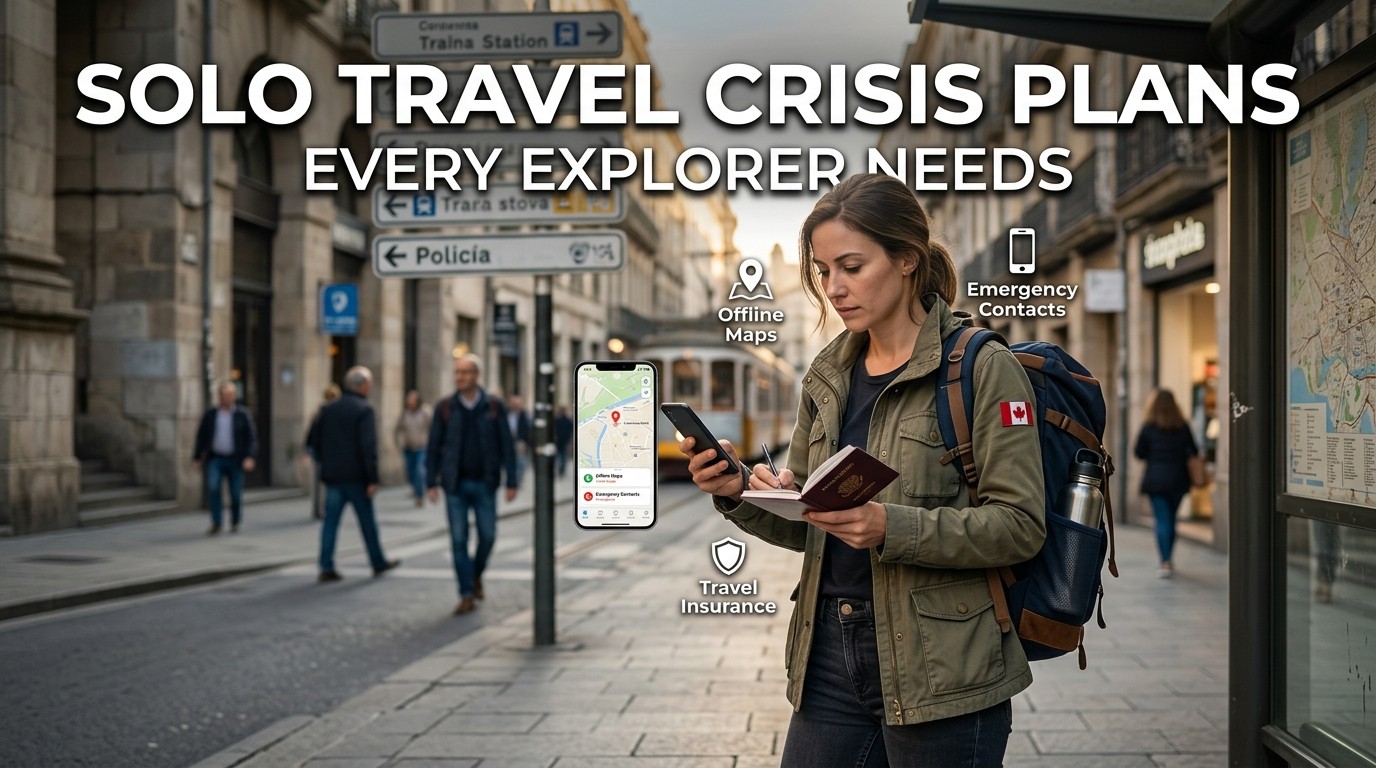
Solo Travel Crisis Plans help independent travelers stay calm, make fast decisions, and protect themselves when plans change, stress spikes, or unexpected problems appear on the road.
Solo travel is exciting because it gives you freedom, control, and a chance to move at your own pace. You choose the route. You choose the schedule. You choose when to pause and when to push forward. But that same freedom creates one important responsibility: you must be ready when things go wrong. Flights get delayed. Weather shifts. Bags disappear. Phones die. Confidence drops. And when you are traveling alone, there is no second person to take over. That is why Solo Travel Crisis Plans matter.
A strong solo trip is not built only on inspiration and spontaneity. It is also built on preparation. You do not need to fear travel to prepare for it. You simply need a clear response system for the moments when stress rises or uncertainty appears. Solo Travel Crisis Plans give you that system. They help you think before panic starts, and they help you act when time is short.
This guide explains how to build realistic crisis plans for solo travelers, what situations matter most, how to create backup options, and how to keep your emotional state steady when a trip becomes complicated. It also connects practical travel thinking with Ghost Flight Causes, Severe Flight Anxiety Psychology Hacks, Kilimanjaro Climb Routes, and Wild Adventure Travel Tips, because crisis planning is not only about emergencies. It is also about mental readiness, route awareness, and the ability to stay functional in unfamiliar places.
Why solo travelers need crisis planning more than they think
When you travel with others, problems can be shared. One person checks the map while another talks to staff. One person carries backup documents while another handles the booking. But when you travel alone, everything sits on your shoulders. That makes Solo Travel Crisis Plans more than a safety accessory. They are part of the travel structure itself.
A crisis does not have to be dramatic to matter. Missing a transfer, getting sick, losing phone signal, arriving after dark, or facing language confusion can be enough to break momentum. Solo Travel Crisis Plans help prevent a small issue from becoming a full breakdown.
The goal is not to control every possible event. That is impossible. The goal is to reduce the number of decisions you must make under pressure. When you have a system in place, you make better choices faster. That is one of the biggest strengths of Solo Travel Crisis Plans.
The psychology of solo stress
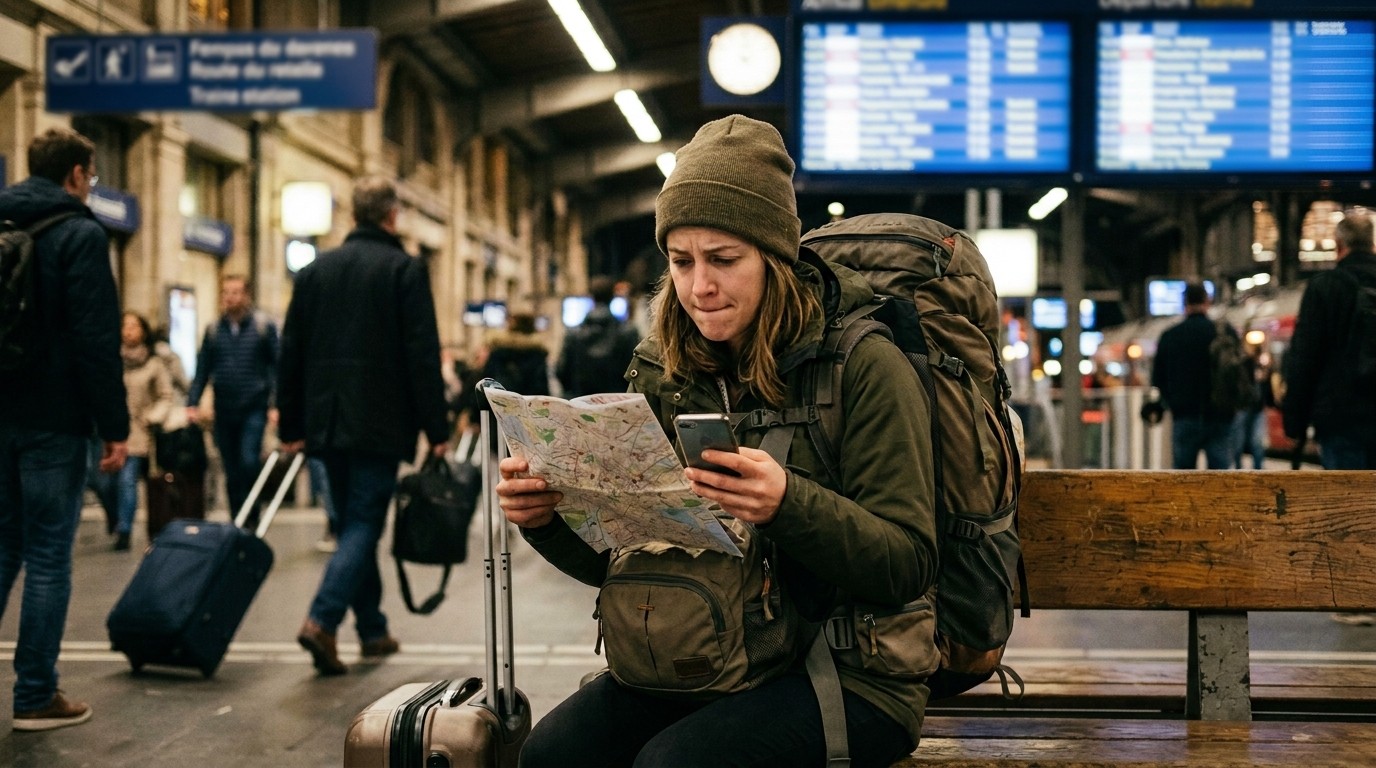
Travel stress is not only practical. It is emotional. When something goes wrong on a solo trip, the mind can quickly jump to worst-case thinking. You may feel isolated, embarrassed, rushed, or uncertain. Solo Travel Crisis Plans help reduce that mental spiral by giving you a structure to fall back on.
That structure matters because panic narrows attention. It becomes harder to prioritize, harder to communicate, and harder to think clearly. When you have already thought through likely problems, your brain does not have to invent a solution from zero in the moment.
Many solo travelers are stronger than they realize. They just need a way to stay calm when the trip becomes difficult. Solo Travel Crisis Plans are a confidence tool as much as a safety tool. They remind you that being alone does not mean being unprepared.
What belongs in a crisis plan
A good solo travel crisis plan should be simple, readable, and easy to use under pressure. It should include your documents, emergency contacts, access to money, accommodation backup, transport alternatives, communication methods, and health steps.
The best plans are not long essays. They are practical checklists. Solo Travel Crisis Plans should tell you what to do first, what to do next, and who to contact if the situation escalates.
At minimum, your plan should cover:
- Identity and document backups
- Emergency phone numbers
- Health and medication notes
- Cash, cards, and payment backup
- Alternative transport options
- Accommodation fallback options
- Offline maps and translation access
- A check-in routine for someone you trust
The more clearly you define these items, the easier it becomes to move through stress without freezing.
Building a document safety system
The first layer of Solo Travel Crisis Plans should protect your identity and bookings. Keep digital copies of your passport, visas, insurance, ticket confirmations, and important reservations. Store them in more than one place if possible.
It also helps to keep a small physical backup in a separate bag. If your phone dies or your main bag is lost, you still need a way to prove who you are and where you are supposed to be. Solo Travel Crisis Plans work best when no single failure can destroy the whole trip.
Do not assume you will remember numbers or confirmation codes when you are stressed. Write them down. Keep them accessible. That simple habit can save time, energy, and money.
The role of communication backups
A solo traveler should never rely on just one communication method. If your phone battery dies, your SIM stops working, or your internet fails, you still need a way to reach help or confirm your plans. Solo Travel Crisis Plans should include at least one backup communication method.
That may mean a second charger, a local SIM card, a power bank, an offline map, or a printed address in the local language. It may also mean telling someone at home where you will be and when you expect to check in.
This is not about fear. It is about reducing dependency. Solo Travel Crisis Plans become much stronger when you are not locked into one device or one app.
Money planning for emergencies
Money stress can turn a manageable problem into a serious one. If a hotel booking falls through, a ride cancels, or you need a different route, you may need to pay quickly. Solo Travel Crisis Plans should include financial backups.
That does not mean carrying huge amounts of cash. It means having options. Keep one main card, one backup card, some local currency if possible, and a small reserve for urgent situations. Make sure your bank knows you are traveling if needed.
A traveler who cannot access money may feel trapped even when help is available. Solo Travel Crisis Plans reduce that feeling by making sure a temporary disruption does not become a total dead end.
Accommodation fallback strategy
One of the most useful parts of Solo Travel Crisis Plans is the accommodation fallback. If your first place falls through, arrives late, or becomes unsafe, you need a backup list.
That list should include at least one nearby option in a safe area and one broader option in case the entire neighborhood becomes inconvenient. It also helps to know how late check-in works, whether reception is available, and what cancellation terms apply.
If you are arriving after a long flight or during a delay, you are already tired. A backup plan saves you from making rushed decisions at the worst possible moment.
Transport backup decisions
Transportation problems are common on solo trips. Trains can run late. Taxis can overcharge. Public transit may stop early. Weather can disrupt routes. Solo Travel Crisis Plans should always include fallback transport thinking.
The simplest approach is to know at least two ways to get from the airport or station to your accommodation. Also know what the journey costs roughly, how long it takes, and whether the route is safe at the time you arrive.
When you know your options in advance, you are less likely to panic if the first one fails. Solo Travel Crisis Plans are strongest when they anticipate route failure instead of assuming everything will run smoothly.
Health, fatigue, and personal limits
Solo travel becomes harder when your energy drops. Hunger, dehydration, poor sleep, and mild illness can make normal problems feel much bigger. That is why Solo Travel Crisis Plans should include basic health awareness.
Know where the nearest pharmacy, clinic, or hospital is. Carry any essential medication in your hand luggage. Keep water, snacks, and rest time in your plan. These are small details, but they matter when you are alone and tired.
Travel is often romanticized as an endless adventure, but the body still needs care. Solo Travel Crisis Plans help you respect that reality.
Managing fear before it turns into panic
Fear can be useful if it helps you prepare. It becomes a problem when it stops you from acting. Some travelers freeze when plans change because they never expected disruption. Solo Travel Crisis Plans reduce that shock.
It also helps to understand your personal triggers. Some people worry about missing flights. Others fear losing documents, getting lost, or being unable to communicate. Once you know your trigger, you can prepare around it.
This is where Severe Flight Anxiety Psychology Hacks can also help. Even if your main issue is not flying itself, the same mental tools apply: slow breathing, clear checklists, grounding techniques, and realistic self-talk. Solo Travel Crisis Plans work better when your nervous system is not overloaded.
Emotional recovery after a disruption

A crisis plan should not only tell you what to do during the issue. It should also help you recover after it. A missed connection or bad delay can leave you emotionally drained. Solo Travel Crisis Plans should include a reset step.
That reset might be as simple as eating, hydrating, finding a quiet place, checking your next three actions, and reminding yourself that the trip is still moving forward. You do not need to solve everything instantly. You need to restore clarity.
The faster you recover emotionally, the faster you can make good decisions again. Solo Travel Crisis Plans help you do that by making recovery part of the plan instead of an afterthought.
Crisis thinking for airport travel
Airports are full of moving parts, which makes them a common stress point for solo travelers. Delays, gate changes, crowded spaces, and unclear instructions can all create pressure. Solo Travel Crisis Plans should include airport-specific steps.
Know your arrival time, boarding time, security needs, terminal layout, and what to do if the gate changes. Keep chargers, documents, snacks, and water close. If you are stuck, know where to go for help and how to ask for it.
This is also where Ghost Flight Causes become relevant in a practical sense. Delays, missed bookings, or low-visibility route issues can disrupt travel patterns unexpectedly. Understanding how these situations arise helps you anticipate the kinds of airport problems that need backup planning.
Crisis planning for remote and adventurous trips
Solo travel becomes even more complex in remote places. Mountain treks, island routes, rural areas, and wilderness trips all require more preparation. Solo Travel Crisis Plans become essential when help is farther away.
For example, if you are planning a trek, you need to think about weather, altitude, communication gaps, route difficulty, and evacuation options. Even if your travel is not extreme, a remote destination changes the stakes. You cannot rely on instant convenience.
This is where Kilimanjaro Climb Routes offer a useful example. A serious mountain trip requires awareness of route differences, pace, physical adaptation, and emergency possibilities. The same mindset applies to solo travel generally: know the route, know the risks, and know your exit options.
Wild adventure settings and risk awareness
Adventure travel is exciting because it pushes comfort zones. But excitement should not erase caution. Solo Travel Crisis Plans are especially important when the environment is unpredictable.
Wild Adventure Travel Tips often emphasize pacing, weather awareness, guide selection, packing discipline, and communication habits. Those tips are not only for adventure seekers. They reflect the broader truth that the more unpredictable the setting, the more important the plan.
If you are hiking, camping, diving, exploring rural roads, or moving through unfamiliar terrain, your crisis plan should be practical and conservative. Think about water, shelter, route options, and the possibility that the original plan might need to change quickly.
Building a simple decision tree
One of the best ways to reduce panic is to build a decision tree before you travel. Solo Travel Crisis Plans become easier to use when you already know what to do if a certain problem appears.
For example:
- If the flight is delayed, check the new arrival time, then revise transport and accommodation.
- If the phone dies, use offline backups and contact the emergency person later.
- If the hotel is unavailable, move to the backup option already saved.
- If you feel unwell, slow the day down and seek help early.
This kind of structure removes uncertainty. Instead of thinking from scratch, you follow a path you already wrote.
The value of routine check-ins
A solo traveler does not need to constantly update people back home, but regular check-ins can reduce concern and improve accountability. Solo Travel Crisis Plans should include a communication rhythm.
That might mean sending a short message when you arrive somewhere, when you change cities, or at the end of the day. The point is not surveillance. The point is reassurance and traceability.
If something goes wrong, someone should roughly know where you last were and what your plan was. That small habit can become extremely useful in a genuine emergency.
How to stay calm in the middle of confusion
When a trip goes wrong, your first job is not to solve everything. Your first job is to get calm enough to think. Solo Travel Crisis Plans are most effective when they include a calm-down routine.
That routine may include breathing slowly, sitting down, drinking water, reading the next three steps, and avoiding unnecessary movement. The body often needs a moment before the mind can work properly.
Once you slow down, you can ask better questions. What happened? What is the immediate risk? What is the next best action? Solo Travel Crisis Plans guide you back to those basics.
What to pack differently when traveling alone
Packing for solo travel is not only about clothing. It is also about independence. You need enough supplies to handle small failures without losing control. Solo Travel Crisis Plans should influence your packing list.
Helpful items include a charger, power bank, water bottle, backup cash, photocopies, medication, a small first aid kit, offline maps, and a basic note with addresses and contacts. These items may seem boring, but boring is good when something goes wrong.
A smart packing strategy makes solo travel more resilient. It gives you a margin of safety.
Crisis categories and actions
| Crisis Type | Example | Best First Response |
|---|---|---|
| Transport disruption | Missed flight, delayed train | Check alternatives immediately |
| Document issue | Lost passport, missing booking | Use backups and contact support |
| Health issue | Fatigue, illness, dehydration | Slow down and seek help |
| Accommodation problem | Booking cancelled, unsafe stay | Move to fallback option |
| Communication failure | Dead phone, no signal | Use offline backups |
| Emotional overload | Panic, fear, confusion | Pause, breathe, reset |
This table helps make Solo Travel Crisis Plans concrete and easier to follow.
What beginners often overlook
Beginners usually think about what they want to see, not what might interrupt the trip. That is normal. But solo travel requires a second layer of thinking. Solo Travel Crisis Plans help bridge that gap.
Common oversights include not having offline information, not knowing the local transport system, assuming internet will always work, and underestimating fatigue. These are small mistakes until they happen at the wrong time.
The good news is that most of these issues are easy to prepare for. A little planning goes a long way.
How experience changes crisis confidence
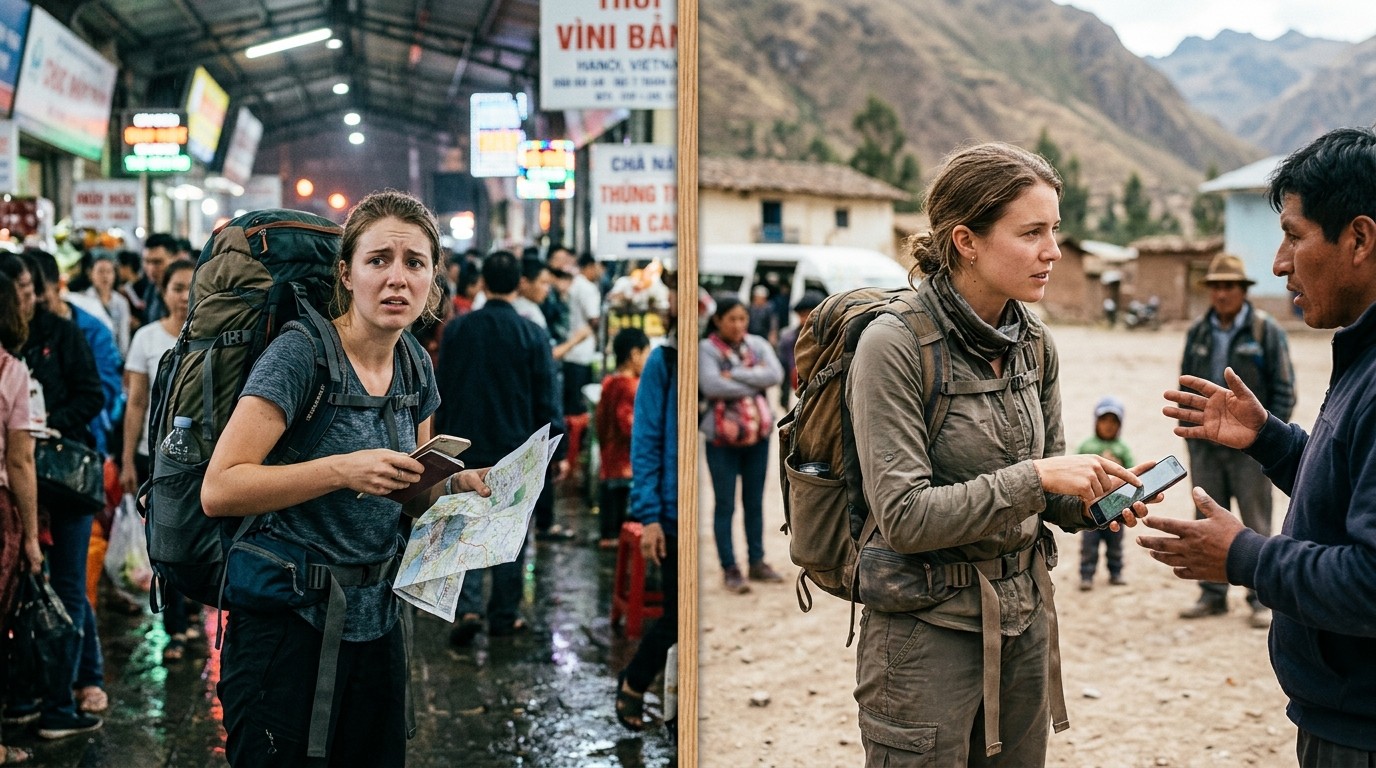
The more you travel alone, the more you learn what kinds of disruptions actually matter to you. Solo Travel Crisis Plans can become more personal over time.
A seasoned traveler knows which problems are manageable, which ones need urgent action, and which ones just require patience. That confidence is not luck. It comes from having thought through the possibilities.
Even experienced travelers still benefit from a written plan. Memory can fail under stress. A plan can remain clear.
The role of flexibility
Planning is important, but rigidity is risky. Solo Travel Crisis Plans should create structure without making you inflexible. If the route changes or the day shifts, the plan should help you adapt.
Flexibility means keeping the trip’s goals while allowing the details to change. You may need a later train, a different hotel, or a shorter activity day. That is not failure. That is smart travel.
The strongest solo travelers are not the ones who never encounter problems. They are the ones who adapt without losing direction.
Long-term confidence building
Confidence grows when you prove to yourself that you can handle uncertainty. Every time a small issue happens and you manage it calmly, your trust in yourself increases. Solo Travel Crisis Plans make those wins more likely.
That confidence changes travel completely. Instead of fearing the unknown, you start to trust your own process. You become more willing to travel farther, stay longer, and explore more freely.
This is the hidden reward of crisis planning. It does not just protect the trip. It expands your freedom.
Strategic takeaways for solo explorers
Solo travel is most enjoyable when independence is supported by preparation. Solo Travel Crisis Plans help you stay flexible, calm, and functional when the route changes or stress rises.
The best plans are simple, portable, and honest about risk. They cover documents, money, communication, health, transport, and emotional reset. They also help you travel with more confidence because you know what to do if the trip gets messy.
Conclusion
Solo Travel Crisis Plans are not about expecting disaster. They are about removing unnecessary fear and making sure you can respond well when a trip changes unexpectedly. A good plan protects your documents, communication, money, health, accommodation, and emotional clarity. It also gives you a way to stay steady when delays, confusion, or discomfort appear. For solo travelers, that preparation is not restrictive. It is empowering. The more prepared you are, the more freedom you have to explore with confidence. A strong crisis plan turns solo travel from a nervous gamble into a manageable, flexible, and deeply rewarding experience.
Frequently Asked Questions (FAQ)
1. What are Solo Travel Crisis Plans?
They are simple preparation systems that help solo travelers respond to disruptions, emergencies, and stress more effectively.
2. Why are they important?
Because solo travelers do not have a travel partner to share the burden when things go wrong.
3. Should I include digital and physical backups?
Yes. Having both makes your plan more reliable if your phone dies or your bag is lost.
4. How do Ghost Flight Causes relate to travel planning?
They remind travelers that schedule changes and hidden disruptions can happen, so backup planning matters.
5. Can Severe Flight Anxiety Psychology Hacks help solo travelers?
Yes. The same calm-down tools can help when stress rises during solo travel.
6. Why mention Kilimanjaro Climb Routes in a solo travel guide?
Because remote or difficult trips need route awareness and emergency thinking, which are core parts of crisis planning.
7. Do Wild Adventure Travel Tips apply to regular solo trips?
Yes. They reinforce habits like pacing, route awareness, and backup thinking.
8. How much detail should a crisis plan have?
Enough to guide action quickly, but not so much that it becomes hard to use under pressure.
9. Should I tell someone my travel plan?
Yes. A simple check-in routine adds safety and helps others know where you are if something goes wrong.
10. What is the biggest benefit of planning ahead?
It helps you stay calm and make better decisions when the trip becomes uncertain.