Real-time processing near the source helps industries reduce delay, improve reliability, and unlock smarter operations across factories, hospitals, stores, vehicles, and connected infrastructure.
As data grows faster than centralized systems can always handle, organizations need faster decisions closer to where events happen. The value of Industry Edge Computing Use Cases is not just speed; it is also resilience, privacy, and lower bandwidth pressure. In a world where machines, sensors, cameras, and mobile devices generate constant streams of information, waiting for a distant cloud response can be too slow for safety-critical work, customer experience, or operational efficiency. That is why many teams are moving from “send everything to the cloud” thinking to a more balanced architecture where local processing handles the urgent tasks first. Industry Edge Computing Use Cases help leaders understand which workloads belong near devices, which can stay in the cloud, and how to design systems that scale without losing control.
A useful way to think about the shift is simple: the cloud is excellent for storage, large-scale analytics, and coordination, while the edge is best for immediate action. In Industry Edge Computing Use Cases, that distinction becomes practical in ways that affect uptime, quality, and cost. A machine can stop before damage occurs. A camera can flag a hazard before a worker is harmed. A retail shelf can report stock conditions before a customer walks away. Each of these moments rewards faster processing, and Industry Edge Computing Use Cases make that speed available where it matters most.
The best strategy is not to replace cloud systems, but to create a layered architecture. Edge nodes filter, compress, prioritize, and act on data locally, then send only valuable insights upstream. This reduces noise and improves decision-making. Industry Edge Computing Use Cases are especially effective when latency, connectivity, privacy, or local autonomy matters more than raw centralization. That is why the topic has become a core part of digital transformation conversations across nearly every sector.
What edge computing actually changes
To understand the shift, it helps to compare old and new operating models. Traditional systems pushed every event to a central server, then waited for instructions. That model worked when data was limited and delays were acceptable. Today, Industry Edge Computing Use Cases challenge that assumption by moving computation closer to the action. The result is faster alerts, more stable operations, and better use of network resources. For many organizations, this change is not cosmetic; it is operationally transformative.
One important benefit is improved decision timing. When a temperature sensor detects overheating, or a camera spots an unsafe pattern, the system does not need to wait for round-trip cloud communication. Industry Edge Computing Use Cases enable immediate local responses such as shutting down a machine, changing a route, or alerting staff. Those seconds can protect assets, reduce downtime, and prevent mistakes. In high-volume environments, that timing advantage compounds over thousands of events every day.
Another major shift is that edge computing supports more contextual intelligence. Instead of moving every raw data point to a central platform, local devices can analyze the event, retain only what matters, and send a summary. Industry Edge Computing Use Cases therefore reduce bandwidth costs while improving signal quality. This is especially useful where networks are unstable, overloaded, or expensive. The edge becomes a filter, a guardian, and an accelerator all at once.
Where the value shows up first
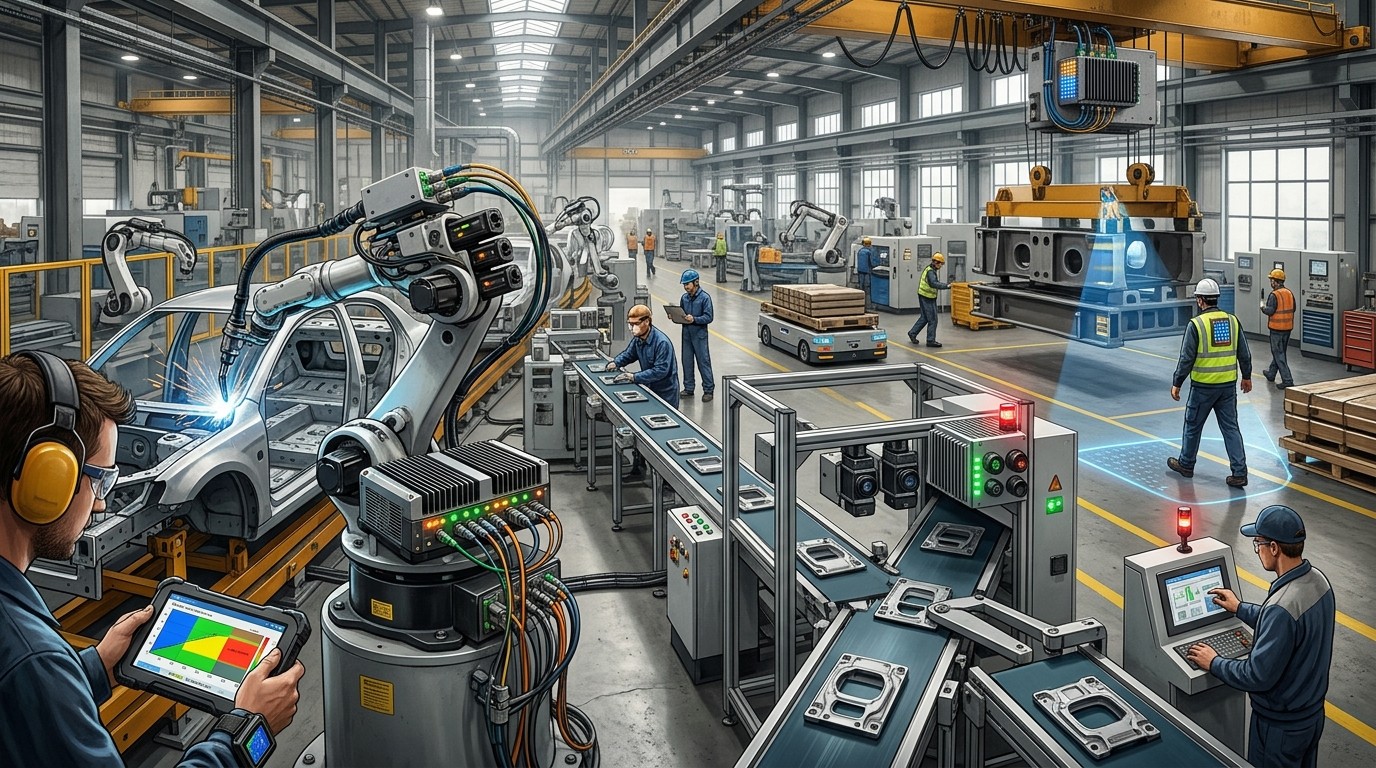
Different sectors adopt this architecture for different reasons, but the first gains usually appear in latency-sensitive, bandwidth-heavy, or safety-critical environments. Industry Edge Computing Use Cases often start in places where a delayed response creates a real cost. Factories need machine oversight, logistics teams need route awareness, hospitals need fast monitoring, and stores need local automation. In each case, the edge improves the speed and quality of the response.
A second place where value appears quickly is data reduction. Many businesses collect massive amounts of sensor and video data, but not all of it needs to travel or be stored centrally. Industry Edge Computing Use Cases allow local systems to pre-process raw information and forward only the important portions. This helps teams lower storage expenses, simplify compliance, and avoid overload in their analytics pipelines. A better data shape often matters as much as a faster response.
The third early benefit is continuity during outages. When the cloud connection is unstable, local systems can continue to function. That autonomy is valuable in remote sites, moving vehicles, and mission-critical facilities. Industry Edge Computing Use Cases offer a practical path to reliability because they keep essential logic close to the operation itself. Even if upstream systems are unavailable, the local environment can still make safe, informed decisions.
A practical view of where edge fits best
| Environment | Edge benefit | Typical business result |
|---|---|---|
| Manufacturing | Real-time machine response | Less downtime and fewer defects |
| Healthcare | Local patient monitoring | Faster alerts and safer care |
| Retail | In-store analytics | Better service and inventory control |
| Logistics | Route and fleet awareness | More efficient deliveries |
| Energy | Local grid intelligence | Better stability and response |
This view makes Industry Edge Computing Use Cases easier to prioritize because it links technical design to business outcomes. A leader does not need to be an engineer to see the value. If delay hurts performance, if the network is unreliable, or if the data is too large to move efficiently, the edge likely belongs in the solution. Industry Edge Computing Use Cases are strongest when they improve something measurable rather than simply adding another layer of technology.
Manufacturing and machine monitoring
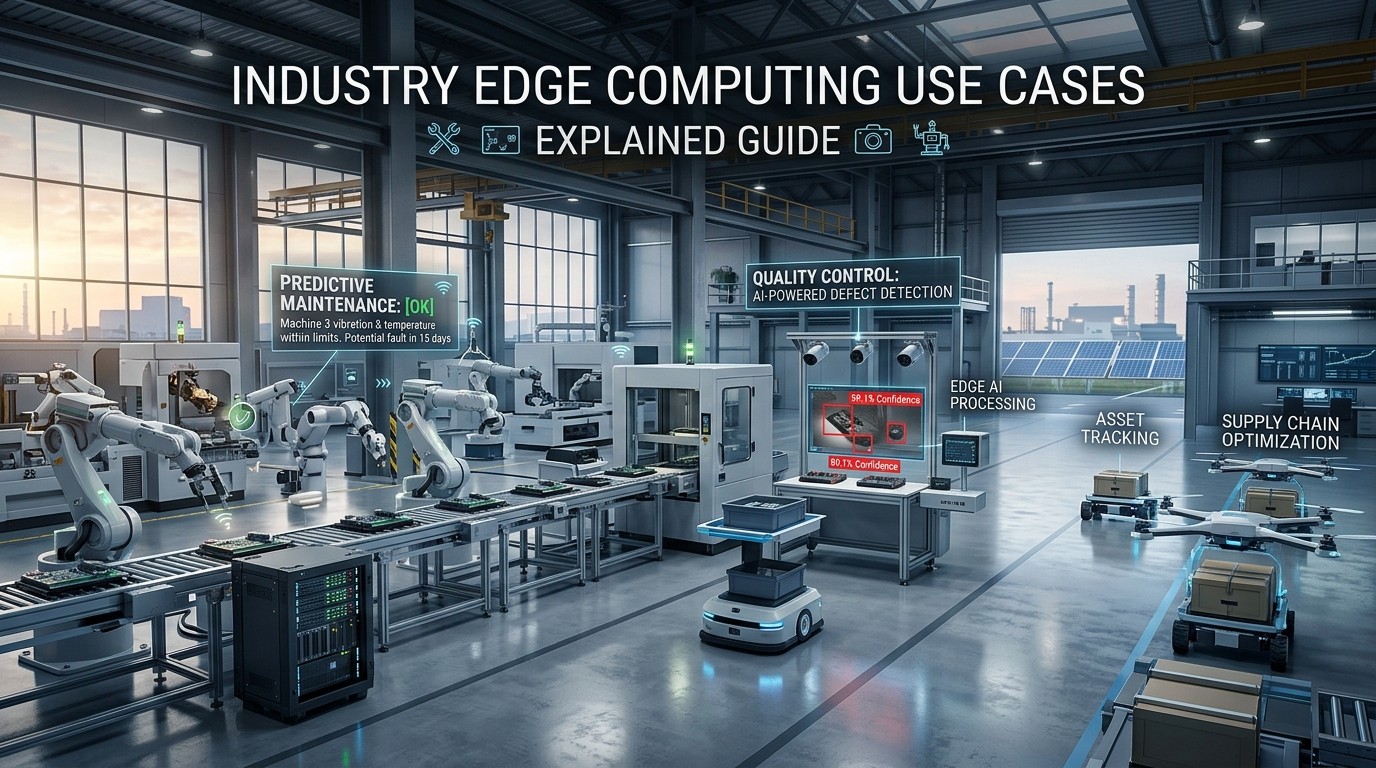
Factories are one of the most natural homes for edge systems because production lines depend on timing, precision, and uptime. Industry Edge Computing Use Cases in manufacturing often focus on predictive maintenance, anomaly detection, quality inspection, and machine synchronization. When a sensor notices unusual vibration or temperature drift, local logic can flag the issue immediately. That means technicians can act before a failure turns into a shutdown. The business value is direct: fewer interruptions, lower repair costs, and higher output consistency.
A plant can also use local intelligence to inspect products in motion. Cameras and vision models running at the edge can detect defects without sending every image to a central server. Industry Edge Computing Use Cases make that practical because the inspection happens in real time, at line speed. The system can reject faulty items instantly, rather than discovering problems only after a batch has already advanced too far. That improves quality control while reducing waste.
Manufacturers also benefit from segmented control. Not every machine or production cell needs the same response pattern. Edge controllers can be tuned for specific equipment, specific shifts, or specific tolerance levels. Industry Edge Computing Use Cases are especially effective in such environments because they support local adaptation without sacrificing centralized oversight. The cloud can still monitor broad performance trends, while the edge handles the immediate work that keeps the line moving.
Healthcare and patient safety
Hospitals, clinics, and remote care programs need systems that respond quickly and reliably. Industry Edge Computing Use Cases in healthcare often involve bedside monitoring, wearable devices, imaging workflows, and local alerts for critical changes in patient status. A system that notices an abnormal pattern in heart rate or oxygen levels can warn staff immediately. That speed can improve safety, reduce response time, and support more proactive care.
A second advantage is data privacy. Patient information is sensitive, and not every data stream should travel farther than necessary. Industry Edge Computing Use Cases can help by processing certain data locally and forwarding only what is required for treatment or records. This supports compliance while reducing unnecessary exposure. It also helps hospitals manage network congestion, which can be important when many systems are operating at once.
Hospitals also face practical constraints such as limited bandwidth, device diversity, and urgent workflow demands. Edge architecture can make those systems easier to coordinate because the local environment handles the most time-sensitive tasks. Industry Edge Computing Use Cases in healthcare are therefore not just about technology quality; they are about human outcomes. When a nurse gets a faster warning or a clinician sees a clearer signal, the system has done more than compute data. It has supported care.
Retail and customer experience
Retail environments need quick decisions about stock, foot traffic, promotions, and service quality. Industry Edge Computing Use Cases in retail often include smart shelves, cashierless checkout support, local video analytics, and in-store personalization. A store can notice empty shelves sooner, adjust product placement, or trigger staff assistance at the right time. The result is a smoother customer journey and less lost revenue from missed opportunities.
Retail is also highly sensitive to experience. If a system is slow, shoppers feel it immediately. Industry Edge Computing Use Cases help stores create more responsive environments by reducing delay in common interactions. For example, a camera system can identify a long queue and alert staff in real time. A local analytics node can detect dwell patterns and support store layout decisions. Those small improvements create a stronger impression than many marketing campaigns can.
There is also a strategic side to retail edge deployment. Store networks often include many devices, but not every device needs to transmit raw data constantly. Industry Edge Computing Use Cases reduce unnecessary bandwidth by filtering data locally. That means the organization can keep more useful insight while spending less on transport and storage. In a competitive market, that efficiency matters as much as the customer-facing gain.
Transportation, fleets, and logistics
Vehicles and distribution networks generate constant movement data, and that makes them ideal for local processing. Industry Edge Computing Use Cases in logistics commonly include route optimization, fleet diagnostics, driver safety alerts, cargo condition monitoring, and warehouse automation. When a truck or delivery system needs an immediate adjustment, waiting for a distant cloud response may be too slow. Edge systems make the response local and more dependable.
Warehouses also benefit from this approach because operations are dense and time-sensitive. Scanners, cameras, robotics, and conveyor systems can coordinate faster when local intelligence is available. Industry Edge Computing Use Cases help these environments reduce errors, improve throughput, and maintain stability even when the network is under pressure. That can be a major advantage in fulfillment centers where milliseconds and order accuracy both matter.
A strong logistics system also needs visibility without overload. Sending every location ping and sensor reading to a central platform can create noise. Industry Edge Computing Use Cases solve that by summarizing what matters, filtering what does not, and prioritizing events that require action. The result is better coordination across the network, without burdening every part of it with unnecessary data movement.
Energy, utilities, and critical infrastructure
Power systems, water systems, and utility networks depend on continuity. Industry Edge Computing Use Cases in this space often include grid balancing, fault detection, remote monitoring, and local automation for substations or field equipment. When equipment operates in remote or difficult-to-reach locations, the edge provides autonomy. That means systems can continue to make safe decisions even if connectivity is limited.
Utilities also need to respond to environmental changes quickly. Demand spikes, equipment faults, and weather disruptions can all create pressure on a network. Industry Edge Computing Use Cases help by giving local assets the ability to detect and react in real time. A local node can isolate a problem, alert operators, or rebalance demand before the issue spreads. That can reduce service interruptions and protect infrastructure.
Another benefit is that critical infrastructure often includes long-lived assets. These systems do not change as rapidly as consumer software, so reliability matters more than novelty. Industry Edge Computing Use Cases are attractive here because they support robust, distributed decision-making without requiring constant dependence on a central service. The architecture becomes more stable, which is exactly what critical operations need.
Agriculture and food production
Modern agriculture increasingly depends on sensors, drones, environmental controls, and local automation. Industry Edge Computing Use Cases in agriculture include irrigation control, soil monitoring, crop health detection, livestock observation, and machinery tracking. A farmer does not need every reading to travel to the cloud before acting. Local systems can make faster, more efficient decisions based on current conditions.
This matters because many agricultural sites are remote and network quality may vary. Industry Edge Computing Use Cases are valuable in those settings because they keep essential intelligence close to the field. If temperature, moisture, or pest pressure changes suddenly, the system can respond without waiting for connectivity. That makes operations more resilient and more efficient in places where timing and resource use are tightly linked.
Food production also benefits from traceability. Edge systems can help monitor processing steps, storage conditions, and transport temperature. Industry Edge Computing Use Cases therefore support quality assurance from farm to shelf. When local devices filter and summarize the right events, managers get useful oversight without drowning in raw data. That combination of speed and accountability is especially important in food systems.
Telecom, 5G, and network intelligence
Telecom networks need fast orchestration, low latency, and high reliability because they support other digital systems. Industry Edge Computing Use Cases in telecom include network slicing support, localized service delivery, radio access optimization, and real-time analytics. A telecom operator can place processing closer to users so services feel faster and more stable. That is especially important for media, gaming, industrial automation, and emergency response applications.
A strong example is Telecom Edge Computing Use Cases in dense urban areas where user demand changes quickly. Local nodes can balance traffic, reduce congestion, and deliver faster application responses. This helps network operators improve quality of service while reducing the strain on central infrastructure. The edge also allows some services to be hosted closer to the user, which can improve experience significantly.
Telecom systems are also the backbone of many other edge deployments. Industrial sites, hospitals, and smart buildings may rely on local connectivity to keep their edge nodes synchronized. Industry Edge Computing Use Cases in telecom therefore act as an enabler for many other industries. The network is not just carrying data; it is becoming part of the intelligence layer itself.
Security, surveillance, and public safety
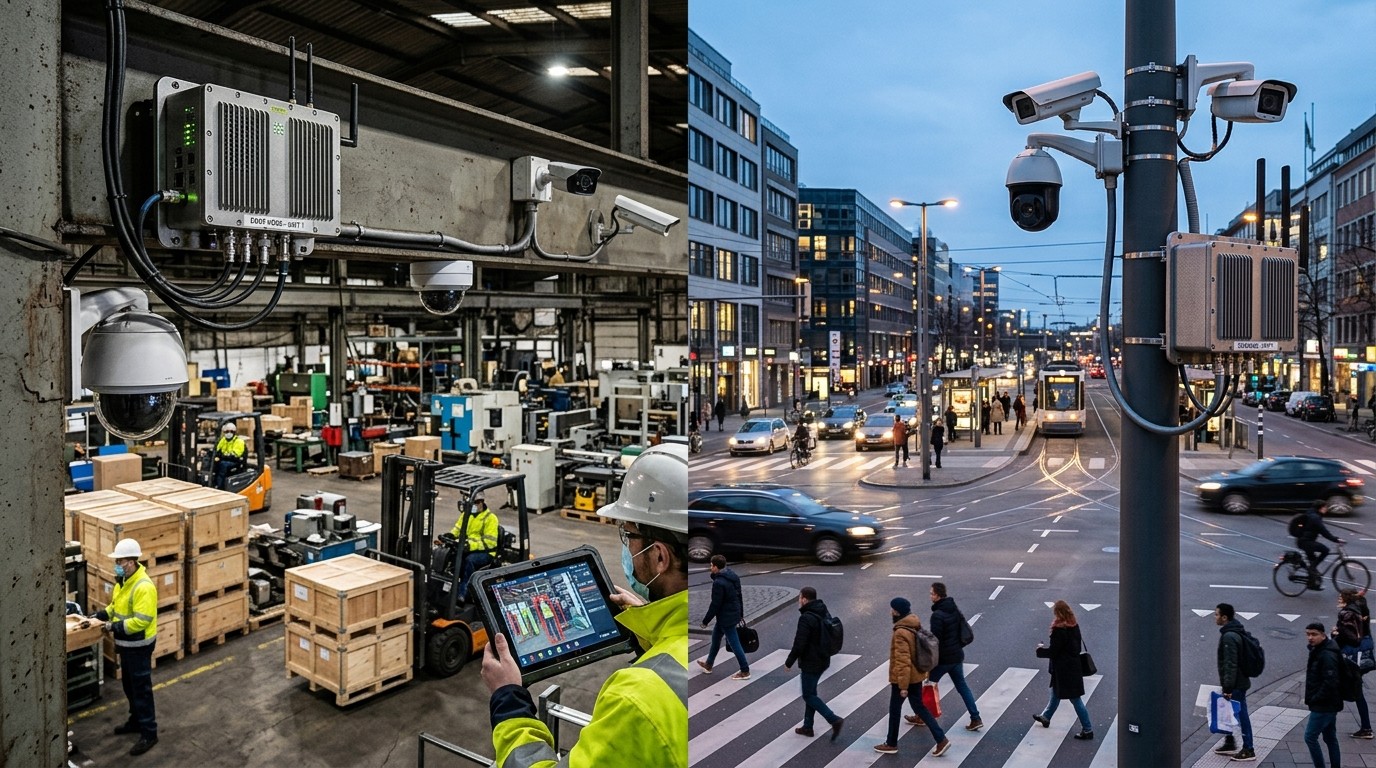
Safety environments are a natural fit for local processing because delay can increase risk. Industry Edge Computing Use Cases in security often include video analytics, intrusion detection, crowd monitoring, access control, and hazard recognition. A local camera system can spot suspicious motion or unsafe behavior without sending every frame to a central server. This reduces delay and improves the chance of timely intervention.
Public safety settings also need efficient data management. Large camera networks can produce overwhelming volumes of video, but only a small fraction of that footage may be urgently relevant. Industry Edge Computing Use Cases solve this by identifying events locally and preserving only the important clips or alerts. That improves searchability and reduces storage pressure while helping responders move faster.
There is also an operational trust factor. When security teams know the system can detect, classify, and alert at the edge, they gain more confidence in fast decision-making. Industry Edge Computing Use Cases make that possible because they combine automation with local context. The result is not just more surveillance, but smarter surveillance that prioritizes action.
Smart cities and public services
Cities are complex ecosystems of transport, energy, waste, lighting, utilities, and public facilities. Industry Edge Computing Use Cases in smart cities often include traffic optimization, environmental monitoring, intelligent lighting, parking systems, and public service alerts. Local processing helps city systems react to real conditions instead of relying only on delayed central coordination.
Traffic management is one of the clearest examples. A camera or sensor at an intersection can detect congestion and adjust signals locally. Industry Edge Computing Use Cases allow that decision to happen faster, which can improve flow and reduce emissions. Similar logic applies to smart lighting, where local controls can respond to pedestrian presence or ambient conditions without central lag.
Public services also benefit from localized insight because cities often operate under budget constraints. Industry Edge Computing Use Cases reduce network load while improving service quality. A city does not need every meter reading, camera frame, or environmental update sent far away before an action is taken. Instead, the edge can prioritize what matters now and report the rest later. That makes urban systems more manageable and more responsive.
Oil, gas, and mining operations
Remote industrial sites often operate in harsh conditions with limited connectivity and high safety requirements. Industry Edge Computing Use Cases in oil, gas, and mining include equipment monitoring, environmental sensing, remote control, and worker safety systems. These environments demand immediate reaction because delays can increase risk, damage assets, or disrupt extraction and processing.
A remote drilling site or mine tunnel may not always have reliable bandwidth. Industry Edge Computing Use Cases are valuable because they keep essential intelligence on site. If a gas reading changes, a machine vibrates abnormally, or a perimeter sensor detects an issue, the local system can respond right away. That can reduce risk and improve continuity without depending entirely on external infrastructure.
These sectors also benefit from predictive insight. By analyzing sensor patterns locally, teams can catch small changes before they become expensive failures. Industry Edge Computing Use Cases make that possible by combining local inference with broader cloud-based analysis. The cloud can help with long-term planning, while the edge helps with immediate operational safety and performance.
Financial services and branch operations
Banks and financial organizations may not be the first industries people associate with edge systems, yet the use cases are strong. Industry Edge Computing Use Cases in finance can support branch analytics, fraud detection at the point of interaction, kiosk management, ATM monitoring, and local customer service optimization. Immediate response matters because customer trust and operational continuity are both important.
A local system can also improve service in branches with limited connectivity or heavy traffic. Industry Edge Computing Use Cases allow certain functions to continue even if the central network is slow. That reduces friction for customers and staff. It can also support better personalization at the point of service by giving local terminals access to the most relevant information without overloading the main system.
Security and compliance are equally important in finance. Edge processing can help reduce the amount of raw sensitive data moved across the network while still enabling useful analysis. Industry Edge Computing Use Cases therefore support both performance and governance. In a sector where trust is fragile, that combination is especially valuable.
Buildings, facilities, and workspace intelligence
Offices, campuses, hotels, and commercial buildings are filled with data opportunities. Industry Edge Computing Use Cases in building management often include HVAC optimization, occupancy tracking, access systems, energy use management, and predictive maintenance for elevators or mechanical systems. When these systems work locally, they can respond to changing conditions faster and more efficiently.
A building does not need to send every motion event or temperature reading to a distant platform before adjusting comfort settings. Industry Edge Computing Use Cases allow local controllers to act quickly and preserve energy. That can improve both occupant experience and operating cost. The building becomes more adaptive rather than merely reactive.
There is also a maintenance advantage. Local analytics can flag unusual patterns in airflow, power consumption, or equipment vibration. Industry Edge Computing Use Cases make it easier to catch problems early, which can prevent downtime and reduce emergency repair expenses. For facility managers, that turns operational data into practical savings and better service quality.
How teams should start planning
The first step is not buying hardware. It is defining the problem clearly. Industry Edge Computing Use Cases should begin with an operational pain point such as latency, bandwidth cost, privacy risk, or the need for autonomous response. Once the issue is identified, teams can decide whether local processing, cloud processing, or a hybrid model is best. That prevents waste and keeps the architecture focused.
The next step is to map data flow. Which events must be handled instantly? Which can wait? Which can be summarized locally and reported later? Industry Edge Computing Use Cases become easier to manage when every data path has a purpose. Teams should also consider device durability, maintenance complexity, security controls, and update mechanisms. Edge systems work best when they are designed for real-world conditions, not just lab environments.
A useful planning practice is to start small. Choose one site, one workflow, or one critical process, then measure the result. Industry Edge Computing Use Cases tend to scale best when early pilots prove that the approach improves time, cost, or reliability. That proof makes expansion easier because leaders can see the value in concrete terms rather than abstract promises.
What success looks like after deployment
Success is not just lower latency. It is a system that creates better decisions with less friction. Industry Edge Computing Use Cases should improve the way people work, machines respond, and data moves. A successful deployment usually shows up in fewer incidents, faster action, lower bandwidth consumption, and more stable operations. Those gains are especially meaningful when the environment is complex.
It is also important to watch for hidden benefits. A local system may reduce pressure on central analytics tools, improve compliance posture, and simplify disaster recovery. Industry Edge Computing Use Cases can also unlock new services that were not practical before, such as instant product recognition, local safety alerts, or adaptive machine control. Sometimes the edge does not just optimize the old workflow. It enables a new one.
The strongest programs keep measuring after launch. They track uptime, response time, event accuracy, maintenance effort, and business results. Industry Edge Computing Use Cases should always be judged against a baseline. If the new architecture makes the operation faster, safer, or more profitable, then the deployment is doing real work rather than creating technical complexity for its own sake.
Where strategy and communication meet
Technology adoption also depends on how well the value is explained. Teams that present Industry Edge Computing Use Cases clearly are more likely to win support from operations leaders, finance teams, and executives. The message should focus on business outcomes, not only technical elegance. People understand lower downtime, safer workflows, and better service much faster than they understand raw architecture diagrams.
This is where storytelling matters. The same principle that helps in Mobile App Marketing also applies here: people respond to a clear promise, a visible problem, and proof that the solution works. Industry Edge Computing Use Cases become easier to adopt when the narrative is practical and human. Instead of saying “we moved computation to the edge,” say “we stopped a machine failure before it caused downtime.” That shift turns a technical project into a business win.
Implementation teams can also borrow from Advanced Mobile App Marketing Techniques in one important way: test, measure, and refine. In both fields, assumptions can be expensive. Industry Edge Computing Use Cases should therefore be piloted, evaluated, and iterated. The more quickly a team learns from real data, the better the long-term outcome becomes.
Common mistakes to avoid
One common mistake is using edge technology where the cloud already does the job well. Industry Edge Computing Use Cases should solve a specific need, not exist because the concept is fashionable. If latency is not a problem and the data is not sensitive, the added complexity may not be worth it. Good architecture is selective, not maximal.
Another mistake is ignoring lifecycle management. Devices at the edge need updates, monitoring, security hardening, and physical maintenance. Industry Edge Computing Use Cases can fail if teams deploy systems without planning for how they will be supported over time. A strong design includes patching, remote visibility, failover planning, and clear ownership from day one.
A third mistake is underestimating integration. Edge systems still need to work with cloud platforms, operational tools, and business dashboards. Industry Edge Computing Use Cases are most successful when the local layer and central layer cooperate smoothly. If the data flow is fragmented, the edge becomes another silo instead of a performance advantage.
The future direction of edge adoption
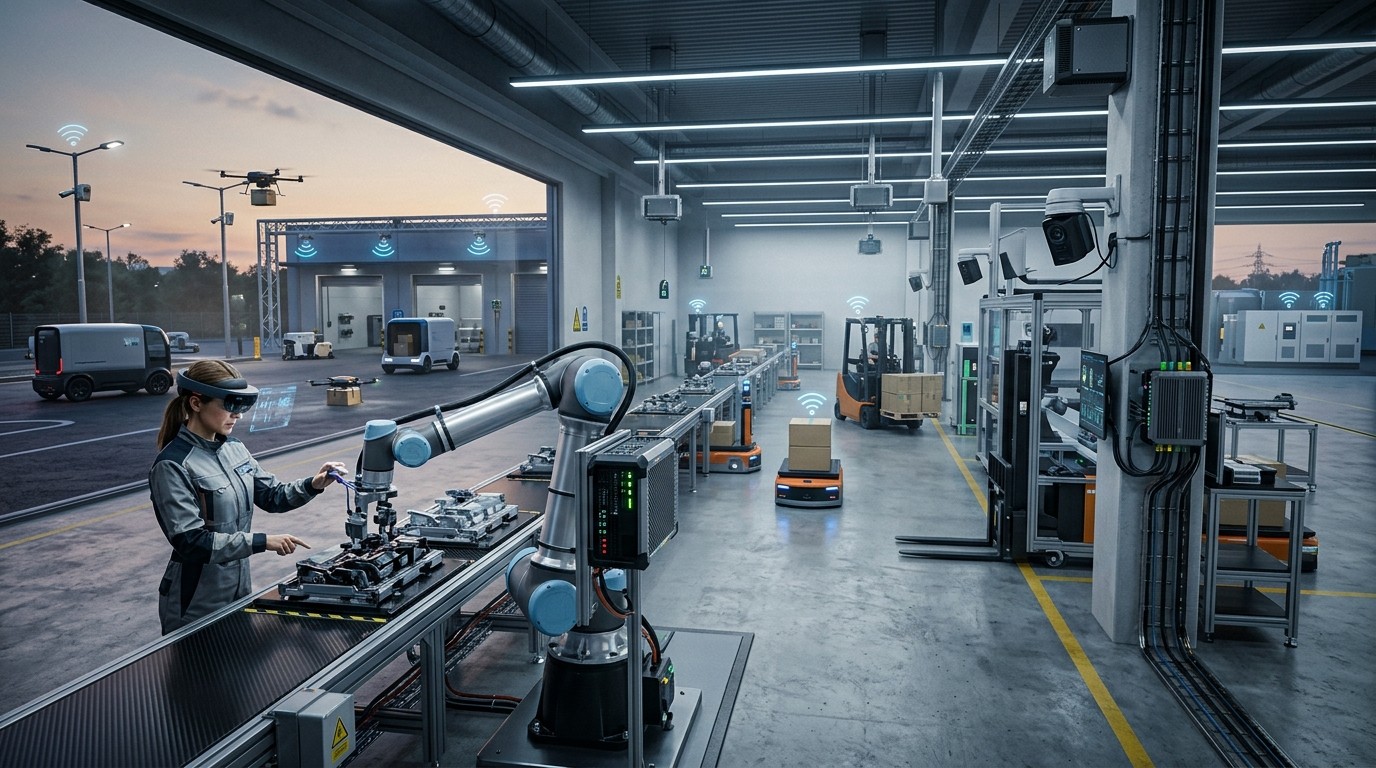
The next phase of growth will likely combine smarter chips, better orchestration, and more specialized local intelligence. Industry Edge Computing Use Cases will expand as organizations demand faster reactions, better privacy, and more resilient operations. As AI models become more efficient, more of that intelligence will be able to run closer to the source of the data. That will make the edge even more valuable.
We are also likely to see more industry-specific solutions. A factory, hospital, store, and utility network do not need the same edge design. Industry Edge Computing Use Cases will increasingly reflect domain needs rather than generic computing theory. That is good news because the more specific the deployment, the easier it is to show value. The edge works best when it is tailored to the problem.
Over time, the edge will feel less like an optional add-on and more like part of normal infrastructure. Industry Edge Computing Use Cases are moving in that direction now because the economics and performance benefits are becoming clearer. Organizations that learn early will likely have a stronger position later, especially in sectors where speed and reliability influence the bottom line.
Conclusion
Industry Edge Computing Use Cases are most powerful when they solve a clear business problem, not when they are adopted for novelty. Across factories, hospitals, retail stores, fleets, utilities, and public infrastructure, the edge helps teams act faster, reduce bandwidth strain, and improve reliability where delay matters most. The best deployments blend local intelligence with cloud coordination so each layer does what it does best. Start with one painful bottleneck, measure the result carefully, and expand only when the evidence is strong. Done well, edge computing becomes a practical advantage that improves operations, customer experience, and resilience at the same time.
Frequently Asked Questions (FAQ)
1. What are Industry Edge Computing Use Cases?
They are practical situations where computing happens close to the data source so decisions can be made faster, more reliably, and with less dependence on a distant cloud system.
2. Which industries benefit most from edge computing?
Manufacturing, healthcare, retail, logistics, telecom, energy, smart cities, and security-heavy environments often see the strongest benefits because they rely on speed and local responsiveness.
3. Is edge computing replacing the cloud?
No. The cloud still matters for storage, large-scale analytics, and coordination. Edge systems usually work best as part of a hybrid architecture.
4. Why is latency such a big issue?
Latency can affect safety, quality, and customer experience. If a response arrives too late, the system may miss the moment when action mattered most.
5. Does edge computing improve privacy?
It can. By processing some data locally, organizations may reduce how much sensitive information must travel or be stored centrally.
6. What is the biggest challenge in deployment?
Managing devices over time is often the hardest part. Updates, security, maintenance, and integration all need a clear plan.
7. How should a company start?
Begin with one specific use case where delay, bandwidth, or reliability is a real problem. Pilot the idea, measure the results, and expand only after proving value.
8. Can small businesses use edge computing?
Yes. A smaller business may use local analytics, smart cameras, or on-site automation without needing a massive infrastructure rollout.
9. What metrics matter most?
Response time, uptime, bandwidth reduction, incident prevention, maintenance cost, and business outcome metrics are usually the most useful measures.
10. What makes a use case worth pursuing?
A strong use case has a clear problem, a measurable benefit, and a workflow where local processing can improve performance better than a cloud-only design.